Election Day is supposed to be just that. Election Day.
Not election week. Not election month.
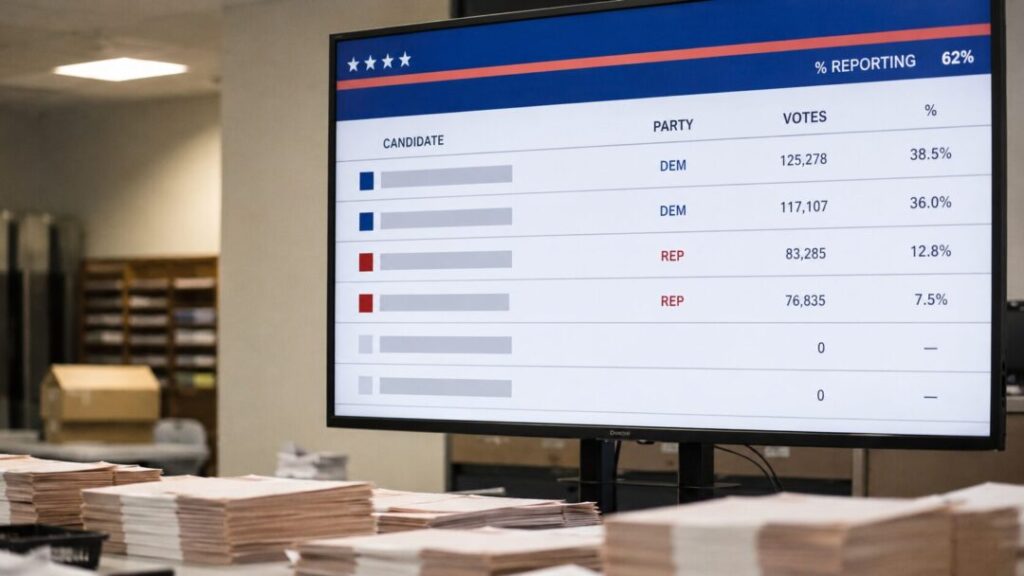
Yet once again, California voters are watching election officials continue counting ballots days after the polls closed.
Several major races from the June primary remain undecided, and millions of ballots were still being processed long after Election Day had passed.
To be clear, there is no public evidence that widespread fraud affected these elections. Election officials say they are following state law and working through a huge volume of mail ballots.
But that doesn't mean voters shouldn't be asking questions.
One of the most important parts of any election is public confidence. People need to believe the system is fair, transparent, and efficient.
When results drag on for days or weeks, confidence suffers.
California has built one of the most complicated voting systems in the country.
Every registered voter receives a mail ballot. Ballots can arrive after Election Day if they were properly postmarked. Election workers must verify signatures and process provisional ballots.
Supporters say these rules help ensure every eligible vote is counted.
Critics argue the system has become so complicated that it creates confusion and delays that damage trust in elections.
Frankly, both concerns deserve attention.
If your bank took three weeks to tell you your account balance, you'd probably start asking questions. If a football game took two weeks to determine the winner, fans would lose confidence in the process.
Government should be able to count votes accurately and efficiently.
Unfortunately, California continues to struggle with the efficiency part.
One issue that repeatedly frustrates voters is what election observers call the “red shift.”
Republican candidates often lead on election night, only to see those leads shrink as additional mail ballots are counted in the days that follow.
Election experts say this is largely because later-arriving mail ballots tend to favor Democrats.
That explanation may be true.
But when vote totals continue changing for days after the election, many voters understandably wonder what's happening behind the scenes.
Again, perception matters.
This debate should sound familiar to Nevadans.
For years, Nevada has expanded mail voting and changed election procedures. Those changes have sparked ongoing debates about election administration, voter rolls, ballot verification, and public confidence.
No matter where someone stands politically, we should all agree on one simple principle.
Election systems should be designed to maximize both access and trust.
Those goals are not opposites.
We should make it easy for eligible citizens to vote. We should also make it easy for voters to understand how elections are conducted and when results will be available.
When government creates a system so complex that ordinary citizens lose confidence in it, that's a problem.
Some election advocates argue that counting every eligible ballot is more important than speed.
They're right that accuracy matters. But speed matters too. The American people should not have to wait weeks to know who won an election.
Technology has transformed nearly every part of modern life.
We can transfer money across the country in seconds. We can track packages in real time. We can watch events happening on the other side of the world instantly.
Surely government can find a way to count ballots accurately without keeping voters waiting for weeks.
At the end of the day, election integrity isn't just about preventing fraud. It's about creating a system that earns public trust.
The longer it takes to count votes, the harder that job becomes.
The opinions expressed by contributors are their own and do not necessarily represent the views of Nevada News & Views. Digital technology was used in the research, writing, and production of this article. Please verify information and consult additional sources as needed.