If you've been on conservative social media today, you've seen the frustration. Justice Amy Coney Barrett just wrote the opinion on late-arriving mail ballots, and people aren't happy.
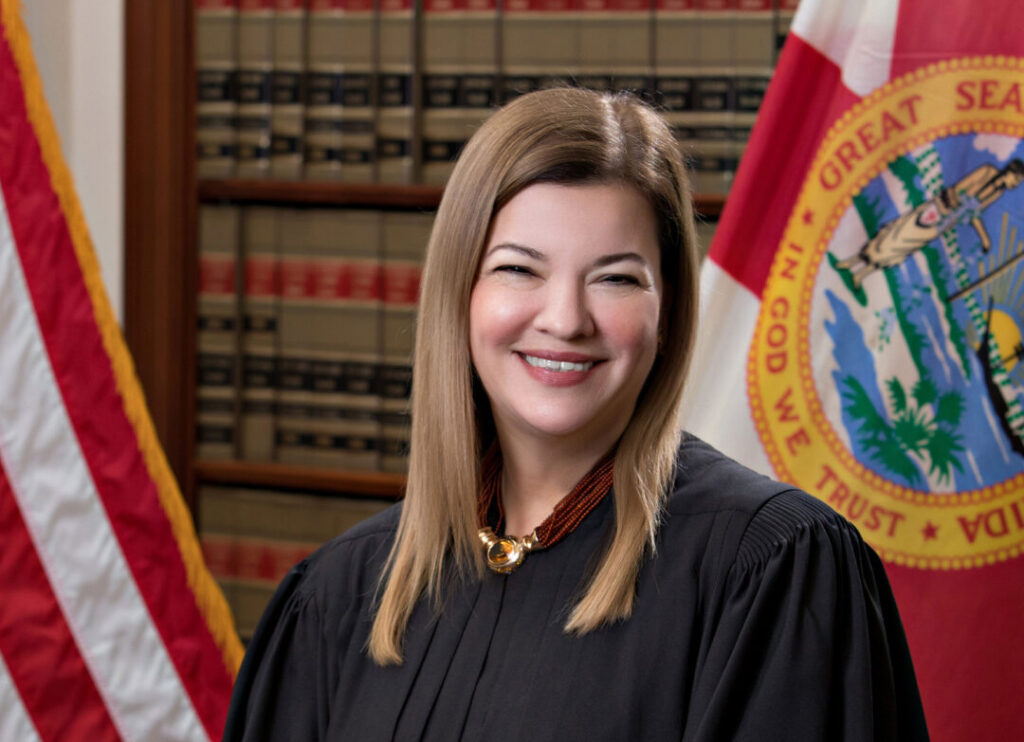
The question showing up everywhere is: how did we end up with ACB instead of Barbara Lagoa? I have thoughts on that.
Let Me Set the Scene
It's September 2020. Justice Ruth Bader Ginsburg has just passed away. President Trump has a Supreme Court seat to fill.
Florida has 29 electoral votes up for grabs. And, a Monmouth University poll conducted that same month had Biden leading the state 50% to 45%.
The RealClearPolitics average of all Florida polls told the same story — Biden up by 1 to 3 points across the board. Trump was trailing in a state he could not afford to lose.
According to CNN, flying back to Washington the night Ginsburg died, Trump was already quizzing aides about whether Barbara Lagoa could secure him Florida's 29 electoral votes.
That was his first instinct. Not her judicial record. Not her originalism. Florida.
On Fox & Friends that Monday, Trump said:
“She's excellent, she's Hispanic, she's a terrific woman from everything I know. I don't know her. Florida, we love Florida.”
And Lagoa made sense. She was the daughter of Cuban exiles. Born in Miami. The first Cuban-American woman ever to sit on the Florida Supreme Court. In a state where Cuban voters could make or break you, she was a walking political asset.
 But her connection to Cuban-Miami went deeper than biography.
As a young lawyer, Lagoa was part of the pro bono legal team that represented Elián González's Miami family.
Elián was the young Cuban boy found adrift at sea after his mother drowned trying to escape Castro's Cuba in 1999. The Clinton administration ultimately sent him back to Cuba over the objections of his Miami relatives.
That case still burns in Cuban-American Miami, and Lagoa was on the right side of it.
Florida Republicans were practically giddy.
Congressman Matt Gaetz said on September 20th:
“If the president picks Barbara Lagoa, they will be dancing salsa with joy in Hialeah well past November.”
Worth noting: Lagoa had already been confirmed to the 11th Circuit by an 80-15 Senate vote. Democrats voted for her overwhelmingly. Hard to attack someone you already put on the bench.
Even Democrats knew what she represented. Democratic pollster Fernand Amandi said picking Lagoa would be:
“a play for women, Hispanics and most importantly, Florida's 29 electoral votes,” calling her “the conservative Cuban version of Sonia Sotomayor.”
So what happened? I have a theory. And I think the timing tells the story.
The Ruling
Earlier that September, Lagoa was part of a 6-4 ruling on the 11th U.S. Circuit Court of Appeals.
The case involved Florida's law requiring felons to pay their fines before having their voting rights restored. Florida voters had passed Amendment 4 in 2018 to restore felon voting rights.
The Republican-led legislature added a condition: pay what you owe first.
Lagoa sided with the majority and upheld the law. The judiciary's job is to check constitutionality — not to legislate from the bench. This was a Separation of Powers ruling, and she got it right.
As a result, felons who hadn't paid their fines remained ineligible to vote.
Democrats were livid. All ten Democrats on the Senate Judiciary Committee wrote her a letter demanding she recuse herself from the case.
Liberal commentators called her ruling an “audition” for the Supreme Court shortlist. Liberal legal publication Above the Law wrote that her ruling:
“could easily be the difference in deciding Florida's electoral votes.”
Bloomberg's Move
Billionaire Michael Bloomberg — former New York City mayor, failed 2020 Democratic presidential candidate who burned through more than a billion dollars of his own money before dropping out in March 2020 — had already pledged an additional $100 million to help Biden win Florida.
But he wasn't done spending.
On September 22, Bloomberg announced he had raised more than $16 million to pay the fines and fees of roughly 32,000 Florida felons. The goal was to get them registered before Florida's October 5 deadline.
The $16 million felon fine payment wasn't a standalone act of charity. It was one piece of a much larger play to flip the state.
In a memo, Bloomberg's own organization described it as a:
“cost-effective way of adding votes to the Democratic column.”
That's not my characterization. That's theirs.
Bloomberg exploited a loophole that Florida's own lawyers had created. During the court fight over the felon voting law, the state's own legal team had argued that third parties were perfectly free to pay those fines. Bloomberg heard that and wrote a $16 million check.
Lagoa's ruling was neutralized overnight. The 32,000 people the law would have kept from voting got their fines cleared and could now register. A legal win that took months to secure evaporated in a week.
Florida Fought Back — And Lost
Republicans in Florida didn't take it lying down. At the request of Governor Ron DeSantis, Attorney General Ashley Moody ordered a criminal investigation into Bloomberg's move.
She sent letters to both the FBI and the Florida Department of Law Enforcement citing potential violations of election law.
Trump called it a “criminal act” on Fox News Radio on September 24th, saying:
“It's a felony. He's actually giving money to people. He's paying people to vote.”
It didn't matter. Because Bloomberg had used the state's own argument against it, there was no legal ground to stand on. The investigation went nowhere. The fines were paid, and the voters were registered.
The Meeting That Never Happened
Here's where it gets interesting.
According to CNN's reporting based on nearly a dozen sources, White House officials had begun making plans for Trump to meet with Lagoa in person. Then that idea got scrapped.
Barrett's supporters inside the White House — including White House Counsel Pat Cipollone and Vice President Mike Pence — moved quickly to lock in their pick before Trump could change his mind. They ran out the clock.
On Capitol Hill, Senate Majority Leader Mitch McConnell had already told Trump that senators felt comfortable with Barrett and that anything complicating the confirmation timeline needed to be avoided at all costs.
Trump never sat down with Lagoa. He nominated Amy Coney Barrett on September 26th.
The evening before announcing Barrett, Trump was still polling guests at a fundraiser about whom he should pick.
When someone suggested Lagoa, he said:
“Let her know she's going to have her chance.”
Eight Days. One Supreme Court Seat.
- September 18 — Justice Ginsburg passes away. Trump immediately focuses on Florida and starts floating Lagoa's name.
- September 20 — Florida Republicans are publicly lobbying for Lagoa. Gaetz predicts Floridians will be “dancing salsa in Hialeah” if Trump picks her.
- September 21 — Trump calls Lagoa “excellent” on Fox & Friends. Barrett meets with Trump at the White House. When asked if he planned to meet with Lagoa during his upcoming Miami trip, Trump said publicly: “I may. She is highly thought of.”
- September 22 — Bloomberg announces $16 million to pay fines for 32,000 Florida felons, neutralizing Lagoa's ruling in a single day.
- September 23 — Florida's attorney general opens a criminal investigation into Bloomberg. National Review reports Trump is expected to meet with Lagoa in Miami that Friday.
- September 24 — Trump calls Bloomberg's move a “criminal act.” The fines keep getting paid.
- September 25 — Trump is in Miami at Doral for a Latinos for Trump roundtable. No meeting with Lagoa takes place. It has been quietly scrapped. Trump never explained why.
- September 26 — Trump nominates Amy Coney Barrett. Lagoa never gets her meeting.
The Twofer
Now — I want to be honest here. There is no reporting that directly connects Bloomberg's move to Trump's decision to go with Barrett. The inside story is that Barrett's allies in the White House ran a fast, organized campaign to lock her in before Trump could waver. That's documented.
What I'm connecting are the dots around the timing. Make of it what you will, but think about what Bloomberg accomplished in one move.
He paid off the fines that Lagoa's ruling had used to keep 32,000 likely Democratic voters off the rolls. He didn't just add voters. He neutered a court win for Trump's campaign at a time when Trump's whole interest in Lagoa was Florida electoral math.
She was supposed to help him with Cuban voters AND the courts had just handed him a ruling that kept what Bloomberg's org had characterized as Democratic voters off the rolls.
Bloomberg erased the second half of that equation the week Trump was deciding.
Why This Matters
This is what sophisticated political money looks like. Bloomberg didn't run an ad. He didn't hold a rally.
He wrote a check at the exact moment it would cause the most damage — and he used the other side's own legal argument to do it.
The lesson for conservatives is simple. Winning in court isn't enough anymore. A court victory can be undone by a billionaire with a checkbook before the ink is dry.
Election integrity work, voting law fights, and judicial nominations all happen inside a much bigger political chess game.
Barbara Lagoa is still on the 11th Circuit, appointed by Trump in 2019. She's still writing opinions that conservatives cheer.
She just never got her Friday meeting in Miami.
The opinions expressed by contributors are their own and do not necessarily represent the views of Nevada News & Views. This article was written with the assistance of AI. Please verify information and consult additional sources as needed.