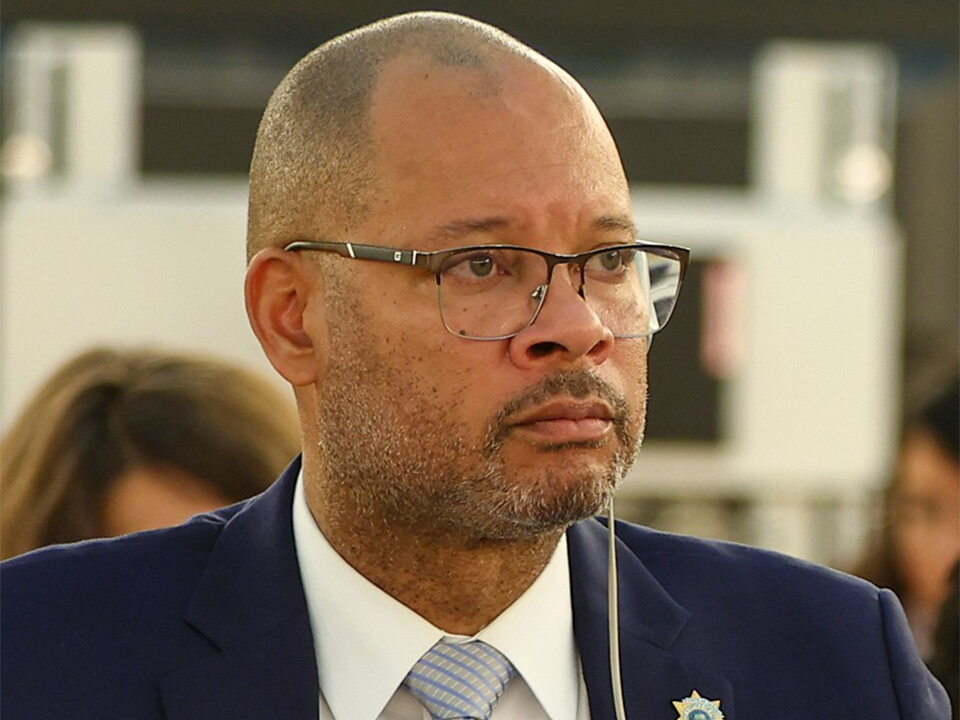
The governor-elect says the third try will become law, but Lombardo’s concerns about free speech and government power still deserve a hearing.
Gov.-elect Aaron Ford wants Nevada to make alternative presidential elector schemes a crime. He says he will sign the bill that Gov. Joe Lombardo vetoed in 2023 and again in 2025.
“It will be signed the third time,” Ford told KTNV’s Steve Sebelius in a recent interview.
He invited state Sen. Skip Daly, a Washoe County Democrat, to run the bill again and send it to him. ktnv
That could end a four-year fight. But Lombardo’s vetoes were never about defending the electors. They were about fair punishment, free speech and keeping government power in check. Those concerns have not gone away.
Why Lombardo Said No
The first bill, Senate Bill 133, passed in 2023. It would have set penalties of four to 10 years in prison.
Lombardo agreed the conduct was wrong.
But he said the bill offered “disproportionately harsh penalties for an, admittedly, terrible crime.”
He pointed out that the punishment was harsher than what some domestic violence offenders and some violent January 6 actors had received.
Daly came back in 2025 with Senate Bill 102. It cut the sentence to one to four years in prison and a fine of up to $5,000. It also still barred anyone convicted from holding public office in Nevada.
Lombardo vetoed SB102 on June 2, 2025, the last day of the session. This time his worries went beyond the sentence.
He warned that the bill’s language was too broad and “could criminalize legitimate political expression or protest.”
He also said the bill gave the Secretary of State subpoena powers with no timelines and no clear standards of evidence.
He wrote that this created “the risk of politically motivated or selective enforcement.”
Why It Matters
Nobody should be allowed to forge election papers. Honest elections are a core American value.
But a law that touches political activity has to be written with care. A sloppy law could be used against people who file a lawful election challenge or hold a symbolic protest. A tool built for one side today can be turned on the other side tomorrow.
SB102 also did not clearly require prosecutors to prove intent to defraud for the elector crime. A different section of the same bill did require that for false election documents.
The 2020 Case Is Separate
The bills grew out of 2020. That year, six Nevada Republicans signed papers saying Donald Trump won Nevada, even though Joe Biden carried the state. As attorney general, Ford charged them under existing forgery laws.
The case has had a rough road. A judge first dismissed it in 2024, saying it was filed in the wrong county. The Nevada Supreme Court reversed that ruling in November 2025.
Then, in August 2026, the same judge threw it out again.
The defendants said the certificate was “political theater” meant to publicize their concerns about the election, and Judge Mary Kay Holthus agreed. She also wrote that prosecutors failed to present evidence favorable to the defense to the grand jury.
Ford’s office has appealed to the Nevada Supreme Court. All six pleaded not guilty, and none has been convicted.
That ruling matters for the new bill. The 2020 case turned on whether the electors meant to fool anyone. That’s the same intent question lawmakers left unclear in SB102.
A new law could not be used against the six anyway. The Constitution bars punishing people under a crime created after the fact. Any new law would apply only to future elections.
What Comes Next
Democrats will have a big edge in 2027. They won a supermajority in the Assembly, where Republicans hold just 10 seats, and they kept 13 of 21 seats in the Senate. With Ford in the governor’s office, a third bill has a clear path.
The Nevada State Democratic Party said SB102 would have set felony penalties for fake electors who try to steal Nevada’s electoral votes. Supporters of the bill argue that forging official documents is conduct, not speech.
Still, no new bill has been filed yet.
Watch for Daly’s bill on the Legislature’s NELIS website.
Lombardo asked the right questions about required proof of intent to defraud, protecting lawful election challenges and protest, and putting firm limits on the Secretary of State’s subpoena power.
A good bill would answer them.
The opinions expressed by contributors are their own and do not necessarily represent the views of Nevada News & Views. This article was written with the assistance of AI.