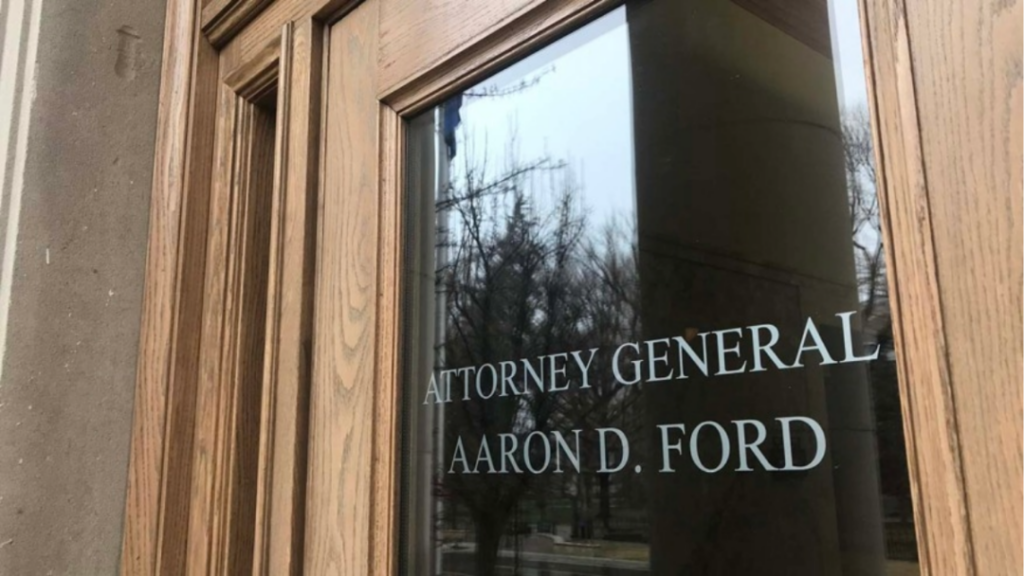
SB74 would add an Open Meeting Law exemption for “critical infrastructure” and “public safety,” but it never says what those words mean.
Most Nevadans never go to a county commission or state board meeting. But they count on the doors being open in case they want to.
A bill filed on behalf of Nevada’s Attorney General could close some of those doors.
Senate Bill 74 was prefiled November 17 at the request of the office that enforces the state’s Open Meeting Law. It would let public bodies meet in private on matters “relating to critical infrastructure or public safety” when needed “to protect the public health and welfare.”
Lawmakers will take up the bill in the 2027 session, which starts February 1.
Two Big Words, No Definitions
Nevada’s Open Meeting Law starts with a simple promise. It says public bodies “exist to aid in the conduct of the people’s business.” Their actions and their deliberations are supposed to happen in the open.
The law allows some exceptions, and each one has to be written into statute. SB74 would add a new one.
The bill says nothing about what counts as “critical infrastructure” or “public safety.”
It does not limit closed meetings to real security threats or secret technical details. It does not require any showing that talking in public would put anyone in danger. To close a meeting, a board only has to pass a motion naming “the nature of the business to be considered.”
Roads, water systems, power lines and police all could fall under those two phrases. Those are also the places where governments spend the most tax dollars.
Picture a city council planning a big water project. A talk about where to put the pipes could easily be called “critical infrastructure.” Under SB74, it could happen behind closed doors.
The bill does not let officials vote on contracts or spending in secret. But the real work often gets done in the talking that comes before a vote. If taxpayers can’t hear that part, they lose the chance to ask hard questions before the decision is made.
Nevada Already Has a Security Exemption
Supporters will likely say some things really should stay private. Nobody wants a map of a power grid’s weak spots posted online. That is a fair point.
But Nevada law already covers it: NRS 241.029, added during the 2025 special session, requires closed meetings when state executive agencies and the Legislature discuss threats to essential services.
The law names water, wastewater, natural gas and electric service, along with cybersecurity. It also defines key terms.
SB74 goes much further. It is not limited to named threats or to meetings between the two branches. It would give any public body, from state boards to local councils, the power to decide for itself when to shut the doors.
Closed meetings under SB74 would still have to be recorded. But the minutes would only become public when the same body that closed the meeting decides secrecy is no longer needed. The bill sets no deadline for that.
Fewer Written Minutes for Advisory Boards
SB74 would also let some advisory boards skip traditional written minutes. These are boards that make recommendations but don’t have final say. Boards that must include elected officials would not qualify.
Instead, they would post an audio or video recording within five business days, along with the text of each motion and whether it passed. The bill says plainly that no summary of the discussion or public comment would be required.
A recording can show exactly what happened, which is a plus. But it is much harder to search hours of video than a few pages of minutes. Busy parents, reporters and watchdog groups may find these boards harder to follow.
Some Changes Cut the Other Way
Not every part of the bill reduces access. For regular boards, minutes would have to include the substance of every public comment. Today, that only happens if the speaker asks.
The bill would also let boards briefly discuss public comments on items not on the agenda, as long as they don’t deliberate about taking action.
It would change which subcommittees must follow the Open Meeting Law. Under the new test, a subcommittee would be covered if at least one member sits on the board that created it. “Working groups” would be dropped from that part of the law. Some groups could gain coverage while others lose it.
Other sections let boards notify employees about personnel hearings by work email. They also protect legal privileges when records are handed to the Attorney General during an investigation.
The fiscal note says the bill “may have fiscal impact” on state and local governments, but it gives no numbers.
What Comes Next
SB74 has been sent to the Senate Committee on Government Affairs. It has not had a hearing yet.
Nevadans can follow the bill and share their views on the Nevada Legislature’s website. They can also contact members of the committee and ask simple questions.
What problem does this bill fix that current law doesn’t? Why not define the terms? And who decides when the secrecy ends?
Protecting the power grid and keeping government open are not opposites. Nevada can do both.
Read the bill: SB74
The opinions expressed by contributors are their own and do not necessarily represent the views of Nevada News & Views. This article was written with the assistance of AI.