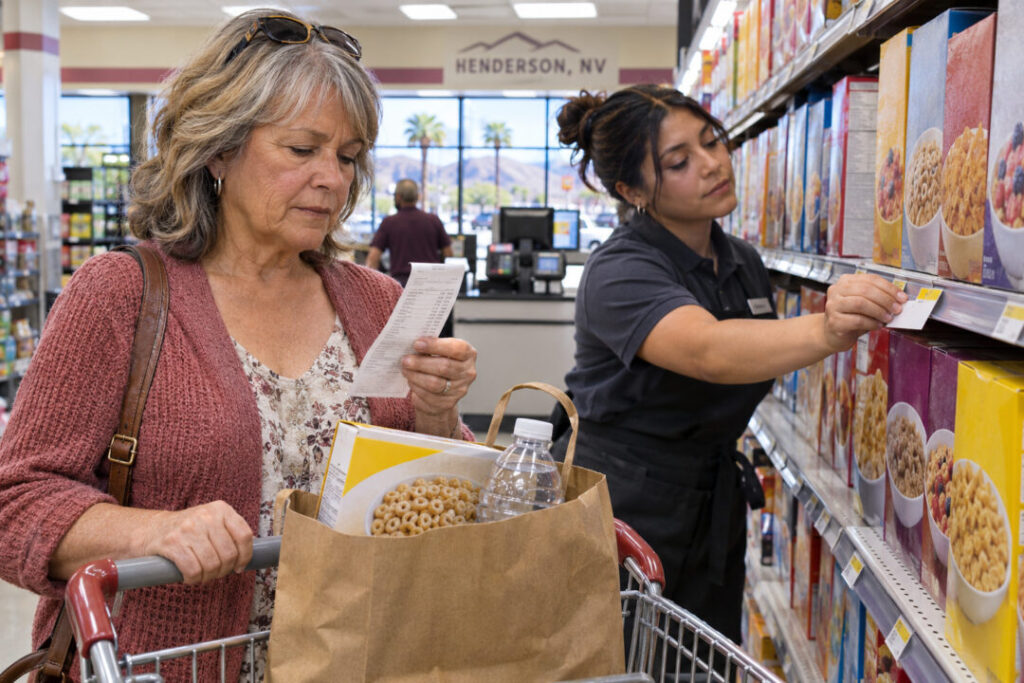
A Secret Fee on Every Box, Bottle and Bag that You’ll Never See on Your Receipt.
Every cereal box. Every water bottle. Every pizza box and shipping carton.
What if the government put a hidden fee on all of them? And what if you weren’t allowed to see it on your receipt?
That’s not made up. It’s called EPR, short for “extended producer responsibility.” It’s already the law in California, Oregon and Washington. And with Democrats now in charge of both the Legislature and the governor’s office, Nevada could be next.
What EPR Really Is
Here’s how it works.
Right now, your city or your trash hauler pays to recycle stuff. Under EPR, the state makes the companies that make or sell packaged goods pay instead.
Their fees depend on how much packaging they ship into the state.
Sounds fair, right? “Polluter pays” and all that.
But here’s the catch. Those fees don’t come out of thin air. They come out of your pocket.
The Tax You Can’t See
California’s version gets going for real next year. The projected cost for 2027 alone? Somewhere between $1.26 billion and $1.87 billion.
And get this. California won’t let businesses list the fee as a separate line on your receipt. Colorado bans point-of-sale fees too.
So you pay more. You just don’t get to know why.
A study done for a California business coalition estimated the law could cost each household $948 to $1,373 a year. Supporters disagree.
Washington’s environmental agency says it expects no impact on store prices.
But when has a new cost on business ever not shown up at the cash register?
A Private Group Sets the Price
It gets worse. The fees aren’t set by anyone you elected. They’re set by a private nonprofit called the Circular Action Alliance, based in Washington, D.C. Businesses don’t get a choice. They have to join.
In Oregon, the group sets fees using a confidential formula. When the first bills went out in 2025, many small and mid-sized businesses were shocked at how high they were.
Wholesale distributors often run on profit margins of just 3 to 5 percent. There’s not much room to swallow a surprise bill like that. In Colorado, lubricant makers are suing over a fee of 56 cents a gallon.
Want to fight your bill? In Oregon, that generally means arbitration, not a courtroom.
The Lawsuits Are Piling Up
That’s why 17 state attorneys general have sued to stop California’s law. Business groups are suing in Oregon and Colorado too.
A federal judge upheld Oregon’s law in August. But the fight’s moving to the Ninth Circuit.
Here’s the kicker.
Companies that sell nationwide say they can’t isolate one state’s costs. So they spread them around.
That means folks in states with no EPR end up paying for it anyway. Including, quite possibly, you.
Why Nevada’s a Target
Seven states have passed packaging EPR laws. When Washington signed on in 2025, the entire West Coast was covered.
Now look at Nevada. Aaron Ford beat Gov. Joe Lombardo on Nov. 3. Democrats kept big majorities in the Legislature.
For the last four years, a governor’s veto was a check on ideas like this. Starting in 2027, one party holds every lever.
And Nevada’s an easy target. We’re a tourism state. Casinos, restaurants, hotels and convention halls go through mountains of packaging.
And much of what’s on our store shelves is trucked in from out of state.
Independents Pay Too
Here’s something both parties should remember. Nevada’s largest group of voters doesn’t belong to either one.
More than 813,000 Nevadans are registered nonpartisan. That’s nearly 39 percent of all active voters.
Those voters didn’t sign up for a party agenda. But if this tax passes, they’ll pay it at the grocery store just like everyone else.
So will their kids’ school supplies. So will the takeout on Friday night.
A hidden price hike doesn’t check your party registration.
What to Watch For
Nobody’s against recycling. But EPR isn’t really about recycling. It’s a hidden tax run by a private group, with fees you can’t see and can’t easily challenge.
So when the 2027 session opens in February, keep your eyes peeled. The bill might not say “EPR” on the cover. Look for phrases like “recycling reform” or “producer responsibility.”
If it shows up, call your legislator. No matter your party. Or no party at all.
Because once this tax lands in Nevada, every one of us will pay it on every box we buy. And none of us will see it on the receipt.
The opinions expressed by contributors are their own and do not necessarily represent the views of Nevada News & Views. Digital technology may have been used in the research, writing, or production of this article. Please verify information and consult additional sources as needed.