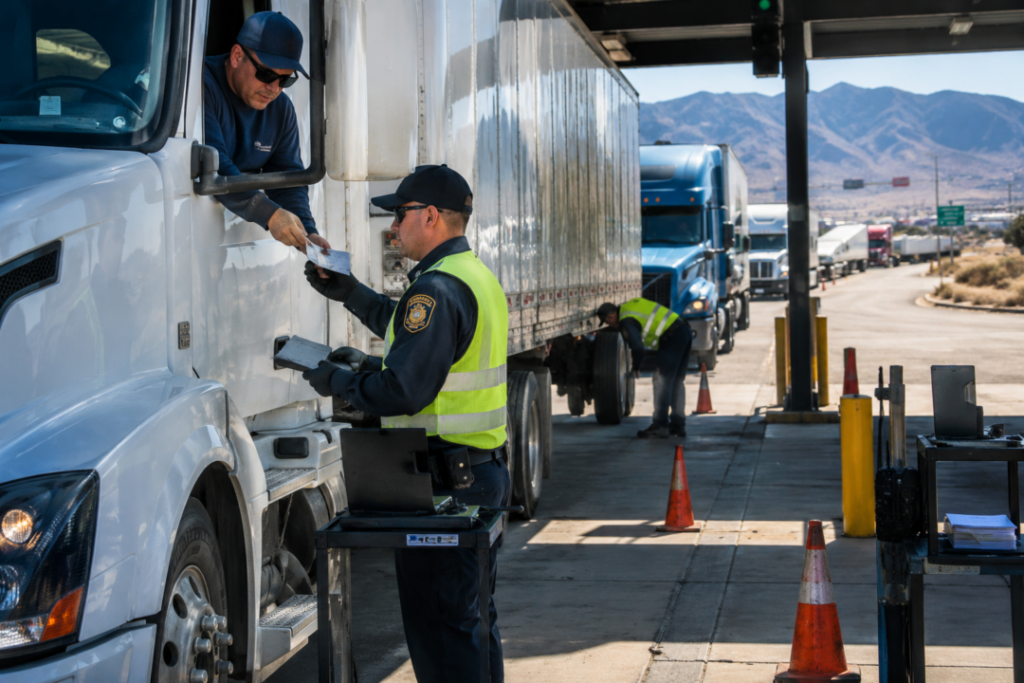
A 5-Year-Old, a Semi-Truck, and a License That Never Should Have Existed
Some of the busiest freight corridors in the country run right through Nevada, feeding Las Vegas’ warehouses and distribution centers.
Most of the people behind those wheels trained for years to earn that responsibility. Some didn’t.
That’s not speculation. It’s what federal investigators found.
The name attached to this story nationally is Dalilah Coleman. She was five years old in June 2024 when a semi-truck slammed into her family’s stopped car in California.
She suffered a fractured skull and underwent an emergency craniectomy. Cerebral palsy will follow her for life.
The driver who hit them had entered the country illegally and never should have qualified for a commercial license. California issued him one anyway.
And it wasn’t just one mistake, either.
THE ILLEGAL HIGHWAYS
A powerful documentary exposing the devastating impact on American families from the epidemic of illegal alien truck drivers on our roads.
Incredible work by Adam Coleman @WrongSpeakFilms
Can’t wait for America to see this film.
This crisis —… https://t.co/rtLS8g4WQO
— American Truckers United (@atutruckers) August 13, 2026
Federal regulators dug into California’s licensing system and found what the DOT called “systemic policy, procedural, and programming errors,” including licenses that stayed active after a driver’s work authorization had expired.
At least 30 people died in 17 separate crashes involving improperly licensed non-domiciled CDL holders in 2025 alone, according to the DOT.
Seventeen crashes. Thirty families who got a phone call everyone dreads.
Washington has started to respond. Federal rules now require states to verify legal status through the SAVE database before issuing a commercial license.
There’s a bill in Congress, named for Dalilah, that would require English proficiency testing for every CDL holder and close the loopholes that let unverified paperwork stand in for real vetting.
Dalilah’s Law cleared committee back in March. It’s still waiting on a floor vote.
Federal crash data doesn’t track drivers by immigration status, so nobody can hand you a precise national percentage. What we do know, with certainty, is that at least one state’s verification system failed in ways investigators called systemic, and people died because of it.
So here are the questions Nevadans should be asking: Is our DMV checking non-domiciled applicants against SAVE the way federal law now requires?
Is English proficiency testing actually happening, or just sitting in a policy manual somewhere nobody reads?
To Nevada’s credit, it hasn’t been named among the states with confirmed licensing failures, and it acted early, pulling nearly 1,000 questionable licenses last November.
Nevada’s ahead of where California was. But “ahead” isn’t “cleared,” and until that audit closes, nobody gets to call this settled.
Here’s what would settle it, as far as I’m concerned: if you’re operating an 80,000-pound vehicle on roads Nevadans drive every single day, you should have to prove you’re qualified to do it.
That’s just what a license is supposed to mean.
The opinions expressed by contributors are their own and do not necessarily represent the views of Nevada News & Views. Digital technology may have been used in the research, writing, or production of this article. Please verify information and consult additional sources as needed.