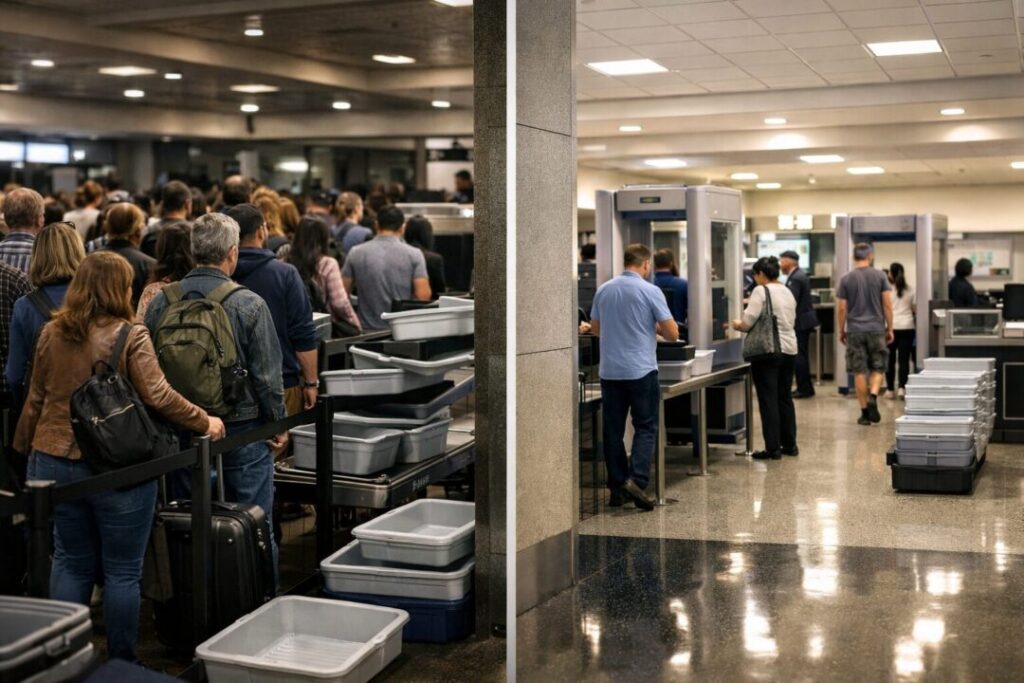
Long lines. Missed flights. People told to show up hours early just to get through a checkpoint.
Americans are sick of hearing about this by now. Here’s something that stands out, though:
Not every airport had those problems.
Back in March, this article highlighted how small group of airports using private screeners kept things moving while federally staffed checkpoints struggled.
Same rules. Same standards.
Better results.
Now, that quiet success story is turning into something bigger.
🚨 GREAT NEWS: Trump’s budget bill submitted to Congress today begins the process of PRIVATIZING TSA
Airports taking part in a test program which TSA pays private screeners have ALREADY proven significant cost savings, per the White House
PRIVATIZE IT! 🔥
WHITE HOUSE: “The… pic.twitter.com/Bo5RiEs2e1
— Nick Sortor (@nicksortor) April 3, 2026
From Backup Plan to Policy Proposal
The Trump administration’s new budget proposal takes that same idea and pushes it further.
Instead of letting smaller airports choose whether to use private screeners, the plan would require many of them to make the switch.
The program already exists. It’s called the Screening Partnership Program.
It’s been around since 2004.
Private contractors handle screening, but the TSA still sets the rules, approves the equipment, and oversees the process.
Nothing about the security standards changes.
Just who’s doing the job.
Why This Is Getting Attention Now
Timing matters. Our federal system hit a political gridlock we still haven't fully figured out.
TSA workers not getting paid on time. Staffing becoming unpredictable. Lines growing longer.
Travelers paid the price.
Meanwhile, airports using private screeners have kept operating much more smoothly.
Workers were paid under contract. Lanes stayed open. Security moved.
Now the White House says expanding the model could save about $52 million in 2027 alone by reducing federal staffing costs.
Same System. Different Results.
Private screening doesn’t mean less security.
The TSA still:
- Sets the rules
- Trains and certifies screeners
- Tests performance
- Oversees operations
In other words, the system stays federal.
The workforce changes.
And in some cases, that change has meant:
- Shorter wait times
- More consistent staffing
- Fewer disruptions during shutdowns
That’s not theory. We’ve already seen it.
The Pushback
Unions representing TSA workers argue this could hurt federal jobs and weaken consistency across airports.
Others worry about accountability. If different companies are running checkpoints, will every airport operate the same way?
Those are fair questions. Congress will have the final say on whether this proposal moves forward.
What It Means for Nevada
For Nevada, this isn’t just policy talk. It’s practical.
Las Vegas depends on tourism. Every delay at the airport has a ripple effect across hotels, restaurants, and local businesses.
Our main airport isn’t part of this proposal right now, but smaller airports could be.
And if the model expands, the conversation will reach bigger hubs sooner or later.
The Bigger Question
When one system struggles and another works under the same rules, what do you do?
Stick with what you’ve always done?
Or try what’s already proving itself?
That’s the question now sitting in front of Congress.
And if you’ve been stuck in a security line lately, you probably already have an opinion on that.
The opinions expressed by contributors are their own and do not necessarily represent the views of Nevada News & Views. Digital technology was used in the research, writing, and production of this article. Please verify information and consult additional sources as needed.