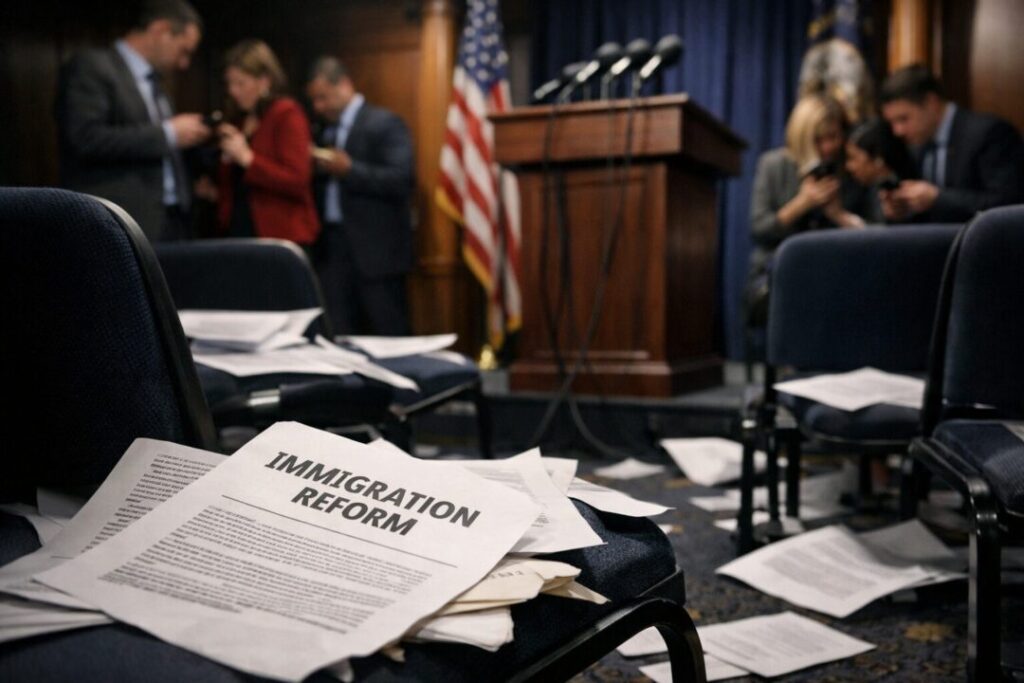
Here we go again.
Washington says it’s fixing immigration. Conservatives say it’s rewarding it.
The so-called “Dignity Act” is being sold as a middle ground. Stronger borders on one side. Compassion on the other.
But if you listen to many conservatives, especially those focused on law and order, it’s not a compromise at all. It’s amnesty with better branding.
Americans voted for mass deportations, NOT mass amnesty.
The Dignity Act should never see the light of day on the House floor.
— Congressman Randy Fine (@RepFine) April 7, 2026
Let’s start with the big issue.
The bill would allow millions of illegal immigrants already in the country to stay and work legally under what’s called a “Dignity Program.”
Supporters say it’s not amnesty. They point out there’s no automatic citizenship. They say participants must pay fees, work, and follow the rules.
But critics aren’t buying it.
They argue that giving legal status to people who broke the law is, by definition, amnesty. Period.
Estimates suggest this could apply to more than 10 million people already here illegally. And here’s the concern you hear over and over.
If you reward illegal behavior once, you encourage more of it later. That’s not theory. That’s history.
We’ve seen it before. Promises of enforcement come first. Then the legalization happens. Then enforcement fades away. And the cycle repeats.
Conservatives say this bill risks doing the same thing again.
There’s also a major sticking point with Dreamers. The bill includes a pathway to green cards for those who came here as minors.
Now, many Americans feel sympathy for Dreamers. That’s real.
But critics warn this provision still opens the door to citizenship for millions who entered the country illegally, even if they were brought here by others.
They also point to concerns about waivers and eligibility standards being too loose.
Then there’s the economic side.
Some analysts argue the bill would expand legal immigration significantly over the next decade. That means more competition for jobs, especially in working-class sectors.
And here in Nevada, that matters.
We already see pressure on housing costs. We already see crowded schools. We already see wages struggling to keep up with inflation.
So the question voters are asking is simple: Who benefits first – American workers or new arrivals?
Another concern is enforcement.
Yes, the bill includes border funding and E-Verify requirements. But critics say those measures are watered down by loopholes and exemptions.
They argue that without real, consistent enforcement, none of it matters.
And then there’s the big picture.
This bill comes at a time when many Americans believe the border is still not secure. That’s not a partisan talking point. That’s what voters are seeing with their own eyes.
So pushing legalization now feels backwards to a lot of conservatives.
Secure the border first. Enforce the laws we already have. THEN, maybe, talk about reforms. Not the other way around.
To be fair, supporters say the system is broken and needs a realistic solution. They argue mass deportation isn’t practical and that this bill offers accountability without citizenship.
That’s their case.
But for many conservatives, it’s not enough. They don’t want another promise. They want results. They don’t want another “temporary” program that becomes permanent.
And they don’t want to send a message to the world that if you come here illegally and wait long enough, you’ll eventually be allowed to stay.
That’s the line in the sand. And right now, this bill crosses it.
The opinions expressed by contributors are their own and do not necessarily represent the views of Nevada News & Views. Digital technology was used in the research, writing, and production of this article. Please verify information and consult additional sources as needed.