If you’ve filled up your tank lately in Las Vegas, you’ve probably done a double take.
Prices are climbing fast. And depending on who you ask, the blame shifts just as quickly.
Earlier this month, Rep. Dina Titus (D-NV) pointed the finger at President Donald Trump, saying rising tensions with Iran are driving up gas prices.
She even posted photos from a local gas station showing how prices jumped in just a couple of weeks.
That sounds serious. But, of course, it doesn’t tell the real story.
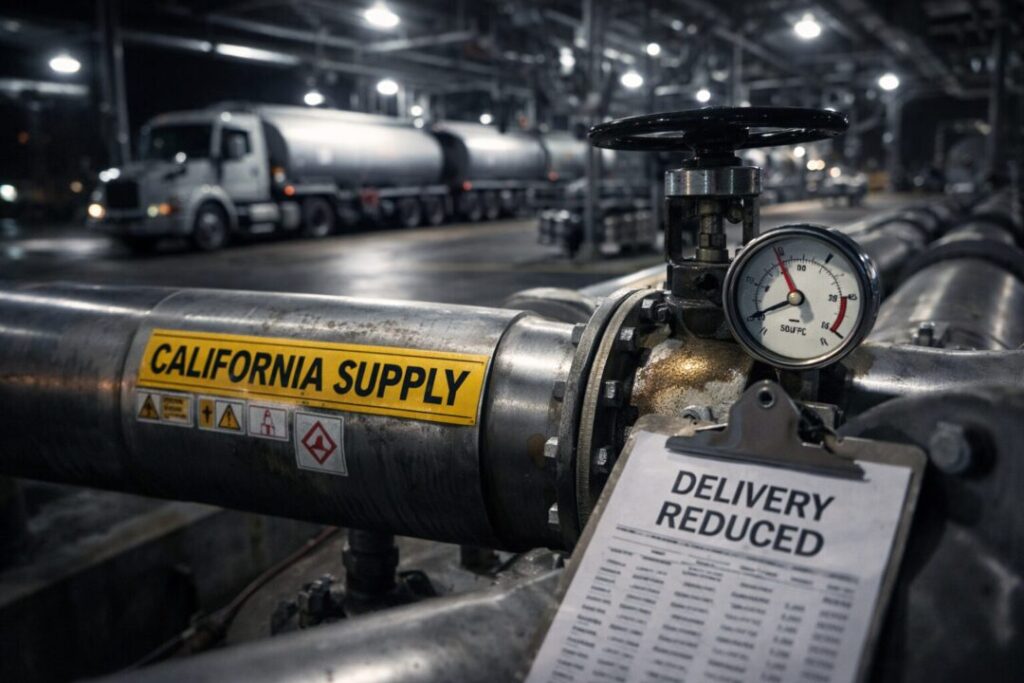
According to the U.S. Oil & Gas Association, Nevada doesn’t produce its own fuel. In fact, about 88 percent of the state’s gasoline comes from California refineries.
In Las Vegas, it’s even higher. Nearly 90 percent.
That fuel travels through the Calnev Pipeline, a supply line most drivers never see but depend on every day.
So when something goes wrong in California, Nevada feels it almost immediately.
The association pushed back on Titus’ claims in a widely shared response on X.
They argued the real issue isn’t foreign policy. It’s California’s energy policies.
We should take a page out of Utahs playbook and fight for NVs energy sovereignty with their Utah Sovereignty Act SB 265 and CB 380. Leveraging the Congressional Review Act (CRA), federal executive authority, and state-level sovereignty assertions. DM me for i can consult on this!
— Valiant Defense Consulting LLC (@ValiantDefCon) April 5, 2026
Over the past few years, California has shut down refineries and tightened regulations on fuel production.
That means less supply. And when supply drops while demand stays high, prices go up. It’s basic economics.
The U.S. Oil & Gas Association didn’t stop there. They also highlighted several votes by Titus opposing measures that would have boosted domestic energy production.
Those proposals included expanding oil and gas leasing, cutting red tape for producers, and speeding up pipeline approvals.
Supporters of those policies say they would increase supply and help stabilize prices. Critics argue they could harm the environment.
That’s the debate. But for drivers, the result is simple. Higher costs at the pump.
Instead of arguing over who’s to blame, one Nevada-based firm is offering a different path forward.
In a post on X, Valiant Defense Consulting LLC suggested Nevada should take a page from Utah’s playbook and push for “energy sovereignty.”
That means relying less on California and more on policies that give Nevada control over its own energy future.
Utah recently passed laws like the Utah Constitutional Sovereignty Act Amendments SB 265 and Presumption of State Jurisdiction Amendments HB 380.
These laws strengthen the state’s ability to challenge federal rules and assert authority over things like land use and energy development.
The idea is simple. If federal rules or neighboring states are making it harder or more expensive to produce energy, the state pushes back.
Valiant Defense says Nevada could do the same. That could include new state laws, working with Congress to roll back regulations using tools like the Congressional Review Act, or expanding local energy production.
Not everyone agrees.
Opponents of more drilling or refinery expansion argue that stricter environmental rules are necessary to protect public health and fight climate change.
They warn that loosening those rules could have long-term costs.
That’s a fair concern. But it doesn’t change the short-term reality many Nevada families are facing right now.
Here’s the part that matters when you’re standing at the pump.
Nevada is heavily dependent on California for fuel. That means decisions made in Sacramento can hit your wallet in Las Vegas.
Blaming Washington might make for a good headline. But it doesn’t fix the problem.
The bigger question is whether Nevada leaders are willing to do something about it.
Because until the state finds a way to control more of its own energy supply, drivers here will keep paying the price for decisions made somewhere else.
The opinions expressed by contributors are their own and do not necessarily represent the views of Nevada News & Views. Digital technology was used in the research, writing, and production of this article. Please verify information and consult additional sources as needed.