No Proof of Citizenship Required? A Federal Judge Says That's Fine.
A federal judge just made it harder to protect your vote.
U.S. District Judge Denise Casper – an Obama appointee in Boston – issued a permanent injunction today blocking most of President Trump's executive order on election integrity.
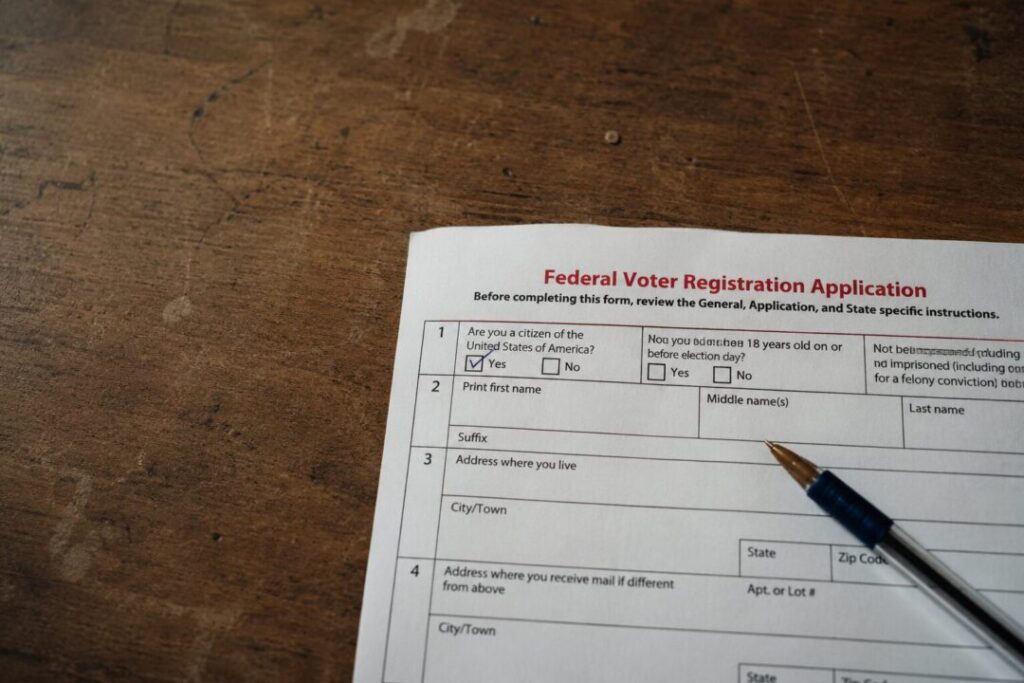
The order, signed in March 2025, would have required people to show documentary proof of U.S. citizenship when registering to vote using the federal form.
Judge Casper said no.
Her key line? “The Constitution does not grant the President any specific powers over elections.”
I've spent years fighting for honest elections here in Nevada. I helped put the photo ID initiative on the ballot.
And I can tell you plainly: this ruling is a problem.
Here's What Got Blocked
The judge's order shuts down three major parts of Trump's executive order.
First, it blocks the requirement to show proof of citizenship on the federal voter registration form.
Second, it blocks rules about mail ballot deadlines – specifically, rules that would've stopped ballots from being counted if they arrived after Election Day.
Third, it blocks the federal government from conditioning election-related funding on states adopting stricter verification rules.
The lawsuit was brought by 19 Democrat-led states – and Nevada was one of them.
That’s right. Although Nevada voters overwhelmingly passed an election security requirement – photo ID – in 2024, our own Attorney General Aaron Ford signed onto a lawsuit to block proof of citizenship requirements for voter registration.
They argued Trump overstepped his authority. Now they've got a permanent court order saying so.
The Department of Justice is expected to appeal. Good. They should.
Why This Matters
Right now, when you fill out the federal voter registration form, you just check a box saying you're a citizen.
That's it. No ID. No document. Just your word.
Trump's order tried to change that. It told the Election Assistance Commission to add a real verification step.
Critics said it was overreach. Supporters – including me – said it was common sense.
You need ID to drive a car. You need ID to fly on a plane. You need ID to pick up a prescription.
But some people think we shouldn't verify citizenship before you vote in an American election? That's backwards.
What Critics Say
Opponents of the order argue this is about states' rights – that the federal government shouldn't be telling states how to run their elections.
And yes, states do have real authority over elections. I respect that.
But this isn't about bossing states around.
It's about making sure the federal form – the one the federal government created and distributes – reflects basic accountability.
That's not overreach. That's just responsible government.
What Happens Next
The DOJ will appeal to the First Circuit Court of Appeals.
From there, this could eventually land at the Supreme Court.
The high court has already been sending signals about limiting the reach of nationwide injunctions from single district judges.
Separate lawsuits are also pending against other Trump election-related executive orders. This fight is far from over.
Here in Nevada, we know what's at stake.
We've seen close elections. We've seen how small margins change outcomes.
I ran to win Senate District 8 and fix the problems I see in this state. Protecting the integrity of our elections is at the very top of that list.
One judge in Boston shouldn't get to decide whether Americans have to prove they're Americans before they vote.
The American people deserve better than that. And I intend to keep fighting until we get it.
The opinions expressed by contributors are their own and do not necessarily represent the views of Nevada News & Views. Digital technology was used in the research, writing, and production of this article. Please verify information and consult additional sources as needed.