.
“Rosie the Riveter” Jeanne Gibson Dies at 100
America said goodbye this week to one of the last living Rosies.
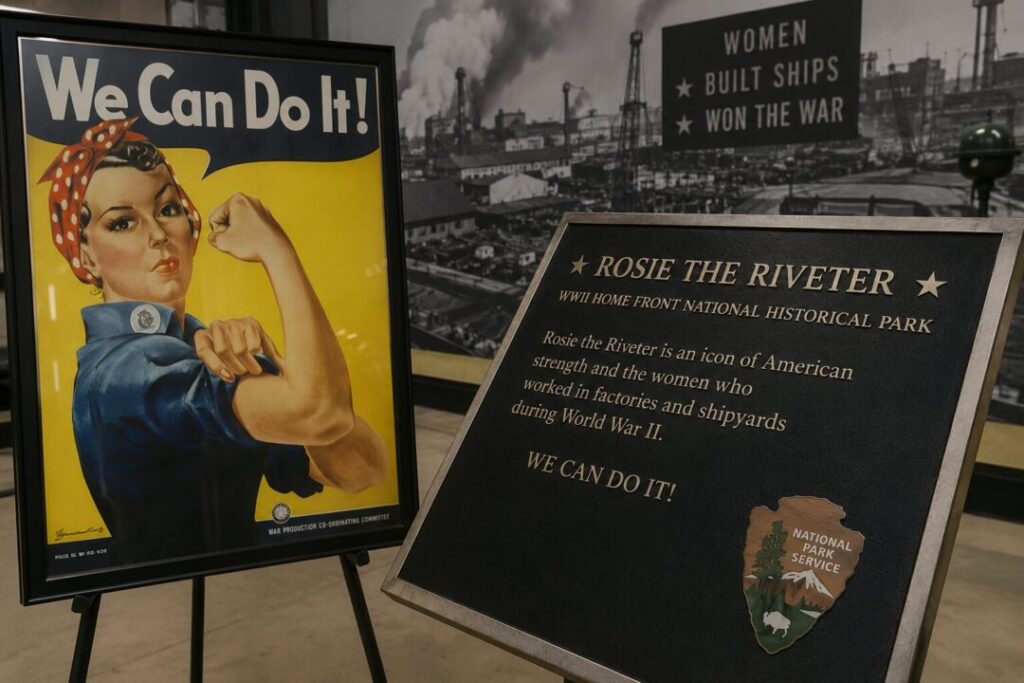
You know the image. A woman in coveralls, hair tied in a red bandana, sleeve rolled up, flexing her arm under the words “We Can Do It!”
That's Rosie the Riveter. But Rosie wasn't one woman. She was more than six million of them.
When American men shipped off to fight, factories and shipyards emptied out. Someone had to build the planes, tanks, and ships that would win the war.
Women stepped in. They learned to weld, rivet, and machine parts most of them had never heard of before.
They kept America's war machine running, and they proved they could do work the whole country had told them they couldn't.
Jeanne Gibson was one of those women.
It is with profound sorrow that we bid farewell to Jeanne Gibson, our beloved Rosie the Riveter, has passed away today, July 29, 2026, at the remarkable age of 100. With her passing, we don't simply mourn the loss of a beloved friend, we honor the life of an American hero whose… pic.twitter.com/XrzSJcNjl2
— Steve Clemans (@Steve09812) July 30, 2026
In the summer of 1944, Gibson boarded a bus in Minnesota with her best friend. Their destination was Seattle. Their job was building warships.
At Todd Pacific Shipyards, Gibson learned to weld. She later said it was a lot like sewing, just with molten metal instead of thread.
She helped build destroyers that carried American sailors into battle. Then she kept serving.
Gibson moved to Juneau, Alaska, to work with the Army Transportation Corps. She helped prepare cargo manifests that kept supplies moving across the Pacific until the war finally came to an end.
Most people would call that a full life already. Gibson was just getting started.
After the war, people told her a woman couldn't go far in education. She'd heard that before.
She earned her bachelor's degree anyway. Then her master's. Then a Ph.D. in educational psychology from UC Berkeley.
She spent 30 years teaching. She also learned to fly and earned her private pilot's license, because why not?
Gibson never let her Rosie story fade into an old photograph. For years, she showed up nearly every Friday at the Rosie the Riveter WWII Home Front National Historical Park in Richmond, California.
She met visitors. She told her story. She reminded young girls that no dream was too big.
Gibson was one of only a handful of original Rosies still alive to tell that story firsthand. Most of the six million are gone now. Every year, there are fewer left who lived it.
In April 2024, Gibson traveled to Washington, D.C. She joined 27 other surviving Rosies at the U.S. Capitol.
Congress gave them the Congressional Gold Medal, one of the nation's highest civilian honors.
It was a long overdue thank-you to the women who kept the country running while the men were at war.
Gibson kept going even after that. She flew to Normandy for D-Day anniversary events. She greeted visitors at Pearl Harbor on National Rosie the Riveter Day. She turned 100 this spring and didn't slow down one bit.
Just days before she died, the Bay Area honored her one more time. She received a Wall of Honor banner at the park she loved. She was also recognized on the field at a San Jose Earthquakes soccer match, celebrated alongside other local heroes in front of a packed stadium.
Then, quietly, her remarkable life came to a close.
Jeanne Gibson answered her country's call at 18 and never really stopped answering it.
Welder. Soldier. Scholar. Teacher. Pilot. Storyteller. Rosie.
She proved that courage doesn't come with an expiration date. Neither does purpose.
Rest easy, Jeanne. You more than earned it.
The opinions expressed by contributors are their own and do not necessarily represent the views of Nevada News & Views. Digital technology was used in the research, writing, and production of this article. Please verify information and consult additional sources as needed.