The Lombardo Firewall Is Gone. Here’s Who Gets Burned First.
Before you know it, Gov. Joe Lombardo will no longer be governor. And some Nevada businesses are about to find out what that means.
For four years, Lombardo was the last line of defense against Democrat extremes. He vetoed 75 bills in 2023. Then he broke his own record with 87 more in 2025.
That’s 162 bills that never became law.
Now Aaron Ford is moving into the governor’s mansion. Democrats hold 32 of 42 seats in the Assembly and 13 of 21 in the Senate. The 2027 session starts Feb. 1.
Let’s be clear. Nothing’s been decided. Old bills don’t come back to life on their own. They have to be filed again and passed again.
But if you want to know who should be nervous, look at the bills Lombardo killed. And look at what Ford promised on the campaign trail.
Here’s the worst-case scenario.
Housing Is First in Line
Corporate homebuyers have the biggest target on their backs. Ford named corporate home purchases as a target again in a Nov. 17 interview.
State Sen. Dina Neal’s 2023 bill would have capped corporate investors at 1,000 homes a year. Her 2025 version dropped that to just 100.
Landlords have more to worry about than rent.
Past bills went after the summary eviction process. They also let tenants hold back rent over repairs and limited access to eviction records.
That means higher costs to deal with bad tenants and less information to screen new ones.
Is statewide rent control on Ford’s agenda? Not officially. Not yet.
But don’t be shocked.
Health Care Gets Hit from Four Sides
Drug makers face price limits. Hospitals face staffing mandates. Insurers face new coverage and approval rules. Medical debt collectors face limits on how they collect.
Lombardo warned the drug price bill could cost Nevada Medicaid rebates and create legal headaches for providers.
Those problems don’t go away just because the governor changed.
Every Employer With 50 Workers
The paid leave bill Lombardo vetoed, AB388, would have covered any employer with at least 50 workers.
That’s casinos. Restaurants. Retailers. Contractors. Clinics.
If you have 50 people on payroll, it could be you.
Past bills on wage payments and garnishment add even more risk.
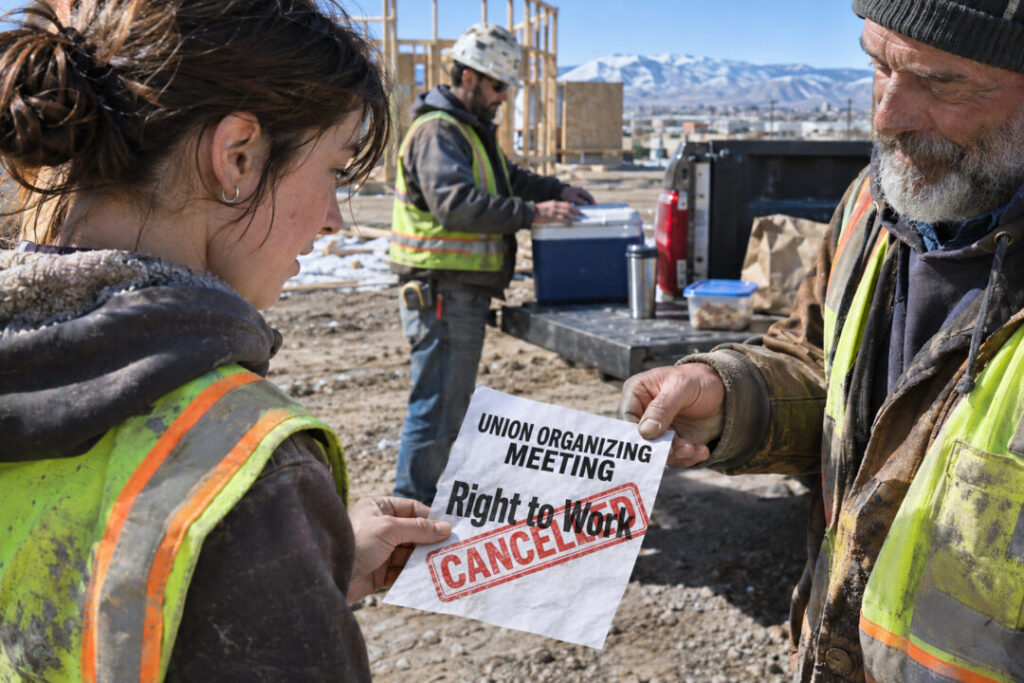
Right-to-Work Is on the Chopping Block
This one’s real. And it could be the biggest of all.
Nevada has been a right-to-work state since 1953. That means nobody can be forced to pay a union just to keep their job.
Voters approved it in 1952. Then they turned back repeal attempts in 1954 and 1956.
Ford wants it gone. He put repeal in his economic plan. He also told a podcast hosted by construction union leaders that he’d sign it.
Here’s what makes it dangerous.
Repealing right-to-work isn’t a tax. It doesn’t need two-thirds. A simple majority will do.
Democrats have that in both houses. And now they’ve got a governor ready to sign.
Non-union construction companies and contractors could take the hardest hit.
Picture a small contractor in Henderson or Sparks with 20 guys on the crew. He’s been competing just fine.
After repeal, unions could negotiate contracts that make every worker pay dues.
That means more money and more muscle for the unions. And more muscle means more pressure on non-union shops, from organizing drives to bidding on public jobs.
Ford says right-to-work holds down wages. He claims workers in states without it earn about $1,600 more a year.
But Nevada’s union membership is already above the national average. Right-to-work hasn’t exactly crushed the unions here.
The Legislature has rejected at least 10 bills to repeal or change the law since 1959. That’s a good track record.
But it’s never been tested with a governor who campaigned on repeal.
The Tax Wall Has a Crack in It
Democrats are one vote short of two-thirds in the Senate. That’s the number needed to raise taxes.
They already have two-thirds in the Assembly. Ford also says he won’t raise taxes.
But one vote isn’t much.
Democrats need just one Republican senator to cross over. And they’ve found those votes before.
In 2021, four Republican senators and two Republican Assembly members joined Democrats to pass a new mining tax.
Back in 2015, plenty of Republicans voted for Gov. Brian Sandoval’s commerce tax.
So “no new taxes” depends on every single Republican senator holding the line. Every vote. All session long.
And don’t forget the mandates.
Price limits and employer mandates don’t need two-thirds. A mandate is just a tax that never shows up on the ballot. The business pays first. Then you pay at the register.
Gaming and mining probably aren’t facing new taxes right away. But they’d still get hit by any new leave or wage rules.
Data centers are on the radar too, as fights over power, water and land heat up.
Cracks in the Blue Wall
Supporters say these bills protect renters, patients and workers. Fair enough. Nobody likes high rent or surprise medical bills.
And Democrats aren’t all on the same page.
Assemblywoman Tracy Brown-May and Sen. Roberta Lange opposed the paid leave bill last time. Neal’s housing bill ran into a two-thirds vote problem.
So the details will matter.
Who counts as a “corporate buyer”? Who pays for paid leave? Does tenant reform stay narrow, or does it grow into rent control? Does right-to-work repeal get a vote at all?
The goose isn’t cooked yet. But the oven’s preheating.
If your business is on this list, waiting until February to pay attention is waiting too long.
The opinions expressed by contributors are their own and do not necessarily represent the views of Nevada News & Views. Digital technology may have been used in the research, writing, or production of this article. Please verify information and consult additional sources as needed.