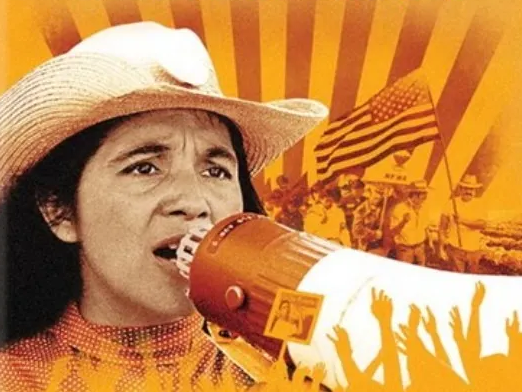
The truth about survival, fear, and the reality behind speaking up.
By Grecia Figueroa
Labor leader Dolores Huerta has passed away at the age of 96. Her decades in public life leave a legacy that people will view through different political lenses. But there is room, across those differences, to pause with compassion and listen to what she chose to share in her own words, recognizing the humanity that connects us beyond politics.
Her words moved me to reflect on the trauma millions of survivors of sexual abuse carry in silence—and the courage it takes to speak up so that the next generation inherits more freedom and less fear.
This essay was originally written in March 2026.
At nearly 96 years of age, Dolores Huerta, one of the most influential voices in the U.S. civil rights movement, broke her silence about the abuse she experienced at the hands of Cesar Chavez. While many people are standing by her and respect her for coming forward, many others are questioning why she stayed silent for 60 years.
I get it. It’s easy for many who have never experienced anything similar (whether it was sexual harassment, assault, or any type of abuse) to question why. I’ve noticed even women will say things like, “I would have reported immediately,” “If she was sexually assaulted, why did she stay close?” “Why is she just coming forward now?”
But I would like for you to look at this from another lens.
In the words of Justin Baldoni:
“We’ve been asking the same question for years, ‘why didn’t she leave?’…but the real question is, ‘why do we keep allowing men to harm?’”
The price of speaking up is high. To paint a real picture for you, many survivors will consider taking their own lives because the trauma is too much to bear and doing so can seem like a better option than choosing to come forward.
The data reflects that reality.
Studies show that survivors of any type of sexual abuse or harassment are 2 to 3 times more likely to experience suicidal thoughts or attempt suicide, and research shows about 1 in 4 have seriously considered taking their own life.
Just think about that for a moment.
To be so terrified of something, that ending your own life feels like the better option, even if you never had a suicidal thought in the past.
Coming forward isn’t just hard, it’s terrifying to the core. It’s making a decision you know will forever change the trajectory of your life. A choice that could derail your livelihood, your career, your mental health, all while exposing the hardest type of trauma that your mind has been working overtime to suppress. It means reopening something you’ve been trying to bury just to survive, and being forced to relive it time and time again.
Relive it every time someone questions it, relive it when someone who wasn’t there claims, “it didn’t happen,” relive it when someone else tries to attribute ulterior motives to you that never existed. It goes hand in hand with the indignation of constantly asking yourself, “Why did it have to happen to me?”. It comes with grieving who you were before the trauma, and so much more.
Dolores Huerta was not planning to come forward, but she says she did so after learning two other women came forward with abuse allegations that happened when they were teenagers. So she spoke up to help validate their claims against Chavez.
This adds another layer to Dolores’ experience.
Realizing you weren’t the only one, and that younger women may have also been harmed, is one of the most painful things to carry. And if they come forward after you do, it brings the heavy realization that, had you stayed silent, they might have been left to carry that trauma alone for the rest of their lives.
So, when people wonder why she didn’t come forward before or why it takes women years to speak up, this is why.
The response we are seeing from skeptics right now is why.
If, in this day and age, we are choosing to question woman in her 90s who many have admired for decades, then think about what that would have been like 60 years ago. How can we ensure a better society for our children if if this is how we are still behaving. The 1960’s was a time when women were told to stay quiet, “calladita te ves más bonita,” in English that means “quieter you look prettier”.
Told not to say anything so they “don’t embarrass the family,” and in Dolores’ case, risking the entire farmworkers movement she was actively working hard for.
Chavez was also her boss.
In her statement, Dolores says, “I didn’t feel I could say no…the second time I was forced, against my will, and in an environment where I felt trapped”
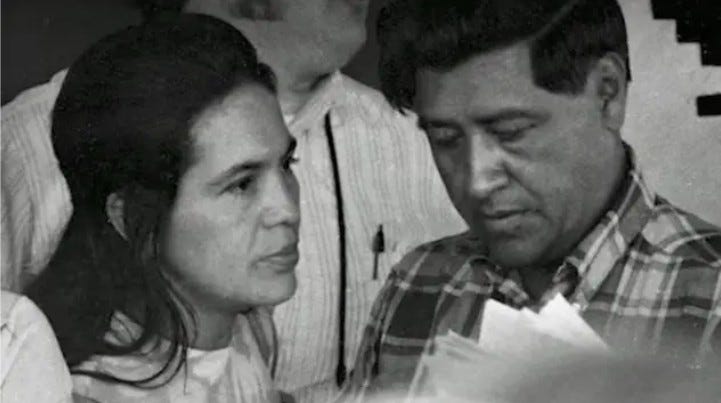
Dolores Huerta and Cesar Chavez, late 1960’s, around the time she was 36 years old and experienced the alleged sexual assault by Chavez
Staying silent carries an excruciating kind of pain. It slowly takes over your life. I can’t imagine what it means to carry that for 60 years, when even a single year can push someone to a place of deep despair and hopelessness.
So next time you question why a woman took so long to report, ask yourself: what was the alternative? What did she have to lose? What was she trying to protect? What was she afraid of?
Then put yourself in her shoes. For a moment, imagine being told that if you speak up about what someone did to you, everything about who you are could be taken away.
Your experience becomes something for others to dissect, question, and judge. People draw conclusions without ever hearing your testimony, without even knowing you.
You could be blamed for what happened, even if you always said no. Your name gets tossed around in comment sections, dehumanizing you, flattening your identity and mocking your trauma.
They judge the way you looked, the way you dressed, the things you said, or how you coped, all during a time when you were only trying to survive.
So please, think about that next time you wonder why a person kept silent. The point is, even if you don’t want to believe a survivor immediately, that’s fine, use your discernment, no one is asking you to. But there’s a difference between not believing and choosing to be hostile to someone for speaking up.
I often also think about men who may experience any kind of SA, because if we are still not believing women, how much longer will it be for society to believe men or people in the LGBTQ community who are also survivors.
Sexual harassment, assault, and abuse are not just women’s issues, they are human ones.
But as difficult as it may be, when a survivor speaks, something shifts. There is a clarity that comes with finally naming what was done to you.
In Dolores’ statement, one of the most powerful and painful paragraphs reveals exactly that kind of clarity:
“I have never identified myself as a victim, but I now understand that I am a survivor — of violence, of sexual abuse, of domineering men who saw me, and other women, as property, or things to control.” – Dolores Huerta
Naming the harm done doesn’t undo it. Not even close. But it frees something inside you.
So today, I choose to hold space and believe Dolores and the other survivors. I choose to hold space for any survivor who is still silent, still afraid. For those standing at the edge of an insurmountable decision of whether to speak up or not. For those who have spoken up and are experiencing the cruel retraumatization of their experience. I hold space because speaking up should feel safe. Because speaking up is, at its core, the beginning of healing.
And lastly, I want you to remember this:
Movements for justice are made stronger because of your voices, not in spite of them.
With love,

The opinions expressed by contributors are their own and do not necessarily represent the views of Nevada News & Views.