Someone Cast Grandma’s Vote, And It Wasn’t Grandma
Lucy Corrato didn’t vote. She hadn’t voted in 30 years.
But the records say she did.
That should alarm every senator in Washington. Instead, Elizabeth Warren is going after the people trying to stop it.
@ElizabethWwxf a/k/a Pocahontas is mad about EIN’s Protect Vulnerable Voters toolkit https://t.co/36D6E0IaUY to alert the public to the threat of political operatives stealing the votes of elderly residents in nursing homes. So she’s sending a letter to CMS Director @DrOzCMS demanding to know if he talked to ME or to @EIwatchdogs because IF HE DID that is TERRIBLE, don’t you know?
and, of course, she’s going after @EIwatchdogs instead of trying to protect vulnerable residents of nursing homes…and the thing that NEVER happens….happened….again
https://t.co/yPVWm3sWmTThese lefties really don’t care about anything other than being able to be left alone to cheat however they can….
@DC_Draino @seanmdav @Joeoltmann @greg_price11
— Cleta Mitchell (@CletaMitchell) October 27, 2026
In July, the Centers for Medicare and Medicaid Services sent new guidance to nursing homes. CMS is run by Dr. Mehmet Oz.
It told residents they have the right to vote. They also have the right not to vote.
And staff can’t coerce them or improperly influence their choice.
That’s it.
In August, 13 Democrat senators led by Warren and California’s Alex Padilla wrote to Oz.
They called the memo an “attempt to intimidate nursing home staff” from helping residents vote.
They demanded he kill it.
And now Warren’s back for more.
This week, she and seven other Democrats sent Oz another letter.
They want to know if CMS talked with the Election Integrity Network, the group founded by veteran election lawyer Cleta Mitchell.
Warren told WIRED, “This is as low as it gets.”
Really? Talking to a group that wants to protect seniors is “as low as it gets”?
Here’s what Mitchell’s group actually did: it put out a Protect Vulnerable Voters toolkit.
The toolkit tells families to ask questions.
Who’s helping Mom register? What protects residents with memory loss? Are any candidates or political groups getting special access?
Those are questions any son or daughter should ask.
Mitchell reiterated the point, saying “We need to make sure that people who live in nursing homes are not having their votes stolen.”
Now back to Lucy.
In 2017, the Philadelphia Inquirer investigated St. Francis, a nursing home in Darby, Pennsylvania.
Lucy was 91. Her son Nicholas said she’d refused to vote for decades because she didn’t want jury duty.
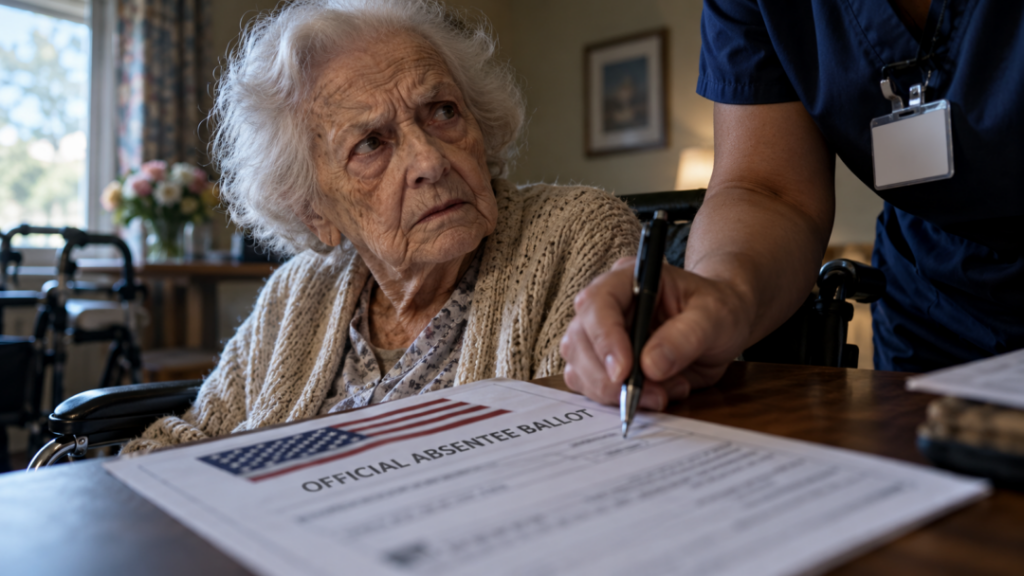
Yet she was registered on the last day before the May primary. And she voted absentee.
Someone else signed her ballot application.
They signed in the spot for voters too sick or disabled to sign.
But Nicholas had video of his mother signing her own name with no trouble at all.
And Lucy wasn’t the only one.
Thirty-four people at that nursing home’s address voted in that primary. Every one of them absentee.
Reporters found several applications that appeared to be filled out by the same hand.
When Nicholas complained, he said a staffer told him things “fall through the cracks sometimes.”
But potentially thirty-four times? That’s a lot of cracks.
Democrats say this situation is rare, and that the memo scares staff away from helping seniors vote.
But even Oz told Warren in September that helping a resident request a ballot or get to the polls “is not the type of conduct that would give rise to a voter fraud investigation.”
Nobody’s stopping anyone from helping Grandma vote.
The memo is meant to stop people from voting for Grandma.
If Democrats have a problem with that, they should say why.
Election Day is Tuesday. If you have a loved one in a care home, call them today.
Ask if they’re voting. Ask if anyone’s touched their ballot. Ask who.
Because their vote has always, and should always, belong to them.
Not to a staffer. Not to a campaign.
And not to a senator more worried about the watchdogs than the thieves.
The opinions expressed by contributors are their own and do not necessarily represent the views of Nevada News & Views. Digital technology may have been used in the research, writing, or production of this article. Please verify information and consult additional sources as needed.