Second Circuit’s Green Card Loophole Just Got Slammed Shut
The Second Circuit Court of Appeals spent years making it harder to remove criminal aliens. The Supreme Court just told them they were wrong.
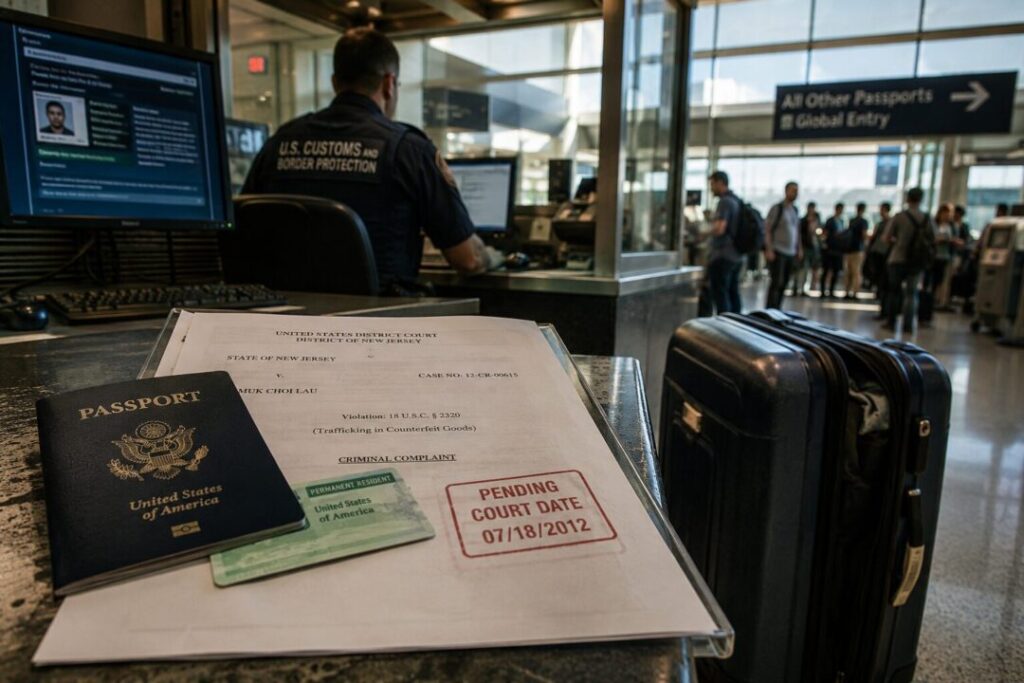
The 6-3 ruling came down this week in the case of Muk Choi Lau – a green card holder who picked up a trademark counterfeiting charge in New Jersey in 2012, then jumped on a plane to China while the case was still open.
When he landed back at JFK, border officers knew about the pending charge. They let him in on parole but flagged him as an applicant for admission rather than a returning resident in good standing.
Smart call. He later pleaded guilty. The government moved to remove him.
That’s when the Second Circuit stepped in to make things complicated.
Their position: border officers needed “clear and convincing evidence” of the crime right there at the checkpoint before they could apply the tougher inadmissibility standard.
Not a charge. Not a guilty plea waiting to happen. Proof. On the spot. At the airport. While planes are still landing.
That’s not law. That’s a roadblock dressed up as law. And the Supreme Court said so plainly.
Justice Clarence Thomas wrote the majority opinion. The statute says if a person “has committed” a qualifying crime, the rules change.
It doesn’t say “has been convicted.” It doesn’t say “prove it to us right now.” Officers can treat the person accordingly, and the full evidentiary process happens later – at the removal hearing, where it belongs.
Six justices got it. Three didn’t. No prizes for guessing which three.
The dissenters argue the ruling puts long-time green card holders at risk and lets the government go back and build its case after the fact.
That sounds reasonable until you remember what we’re actually talking about: people with serious criminal charges who left the country and then tried to walk back in like nothing happened.
The Constitution doesn’t require border agents to pretend a counterfeiting charge doesn’t exist because a trial hasn’t wrapped up yet.
Green card holders get real benefits. Permanent residency. The right to work. A path to citizenship.
Those benefits come with an expectation: don’t commit serious crimes. If you do, you don’t get to hide behind procedural hurdles that the Second Circuit invented to slow the process down.
The Supreme Court cleaned this one up. The Second Circuit needed the correction. And the rest of us are safer for it.
The opinions expressed by contributors are their own and do not necessarily represent the views of Nevada News & Views. Digital technology was used in the research, writing, and production of this article. Please verify information and consult additional sources as needed.