(Nevada Policy) – The United States is facing a pressing shortage of healthcare professionals.
With a growing aging population and aging physician workforce, new professionals are not entering the workforce quickly enough to meet patient demand.
The combination of these and additional drivers has caused the projected physician shortage to reach nearly 150,000 by 2038.
The issue is particularly acute in rural areas where access to professional appointments can take weeks or months.
Internationally Trained Physicians Offer a Practical Workforce Solution
To address this problem, many states decided to leverage Internationally Trained Physicians (ITPs) into their medical workforce.
ITPs are often qualified and licensed professionals from abroad who cannot practice the full scope of their skills in the United States because of medical residency requirements and burdensome licensure procedures.
Consequently, many of these are either underemployed in the medical field or in a completely different field.
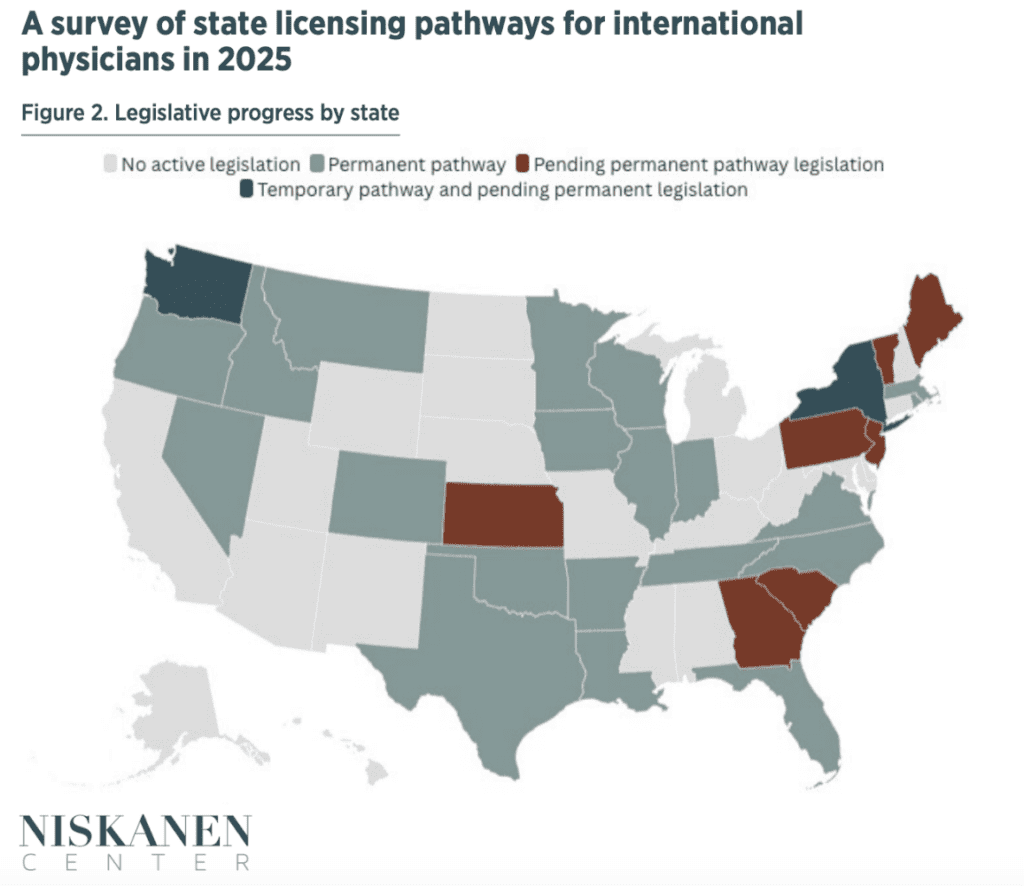
However, in recent years, 20 states, including the Silver State, have implemented policies to tap into this workforce and meet the demands of their residents.
How Nevada’s SB 124 Expands Medical Licensure for Foreign-Trained Doctors
During the 83rd legislative session, Senator Fabian Doñate successfully sponsored SB 124, enacting this legislation in Nevada.
Under the provisions of this bill, licensed physicians from qualified foreign medical schools will be granted a limited license.
The prerequisites include a foreign license in good standing, a full-time job offer in the state, and completion of qualifying medical exams.
After completing a three-year residency, the professionals will be granted an unlimited license and be able to practice as local physicians.
Senator Doñate identified at least 60 foreign professionals in Clark County who were underemployed because of the current occupational licensure restrictions.
Some physicians testified during the hearing, emphasizing how dramatic of a change SB 124 could be for Nevada’s medical workforce.
Low Residency Match Rates for International Medical Graduates Leave States Searching for Solutions
However, the problem does not lie solely on the readily trained physicians from other jurisdictions.
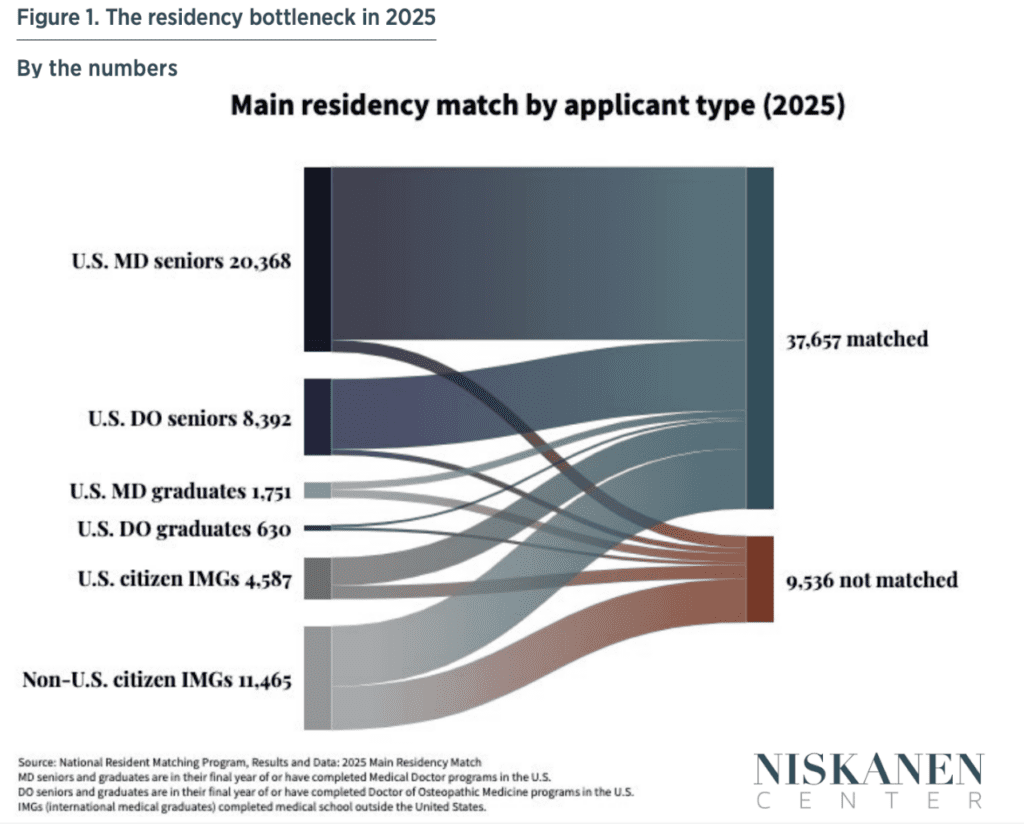
International medical graduates (IMGs) often face much lower match rates to the available residency programs, despite having completed identical coursework and examinations.
In 2025, U.S. MD seniors and U.S. DO (Doctor of Osteopathic Medicine) seniors had match rates of 94 percent and 93 percent.
By contrast, just 68 percent of U.S. citizen IMGs and 61 percent of noncitizen IMGs matched to first-year residency programs.
The limited number of available residencies each year and the financial costs associated are largely subject to federal policy, meaning any change would require Congressional action and investment.
Hence, states have emerged as policy labs, testing different ways to integrate ITPs into their systems.
To date, 30 states have successfully passed or are considering legislation of this nature.
What’s Next for Physician Workforce Reform in Nevada and Other States
Tapping into the ITP workforce is a commendable first step for Nevada which will decrease the entry barriers for qualified professionals.
Potential next steps can include adding a rural practice requirement as seen in Illinois, Massachusetts, and Idaho, automatic conversion into a regular license after the expiry of the limited license, like in Wisconsin, or expansion of the legislature to more medical specialties.
These approaches will build on the success of SB 124 granting Nevadans better access to healthcare, especially in the areas that feel the shortage the most.
The opinions expressed by contributors are their own and do not necessarily represent the views of Nevada News & Views.