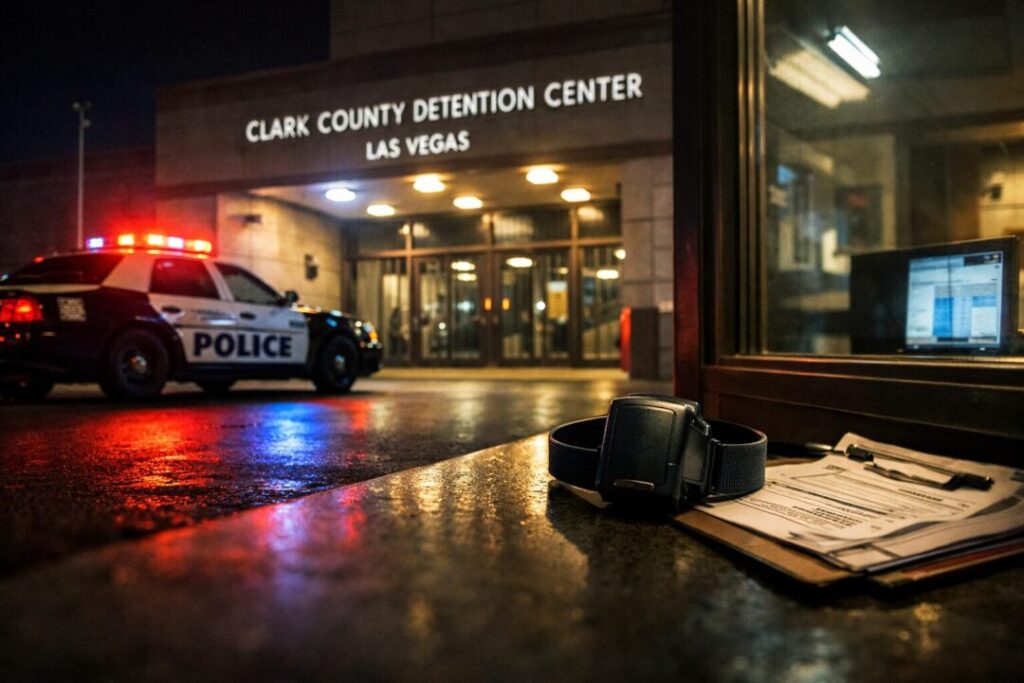
If a man with 35 arrests is about to walk out of jail, somebody has to make a decision.
In Las Vegas, Sheriff Kevin McMahill decided the public’s safety comes first.
🚨 BREAKING: Nevada Sheriff Kevin McMahill is being praised nationwide for REFUSING to release a convicted felon with 35 prior arrests — despite his release being ordered by a leftist judge
He's now being threatened with CONTEMPT for protecting his county.
BRAVO, SHERIFF! 👏🏻🇺🇸 pic.twitter.com/7GVM8GyHsI
— Eric Daugherty (@EricLDaugh) March 15, 2026
The case centers on Joshua Sanchez-Lopez, a repeat offender with a long criminal record.
Police say his history includes stolen vehicles, weapons charges, evading police, and involuntary manslaughter.
Earlier this year he was arrested again in connection with a stolen vehicle.
Judge: Let him out
Las Vegas Justice Court Judge Eric Goodman set bail at only $25,000 and ordered Sanchez-Lopez released into Metro’s electronic monitoring program once the bond was posted.
That usually means house arrest with an ankle monitor. But this time the sheriff said no.
Metro officials refused to release Sanchez-Lopez, citing Nevada Revised Statute 211.250, which allows the sheriff to deny certain releases if they create an “unreasonable risk to public safety.”
Sheriff McMahill and his command staff concluded that risk was obvious.
Investigators pointed to the suspect’s criminal record and social media posts where he allegedly showed off guns and bragged about evading police.
Metro has already blocked 14 similar releases in 2026, according to 8 News Now, when officials believed electronic monitoring would not adequately protect the public.
In other words, this was not a political stunt. It was a judgment call. And the sheriff made it.
The legal battle that followed
Judge Goodman warned the department it could face contempt of court for refusing to follow the release order.
Metro’s lawyers pushed back.
Assistant general counsel Mike Dickerson argued that the sheriff cannot be punished for following state law and protecting officers and residents.
The dispute is now headed to the Nevada Supreme Court.
Metro filed a petition on March 9 asking the high court to clarify who ultimately controls pretrial release decisions.
Public defenders argue the sheriff’s refusal undermines judicial authority and the constitutional rights of defendants.
Supporters of the sheriff see something else. They see a law enforcement leader willing to take responsibility for public safety.
Why this issue keeps resurfacing
This conflict did not appear overnight.
Over the past decade, Nevada lawmakers have steadily pushed the criminal justice system toward easier pretrial release.
The biggest turning point came in 2020, when the Nevada Supreme Court ruled in Valdez-Jimenez v. Eighth Judicial District Court that judges must consider a defendant’s ability to pay bail.
The decision shifted the system away from cash bail and toward release with minimal conditions.
Then in 2021, the Democrat-controlled Legislature passed additional reforms encouraging judges to use the least restrictive conditions, such as release on recognizance or electronic monitoring.
Supporters say the goal is fairness. Critics say it creates a revolving door.
Real cases that haunt this debate
Several Clark County cases have fueled those concerns.
In 2021, Vanessa Harvey was released after a battery case without posting her $5,000 bail. Two weeks later prosecutors say she beat a mother of eight to death with a metal pole.
Also in 2021, Rashawn Gaston-Anderson was released after a nonprofit group posted his $3,000 bail. Six days later he attempted to rob a Chinatown restaurant and shot a waiter 11 times, according to the Las Vegas Review-Journal.
In 2023, Aaron Cole was released on his own recognizance after an assault charge. Four days later police say he stabbed a man to death on an RTC bus.
Each case reignited the same question: How much risk should the system accept before trial?
The sheriff’s job is simple
Courts weigh legal rights. Lawmakers write the rules.
But sheriffs carry a different burden. Their job is to protect the public.
Sheriff McMahill looked at the record. He saw a man with dozens of arrests and a history of evading police.
And he made the call many residents hope every sheriff would make: Not this time.
Now the Nevada Supreme Court may decide where the line between the courts and law enforcement really sits.
But one thing is already clear. Sheriff McMahill chose caution over headlines and public safety over political pressure.
For the people living in Clark County, that decision may matter more than any legal argument now playing out in court.
The opinions expressed by contributors are their own and do not necessarily represent the views of Nevada News & Views. Digital technology was used in the research, writing, and production of this article. Please verify information and consult additional sources as needed.