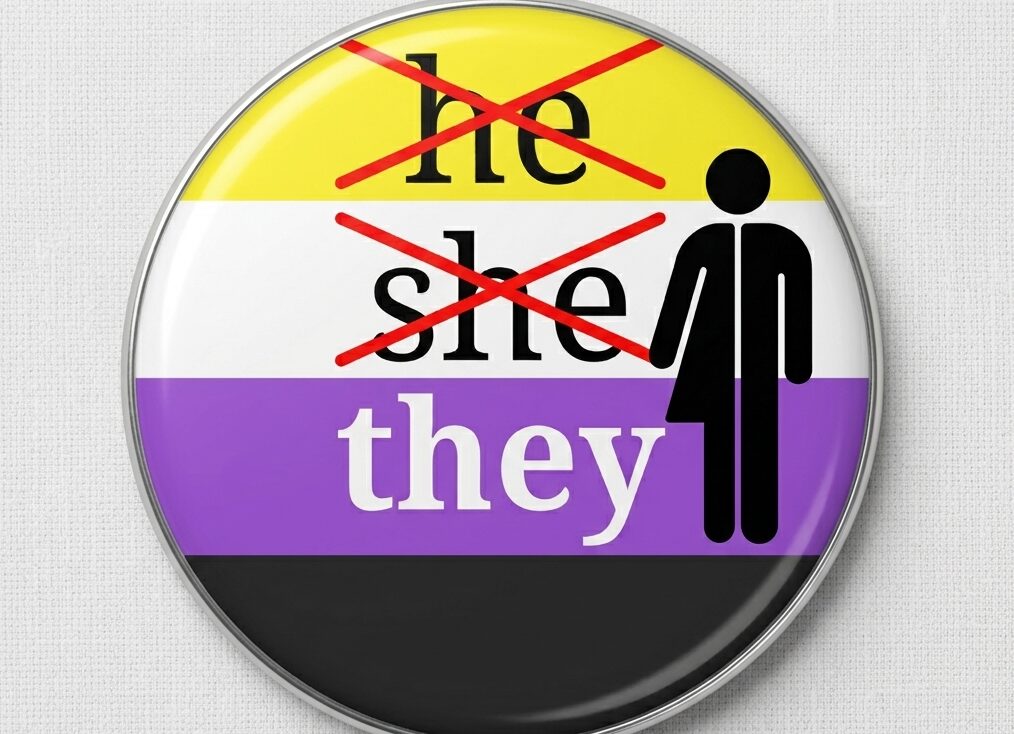
Reno is about to vote on something that sounds small but says a lot. This Thursday, July 16, the Reno City Council will decide whether to strip gendered words like “he” and “she” out of the city charter — that's basically Reno's constitution, the document that spells out how city government runs.
About 70 instances of “he or she” and “his or her” would get replaced with words like “the person” or a job title.
Here's the catch. The charter committee didn't call this a simple cleanup.
In their own words, the goal is:
“to strike all instances of heteronormative language within the Reno City Charter to ensure that the City of Reno's government document recognizes all its citizens and reflects inclusivity goals.”
That word — heteronormative — is doing a lot of heavy lifting it was never built for.
Words Have Meanings, and This One's Been Hijacked
Think about opposites for a second. The opposite of “hetero” is “homo.”
Heteronormative is a word about sexual orientation — it describes the assumption that being straight is the default. It has nothing to do with “identity” or whether a legal document uses “he,” “she,” or “the person” to describe a city manager's job duties.
Saying “he or she is responsible to the City Council” doesn't say anything about who someone loves. It's just grammar. Calling that heteronormative isn't inclusivity — it's linguistic pillaging. It takes a word that means one specific thing and stretches it to cover something else entirely, muddying what both words actually mean.
Gender pronouns describe male and female. Sexual orientation describes attraction. Those are two different topics, and folding one into the other doesn't make government documents clearer. It makes the language less precise — which is the opposite of what good writing and good law are supposed to do.
There's an irony here worth sitting with.
A small number of people don't want to commit to identifying as either male or female, based on their own personal feelings about gender identity. That's their choice to make. But the fix being proposed doesn't just make room for that choice — it erases “he” and “she” for every single person covered by the charter, whether they wanted that change or not.
In other words, a minority who won't conform to the male-female binary themselves are pushing a rule that makes everyone else conform to something new instead. It's conformity for thee, not for me.
What Would Actually Change
Setting the buzzword aside, here's the real substance. In Article 1, a line currently reads that a violator “shall automatically forfeit his or her office.”
Under the new language, it would read “shall automatically forfeit the person's office.”
Elsewhere, “He or she is responsible to the City Council” would simply become “The City Manager is responsible to the City Council.” That's it. Titles and neutral phrasing swapped in for pronouns.
The charter committee already approved this 10-0.
Committee member Willie Puchert, speaking for himself and not the committee, called it a straightforward fix:
“This is a housekeeping resolution that updates the language,” he said, adding, “I think we should do what we can to be respectful of others.”
That's the other side of it, and it's worth hearing. Nobody's arguing city documents can't be updated. The question is whether the reasoning behind the update — branding decades-old grammar as “heteronormative” — reflects sloppy thinking or something more deliberate about reshaping how government talks about its citizens.
Nevada cities have handled this question before without any of this rewrite. The Sparks city charter, for instance, already covers the same ground in one plain sentence:
“The masculine gender includes the feminine and neuter genders.”
Whatever the hell that means. Blue also means pink and some grays.
But hey, they got it done with no renaming, no relabeling old language as exclusionary — just a simple clause clarifying that the pronouns apply to everyone. It raises the question of why Reno needs a wholesale rewrite, and a loaded new label for the old text, when a one-line clarification already does the job elsewhere in the state.
Reno Would Be First in Nevada
Carson City, Elko, Henderson, Las Vegas, North Las Vegas, and Sparks all still use “he/she” and “his/hers” in their charters. If Reno passes this, it would be the first Nevada city to make the change — and it wouldn't happen overnight.
Because charter changes need state approval, Reno would have to send a bill to the Nevada Legislature.
Reno tried something similar with Senate Bill 12 back in 2023, and it died without a vote. That bill wasn't just about pronouns, either — it also carried an attempt by the city to block a separate change to Reno's ward system that would have eliminated an at-large council seat.
Bundling the gendered-language fix with unrelated council-seat maneuvering is part of why SB12 never got a vote, and it's a pattern worth watching if this resolution heads to Carson City again.
If Thursday's vote passes, the city would try again in the 2027 legislative session.
What Conservatives Can Do
Reno residents can attend Thursday's special council meeting, submit public comment through the city's online form, or reach out directly to their ward's council member before the vote.
And when this heads to Carson City for the 2027 session, that's another chance to ask lawmakers a simple question: does swapping “he or she” for “the person” really require inventing a new definition of heteronormative to justify it?
Words matter. So does making sure government uses them correctly.
The opinions expressed by contributors are their own and do not necessarily represent the views of Nevada News & Views. This article was written with the assistance of AI. Please verify information and consult additional sources as needed.