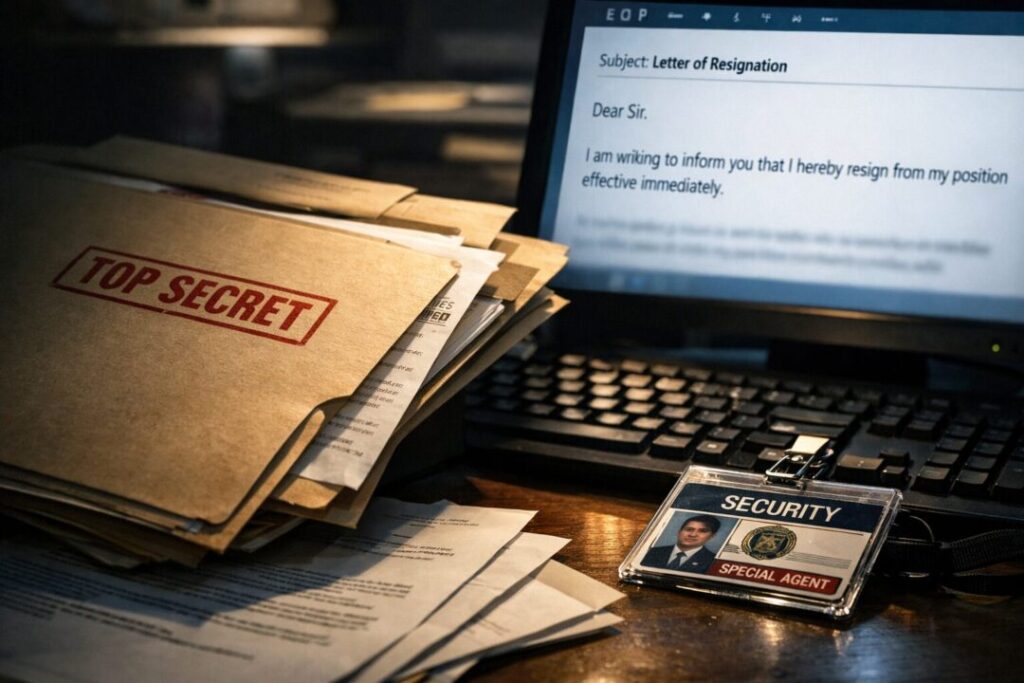
Joe Kent walked out of his post and lit a match on the way out. And if you’ve been watching the headlines, you’d think he was some kind of hero.
Kent, who served as Director of the National Counterterrorism Center, resigned this week in a very public way.
He posted a letter on X saying he could not support the Trump administration’s military action against Iran. He claimed Iran posed no “imminent threat” and even suggested the conflict was driven by pressure from Israel and its allies.
That’s a serious accusation. And it’s one the mainstream media jumped on right away.
Outlets like The New York Times, CNN, and the Associated Press all reported the basics. They quoted his letter. They highlighted his anti-war stance. And many framed the story as a sign of division inside the conservative movement.
But here’s the thing. That’s only part of the story. What’s missing is just as important as what’s being reported.
Within hours of Kent’s resignation, officials from inside the Trump administration pushed back hard.
.@PressSec: “Anyone who has been suspected of leaking or is proven to be a leaker will not be welcome in this administration… there are investigations underway into leakers in this administration, and people will be held accountable for that.” pic.twitter.com/MZxcsqlNG8
— Rapid Response 47 (@RapidResponse47) March 18, 2026
According to reporting from Fox News and the New York Post, Kent had been under suspicion as a “leaker” of sensitive national security information.
Some reports say he had even been cut out of key intelligence briefings months ago. That’s not a small detail. That’s a big one.
Yet many major outlets either buried that information or left it out entirely.
Now, to be fair, these leak claims haven’t been proven in court. There’s no public DOJ case. So yes, it’s still a “he said, she said” situation.
But when senior officials are raising concerns about trust and security, that’s something readers deserve to know. Especially in a role tied directly to counterterrorism.
There’s more. Some critics are also pointing to Kent’s own past statements.
Before this resignation, Kent had repeatedly warned about Iran’s role in supporting terrorist groups. He talked about threats to American troops. He pushed for strong action against those proxy forces.
That doesn’t automatically mean he supported a full-scale war. But it does raise a fair question: What changed?
The media isn’t spending much time on that either.
Instead, many outlets are treating Kent’s resignation like a principled stand. And that’s where things start to feel familiar.
This is the same media that spent years attacking Kent when he was aligned with Trump. Now, suddenly, he’s being presented in a softer light. Why? Because he’s criticizing the president.
That shift should make any reader stop and think.
Look, reasonable people can disagree about foreign policy. Even inside the conservative movement, there’s debate about how far America should go overseas.
But leadership matters. And so does how you leave.
Kent didn’t just resign quietly. He aired his grievances in public, accusing his own administration of acting under outside pressure.
That’s not just a policy disagreement. That’s a serious charge that demands strong proof. When you’re trusted with national security, you don’t get to toss out claims like that lightly.
This isn’t just about one man stepping down. It’s about accountability.
If Kent had concerns, there were ways to handle them internally. Instead, he chose a public exit that gave the media a ready-made narrative.
And they ran with it.
At the end of the day, Kent’s resignation is real. His concerns are real. But so are the unanswered questions.
And those deserve just as much attention.
The opinions expressed by contributors are their own and do not necessarily represent the views of Nevada News & Views. Digital technology was used in the research, writing, and production of this article. Please verify information and consult additional sources as needed.