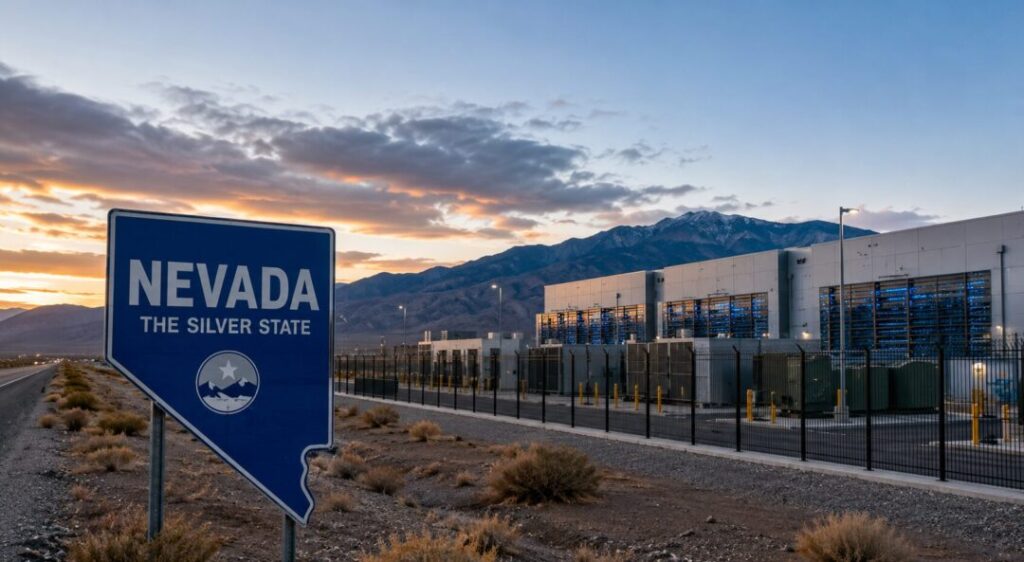
(Gov. Joe Lombardo) – Data centers have become an increasingly important topic in Nevada and across the country. As demand for technology and artificial intelligence continues to grow, so does interest in developing the infrastructure needed to support it.
It’s important we approach this policy conversation carefully, responsibly and with all the facts in front of us.
Data centers present both opportunities and challenges, but it’s our paramount responsibility to ensure that these projects never burden ratepayers, resources or Nevadans and that these projects always serve our state’s long-term interests.
So, what does that mean?
Data centers have been known to use massive amounts of water, strain energy grids and raise electricity costs for surrounding communities. You’ve probably seen stories in the news about local residents in other states reporting low water pressure or huge spikes in their energy bills after a data center gets built.
But the truth is, it isn’t happening in Nevada – because we’ve made it clear that companies investing in Nevada must do so in a way that protects our resources, our communities and our quality of life.
Not all data centers are built the same, and we have the ability to define how these facilities operate before they ever break ground.
Need a news break? Check out the all new PLAY hub with puzzles, games and more!
Through the abatement process at the Governor’s Office of Economic Development, companies must meet strict qualifications and demonstrate that their projects will deliver meaningful economic benefits without placing added burdens on the community.
On the local level, counties and municipalities have discretion over development projects that they want to enter – and those projects need support from the community before they have mine.
My administration has made it clear that projects will only move forward if they have responsible plans in place for water usage, energy generation and infrastructure demands.
The model we support in Nevada is simple:
If a company wants to build here, it needs to bring its own solutions with it.
For example, modern closed-loop cooling systems use dramatically less water than the traditional evaporative cooling method.
Instead of continuously consuming water, these systems recycle it over and over again to cool the servers that power the digital services we rely on – from online banking and health care systems to streaming services and cloud storage.
Behind-the-meter energy systems can be built so that the data centers are producing their own power instead of drawing from the grid that powers Nevada homes and small businesses.
That means families should not see their monthly power bills increase because of a private development project.
And we’re holding data centers to the same environmental standards that any major business or development project must follow – ensuring Nevada’s natural resources are protected for generations to come.
With these safeguards in place, we can ensure Nevadans are benefitting from data center development without negatively impacting their everyday lives.
And those benefits are significant.
Data centers create thousands of construction jobs during development.
Electricians, plumbers, pipe fitters, glaziers, carpenters, heavy equipment operators and countless other tradespeople help bring these projects to life.
These are good-paying jobs that support Nevada families and strengthen our workforce.
Once operational, data centers also require highly trained technicians, engineers, cybersecurity professionals, operations specialists and maintenance personnel to keep these facilities running.
These are long-term careers in a growing industry that position Nevada workers for the future economy.
Then there’s the tax revenue.
Large-scale projects like these generate substantial tax revenues that help fund schools, roads, public safety and local government services.
In some of Nevada’s rural communities, a single major investment can completely transform a county’s long-term financial outlook.
That means more resources for classrooms, better-equipped first responders, improved roads and utilities and stronger local services without placing additional tax burdens on existing residents.
In many cases, these developments also spur additional investment in surrounding areas, helping small businesses and local economies grow alongside them.
I recently attended a groundbreaking ceremony for a data center complex in Storey County, and it perfectly encapsulated everything I’ve been talking about.
This multi-billion dollar buildout needs more than 1,000 construction workers and skilled tradesmen and about 200 full-time employees when completed.
The company has committed more than $175 million toward regional water, wastewater and power infrastructure upgrades that will strengthen the region for years to come.
That is the model we want in Nevada: private-sector investment that creates jobs, upgrades infrastructure, protects taxpayers and leaves communities stronger than they were before.
But if data center developers won’t do what we ask of them, then as long as I’m governor, they won’t be doing business in Nevada.
If companies are willing to invest responsibly, protect our resources, and contribute to Nevada’s long-term success, then I believe we should welcome them.
Because done the right way, data centers are not just buildings filled with servers – they are an opportunity to diversify Nevada’s economy, strengthen our workforce and position our state as a national leader in technology and innovation for decades to come.
“The opinions expressed by contributors are their own and do not necessarily represent the views of Nevada News & Views. This article was originally published via RGJ.com on 6/18/2026.