Sometimes the warning signs are right in front of you. The question is whether anyone’s willing to pay attention.
A new financial report from S&P Global Ratings is raising serious concerns about Brightline’s rail operations in Florida. And those concerns could have big implications for Nevada.
The report shows Brightline’s East line, which runs between Miami and Orlando, is struggling badly. S&P downgraded its debt to CCC-, a level that signals a high risk of default.
That’s not just a small bump in the road.
S&P says the company’s cash reserves have dropped faster than expected. The project lost at least $35 million more than forecast and continues to generate negative cash flow.
In simple terms, it’s spending more than it’s bringing in.
And it gets worse.
S&P warns there is now a “higher probability of a distressed exchange in about six months,” which is financial language for a likely restructuring or default.
They also estimate recovery for investors could be close to zero. In other words, if things go south, investors could lose almost everything.
That’s not speculation. That’s coming straight from the numbers.
Now here’s where this matters for Nevada.
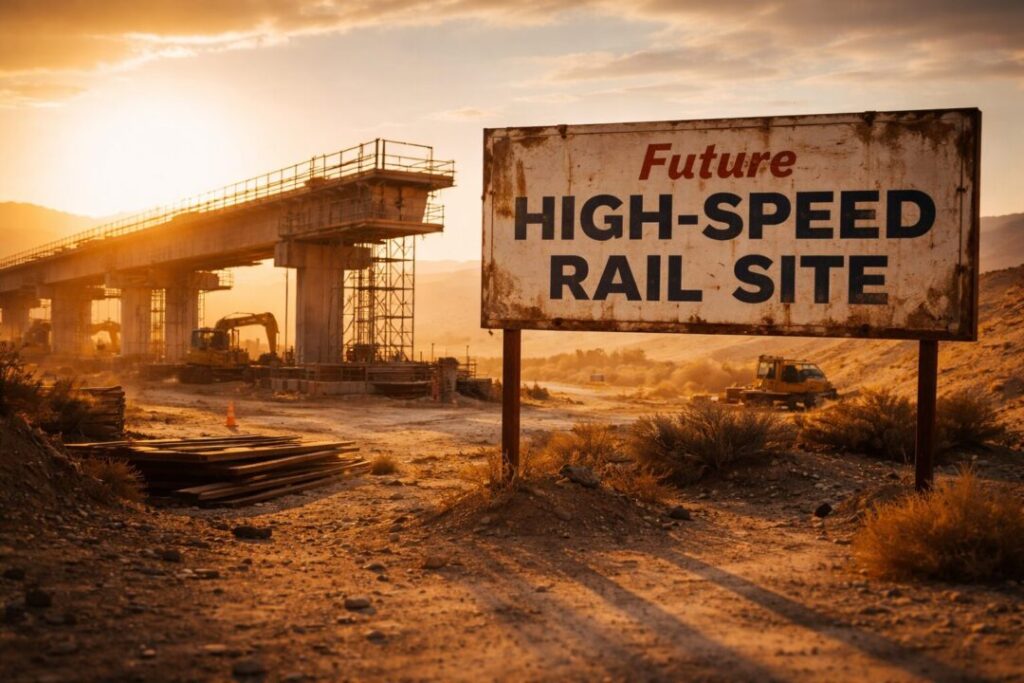
Brightline is also behind the proposed Brightline West project. That’s the high-speed rail line pitched to connect Las Vegas to Southern California, with a planned stop in Victorville.
Supporters say it will reduce traffic, boost tourism, and modernize travel. Critics are, at best, skeptical.
They argue that the financial problems in Florida should serve as a warning before Nevada taxpayers or local governments even think about getting taxpayer money involved.
That’s a strong position, but it reflects a broader concern many conservatives have about large, taxpayer-backed projects.
If a company is struggling to make its first project work, should taxpayers take a risk on the next one?
Supporters of high-speed rail say yes. They argue that infrastructure projects often take time to become profitable and that long-term benefits can outweigh short-term losses.
They also point to environmental benefits and reduced highway congestion.
But critics counter that government-backed projects too often go over budget, underperform, and leave taxpayers holding the bag.
And in Nevada, that’s not just a theory. Voters have seen what happens when projections don’t match reality. Remember the Las Vegas Monorail and Faraday Future?
There are other options on the table, too, such as widening highways, improving airports, and increasing competition in air travel between Los Angeles and Las Vegas.
Those are solutions that already work. They just need to be expanded.
At the end of the day, this comes down to risk. Big promises are easy to make. Paying for them is a different story.
And right now, the financial data is sending a pretty clear message: Before Nevada jumps on board, it might be worth asking whether this train is heading in the right direction.
The opinions expressed by contributors are their own and do not necessarily represent the views of Nevada News & Views. Digital technology was used in the research, writing, and production of this article. Please verify information and consult additional sources as needed.