(Anahit Baghshetsyan) – In 1999, Nevada lawmakers created the Governor Guinn Millennium Scholarship Program (GMSP) to provide up to $10,000 to Nevada high school graduates that want to pursue higher education at a state public institution.
The program was initially designed to be funded through the tobacco settlement fund; however, the funds from the account have become insufficient to finance the eligible students.
A Scholarship Built on Declining Revenue
To bridge the gap between decreasing funds and increasing scholars, lawmakers have transferred substantial funds in from other accounts, meaning the scholarships are now directly financed by state taxpayers.
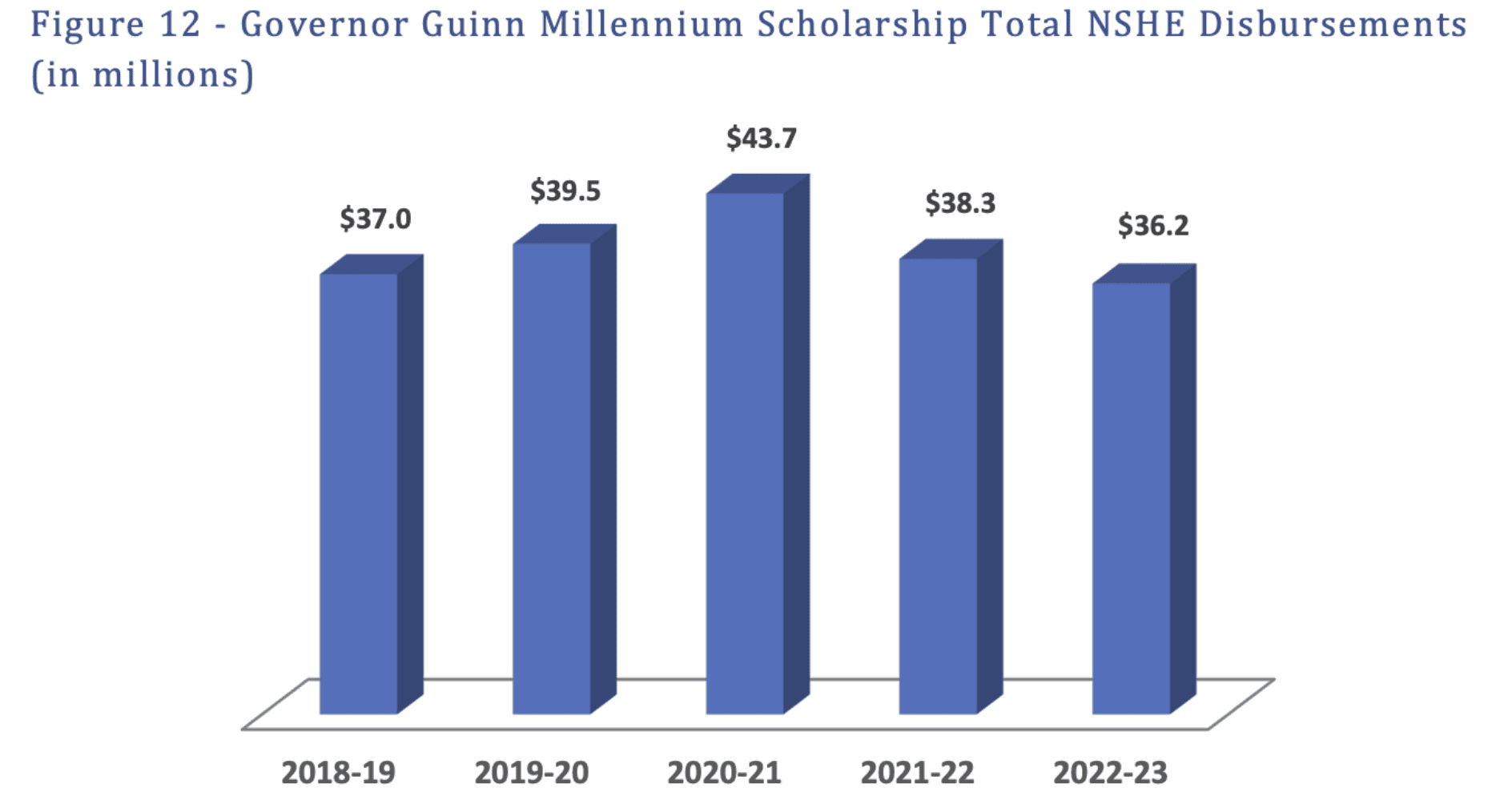
In 2021, general fund appropriations to sustain the program reached $42 million. In 2023, that figure reached $75 million.
Although the scholarship program has become dependent on taxpayer funds, it still stands to be insolvent by FY 2027. The solution to this growing fiscal concern is much easier than one might think.
Lower Standards Have Expanded Eligibility—and Costs
The GMSP has several structural flows.
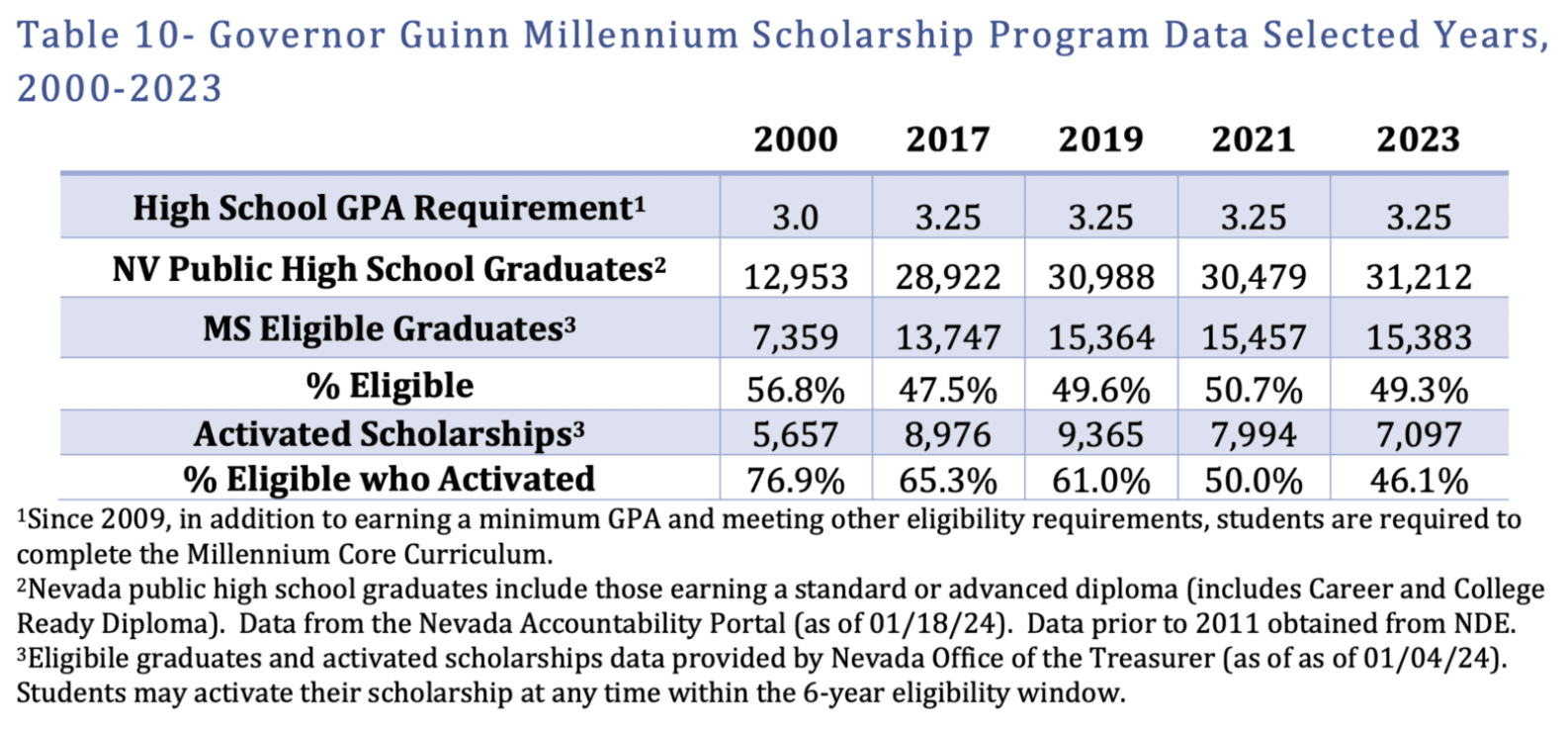
First, and most importantly, the qualifying threshold for graduating high schoolers is too low. Students must complete core curriculum coursework and maintain a 3.25 GPA.
As the availability of additionally weighted courses has expanded, around half of graduating seniors are now eligible to receive the scholarship. And about half of those eligible students proceed to activate their scholarship. Students who complete the bare minimum requirements automatically become eligible.
Simply put, the scholarship is not reserved for the highest achieving students.
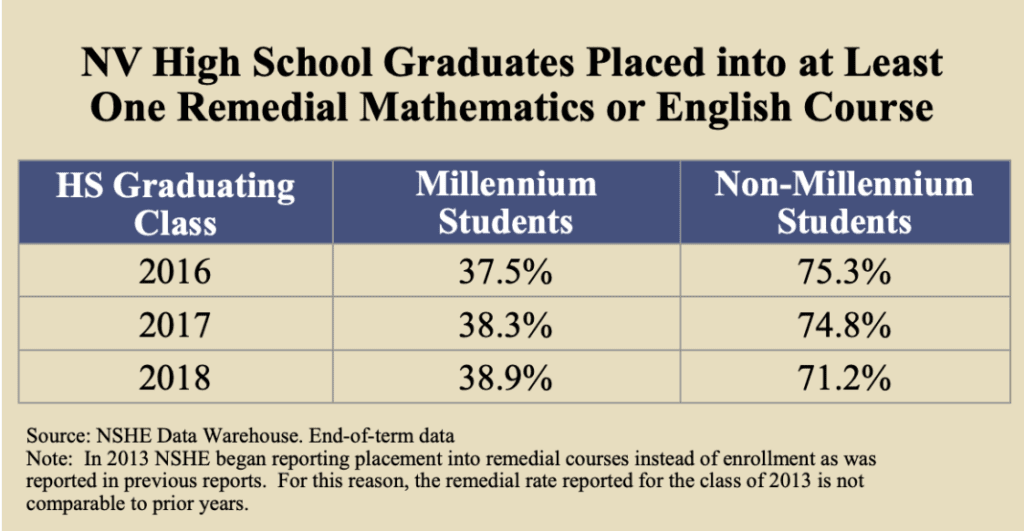
Once recipients enter the NSHE system, it becomes clear many are not even prepared for entry-level college coursework. Around 40% of Millennium Scholarship recipients must complete remedial math or English courses before they can proceed to entry-level courses.
While this proportion is lower than that for non-recipients, it indicates that Nevada’s merit-based academic scholarship program is overly broad.
Restoring Merit to Protect Long-Term Sustainability
Nevada students already face some of the lowest in-state tuition rates for undergraduate degrees in public institutions, indicating that the tuition is already disproportionately subsidized. Handing out scholarships that half of the graduating student body qualifies for simply exacerbates the existing fiscal challenges and encourages social promotion.
The value of the scholarships awarded should be restricted to the program’s independent revenue sources and, more importantly, students should be encouraged to compete and qualify at a much higher threshold. As more graduates seek college subsidies and fewer people smoke, the Millennium Scholarship will need dramatic adjustments to remain solvent.
The opinions expressed by contributors are their own and do not necessarily represent the views of Nevada News & Views. This article was originally published via NevadaPolicy.org on 1/28/26.