A Stunning Weekend Changes Everything
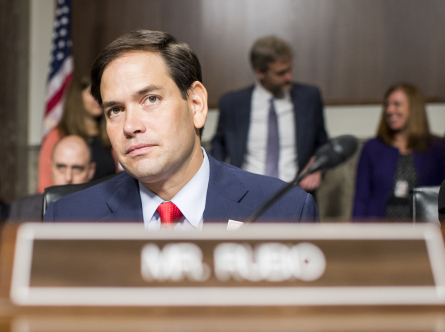
Picture waking up Saturday morning to discover that U.S. special forces had captured Venezuelan dictator Nicolas Maduro in the middle of the night. That’s exactly what happened, and now Secretary of State Marco Rubio is explaining why this isn’t the start of a new war – though not everyone’s buying it.
On Sunday’s Meet the Press, Rubio walked a careful line with host Kristen Welker, insisting the dramatic military operation that seized Maduro from his heavily fortified compound in Caracas was simply about enforcing the law.
“We’re not afraid of boots on the ground,” President Trump had said Saturday, but Rubio stressed we don’t have troops occupying Venezuela right now.
Not Your Average Drug Bust
Here’s what makes this complicated: The operation involved 150 aircraft launching from 20 bases, special forces rappelling into Maduro’s compound at 2 a.m., and explosions that rocked Caracas. At least 40 people reportedly died. If that sounds like war to you, you’re not alone.
“This was not simply a counternarcotics operation. It was an act of war,” House Minority Leader Hakeem Jeffries told Meet the Press right after Rubio’s interview. Democrats are furious that Trump didn’t get Congressional approval first.
But Rubio pushed back hard:
“We will seek congressional approval for actions that require congressional approval.”
He argued this operation didn’t need it because Maduro had a $25 million bounty on his head from a 2020 federal drug trafficking indictment. The Biden administration had offered that reward.
Rubio pointed out, asking rhetorically:
“We have a reward for his capture but we’re not going to enforce it?”
“Noriega Precedent”: Law Enforcement or War?
While critics call the Caracas raid an illegal invasion, the Trump administration is leaning heavily on a 36-year-old legal playbook: the Noriega Precedent.
In 1989, the U.S. invaded Panama to seize dictator Manuel Noriega after he was indicted on similar drug trafficking charges. At the time, U.S. courts ruled that because Noriega was a wanted criminal and not a recognized legitimate head of state, the military could be used to execute a warrant without a formal Declaration of War from Congress.
Rubio echoed this Sunday, framing the 150-aircraft raid not as “regime change,” but as a high-stakes arrest:
“We aren’t removing a president; we are apprehending a fugitive,” Rubio argued. “The indictment has been public since 2020. The reward has been active for years. This is the fulfillment of a judicial process that the previous administration started but was too afraid to finish.”
By treating Maduro as a “narco-terrorist” rather than a world leader, the administration argues the President has “inherent authority” to protect Americans from the “invasion of drugs” orchestrated by the Cartel de los Soles.
What Happens to Venezuela Now?
This is where things get really interesting – and controversial. Trump said Saturday that America would:
“run the country until such time as we can do a safe, proper and judicious transition.”
That set off alarm bells about nation-building and sparked international criticism.
Rubio tried to soften that message on Sunday.
“It’s running policy, the policy with regards to this. We want Venezuela to move in a certain direction because not only do we think it’s good for the people of Venezuela, it’s in our national interest.”
What does that mean exactly? According to Rubio, America will use an “oil quarantine” enforced by U.S. naval vessels to pressure whoever’s left in charge.
Vice President Delcy Rodriguez has been sworn in as acting president, but Rubio made clear she needs to cooperate or face consequences.
The Conservative Case for Action
For conservatives who believe in peace through strength, this operation sends a powerful message. Maduro flooded our country with drugs and gang members while turning Venezuela into what Rubio called:
“the operating hub for Iran, for Russia, for Hezbollah, for China.”
The secretary of state laid out clear demands: Stop flooding America with criminals and drugs. Stop letting our enemies use Venezuela as a base. Start cooperating with legitimate U.S. interests in the region.
And yes, there’s oil involved. Trump and Rubio both talked about American companies potentially investing billions to fix Venezuela’s broken oil infrastructure. That’s not about stealing resources. It’s about preventing China and Russia from controlling oil supplies right in our backyard.
What’s Next?
Maduro now sits in a Brooklyn detention center, awaiting trial on drug trafficking charges. Meanwhile, Venezuela holds its breath. The streets of Caracas are quiet, businesses are closed, and families who lost homes in the operation are still cleaning up debris.
Rubio says elections in Venezuela would be “premature at this point,” noting that most opposition leaders have fled the country. Many conservatives hope Maria Corina Machado, the opposition leader who won the 2025 Nobel Peace Prize, might eventually lead a free Venezuela.
For now, the Trump administration is using what Rubio calls “tremendous leverage, incredible crippling leverage” to push for change. Whether that means a quick transition to democracy or a longer American involvement remains to be seen.
What conservatives should watch: Will this bold action actually stop the drug flow and remove hostile foreign influence from our hemisphere? Or are we getting pulled into another expensive foreign entanglement?
Time will tell, but one thing’s certain – Trump just showed the world that America’s back to enforcing its red lines.
The opinions expressed by contributors are their own and do not necessarily represent the views of Nevada News & Views. This article was written with the assistance of AI. Please verify information and consult additional sources as needed.