My Opponent Wants to Keep Handing Out Needles – I Want People to Get Clean
My Assembly District 9 opponent, Ryan Hampton – who supported Oregon’s plan to decriminalize possession of heroin, fentanyl, and methamphetamine – has been attacking me for supporting President Trump's drug recovery policies.
Honestly? I'll take that attack all day long.
Because here's what those policies have actually produced: The lowest drug-related death numbers this country has seen in years.
Real people. Real lives. Still here because the approach changed.
Let's talk about what the old approach looked like.
Under President Biden, drug deaths surpassed 100,000 Americans in a single year. That was a first in U.S. history.
And what was the response from Biden and governors like California's Gavin Newsom?
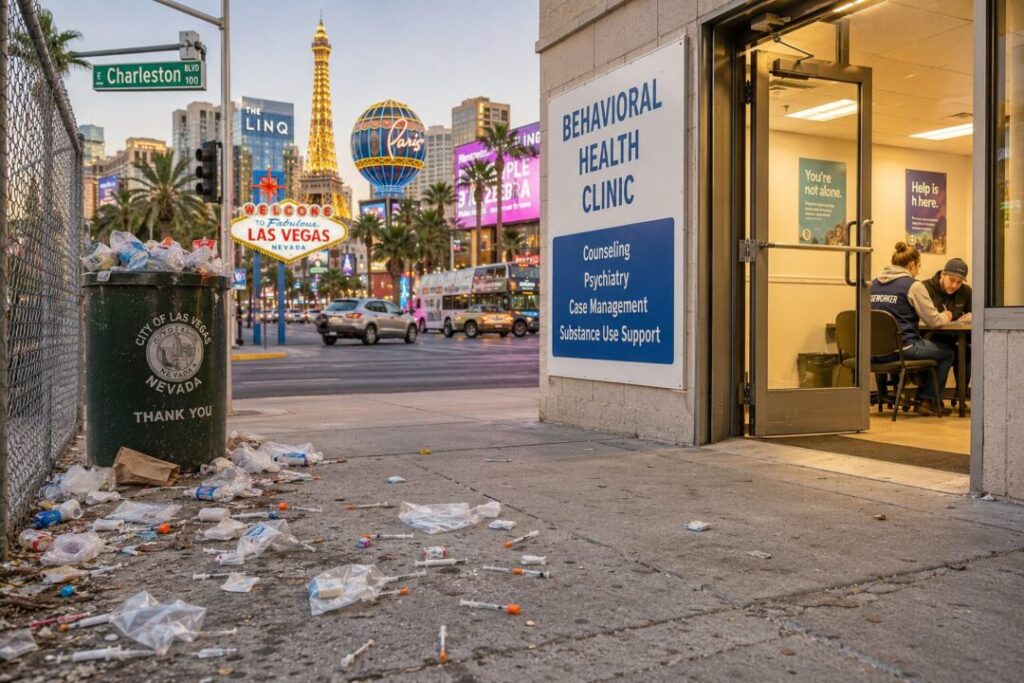
Taxpayer-funded housing with no recovery requirements. Free syringes. “Crack kits” handed out on street corners.
The idea was that if you gave people a safe place to use, they'd eventually choose to get clean. It sounded compassionate. But the body count kept climbing.
That's not compassion. That's enabling. And Nevadans know the difference.
Now contrast that with what Health and Human Services Secretary Robert F. Kennedy Jr. just announced:
Drug Epidemic Drops to Historic Low as Trump Admin Makes Huge Recovery Pushhttps://t.co/0cgl33CDTF
— Karoline Leavitt (@PressSec) June 22, 2026
More than $700 million in federal funding aimed at real addiction treatment, mental health care, and long-term recovery.
This isn't handouts. It's a hand up.
The new STREETS program will fund eight communities across the country with up to $3 million each per year to build real systems of care.
Not just a place to sleep while you keep using. Actual coordinated treatment, connecting people with local governments, health providers, housing services, law enforcement, and courts.
Another $223 million goes to expand Certified Community Behavioral Health Clinics.
These are the places doing the hard, patient-by-patient work of getting people off drugs and keeping them off.
An additional $238 million strengthens the 988 Suicide and Crisis Lifeline. If you've ever had someone you love in crisis, you know how much that line matters.
As Carroll said in the federal announcement, “Every community deserves access to effective behavioral health services that help people prevent addiction, achieve recovery, address mental health challenges, and respond to crises.”
That's not a political talking point. That's a mission statement I believe in.
Here in Nevada, we've seen the consequences of the wrong approach play out in real time.
Las Vegas and Reno both have visible homelessness crises tied directly to untreated addiction and mental illness.
We've tried the free-stuff approach. It hasn't fixed anything. What works is what this recovery initiative is built on: treatment, accountability, and a real path forward.
My opponent wants to make my support for these policies into a liability. But I'd ask the voters of AD9 these simple questions:
What do you actually want for the people in our community who are struggling?
Do you want someone who defends the policies that drove deaths to record highs?
Or do you want someone who supports the policies that are finally bringing those numbers down?
I'll stand on that record.
The Great American Recovery Initiative isn't just a federal program. It's a shift in philosophy.
We stopped pretending that enabling addiction is the same as addressing it. And for the first time in a long time, the results are reflecting that.
Drug deaths don't have to be a permanent feature of American life. Recovery is possible. Treatment works.
And when the federal government actually invests in getting people clean instead of just keeping them comfortable in their addiction, lives get saved.
That's why I support this approach. Not because I was told to. Because it's working.
The opinions expressed by contributors are their own and do not necessarily represent the views of Nevada News & Views. Digital technology was used in the research, writing, and production of this article. Please verify information and consult additional sources as needed.