A New Name in a Long-Running Legal Drama
If you’ve been following Nevada’s federal prosecutor saga, you know it’s been one wild ride. This week, the White House added a new chapter.
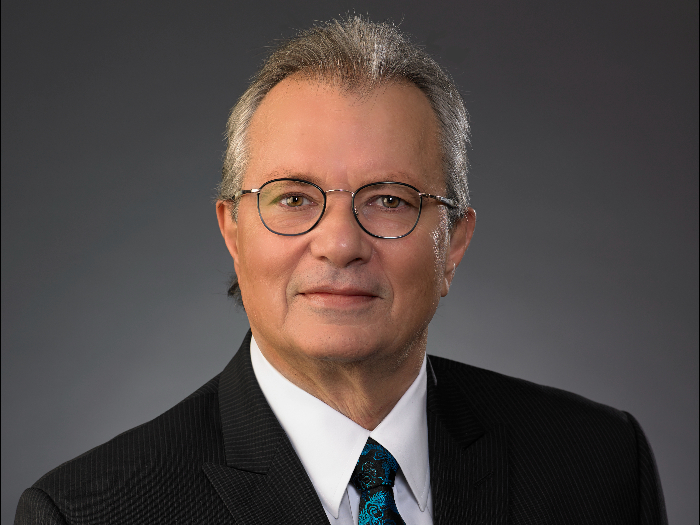
On Wednesday, President Trump nominated George Kelesis, a Las Vegas native and longtime defense attorney, to serve as the U.S. Attorney for Nevada.
Kelesis is a partner at Cook & Kelesis and has practiced law in Las Vegas since 1981. He’s not some outsider parachuting in. He’s a Boyd School of Law adjunct professor, a former Nevada Tax Commissioner, and a guy who’s been part of this community for decades. He’ll need Senate confirmation before he can take the job.
Why This Is Happening Now
Here’s where things get interesting. The nomination lands on the same day the Ninth Circuit Court of Appeals was scheduled to hear arguments in San Francisco about whether the current occupant of the job, Sigal Chattah, was ever legally appointed in the first place.
Chattah has been serving as Nevada’s acting U.S. Attorney since March 2025.
She’s a Las Vegas attorney, a Trump loyalist, and one of the most outspoken conservatives in the state. But a federal judge ruled last September that she was “not validly serving” in the role. The administration has been appealing that ruling ever since.
The legal fight stems from a procedural tangle. Chattah was appointed on an interim basis, a status that expires after 120 days. When that clock ran out in July, the Justice Department used a series of personnel maneuvers to reclassify her and keep her on.
A federal judge said that violated the Federal Vacancies Reform Act, the law that governs who can fill executive branch vacancies without Senate confirmation.
Sound Familiar?
It should. The exact same fight played out in New Jersey, where Trump appointed his former personal attorney, Alina Habba, as that state’s acting U.S. Attorney. Courts there also ruled her appointment was unlawful. After an appeals court upheld the decision in December, Habba resigned.
The key difference is how things have unfolded. Habba was eventually nominated for the permanent post, but couldn’t get Senate confirmation, and ultimately had to step down after courts repeatedly ruled against her. Chattah was never formally nominated, likely because Nevada’s two Democratic senators, Jacky Rosen and Catherine Cortez Masto, made clear they would block her.
With the Kelesis nomination now on the table, the White House appears to be taking a different path. Rather than keep fighting the legal battle over Chattah, they’re moving toward a nominee who may actually have a shot at Senate confirmation.
Whether Nevada’s Democratic senators will cooperate is another question entirely.
What Conservatives Should Know
For conservatives who support limited government and the rule of law, this story is a lesson in how the system is supposed to work, and what happens when it doesn’t.
The Federal Vacancies Reform Act exists for a reason. Congress wrote it to prevent any president from simply installing whoever he wants in powerful positions without Senate oversight. Courts across the country, including judges appointed by Republican presidents, have applied that law consistently in these cases.
Prominent Las Vegas defense attorney David Chesnoff called Chattah:
“the most accessible United States attorney that I’ve seen in this district in my 40-plus years of practice.”
That’s a meaningful compliment from someone who works in federal court every day.
But accessible or not, the rule of law matters. If we want to hold the other side accountable for bending the rules, we have to apply the same standard to our own.
What’s Next
The Ninth Circuit argument took place today. It’s unclear whether the White House will continue to pursue the Chattah appeal now that Kelesis has been nominated, or simply let it drop. The nomination still requires Senate confirmation, and there’s no guarantee the process will move quickly.
Conservatives should watch how Nevada’s Democratic senators handle the Kelesis nomination. Will they engage in good faith, or will they use the confirmation process as another opportunity to slow-walk a Trump appointee? That response will tell you a lot about whether this particular saga is finally nearing its end.
In the meantime, federal prosecutions in Nevada continue, and the legal questions surrounding who actually has the authority to oversee them haven’t been fully resolved yet.
The opinions expressed by contributors are their own and do not necessarily represent the views of Nevada News & Views. This article was written with the assistance of AI. Please verify information and consult additional sources as needed.