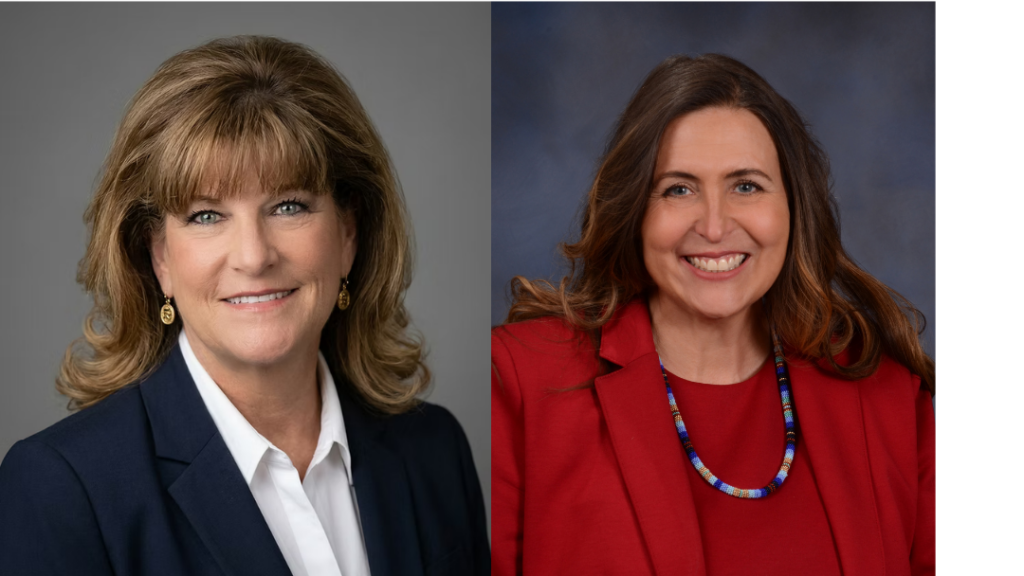
(Marc M. Friedland) – Nevada’s Legislature meets for 120 days every two years. That’s it.
That’s the entire window lawmakers have to fix what’s broken — housing costs, public safety, government waste, the cost of living squeezing Assembly District 37 families — before they go home for another 24 months.
This piece draws on Backus’s own campaign finance filings with the Nevada Secretary of State (via the Aurora business-portal system), her voting and sponsorship record from the Legislature’s own NELIS database, and independent reporting from The Nevada Independent, Nevada Policy Research Institute, and UNLV’s Center for Business and Economic Research, to lay out exactly where those 120 days have gone.
On that record, Shea Backus’s six years in Carson City — spread across three non-consecutive terms after a 2020 loss to Andy Matthews — tell a clear story: a legislator who has mastered the inside game — the committee gavels, the donor relationships, the caucus loyalty — while government waste goes unaudited, public safety concerns go unanswered, and even her own signature bills keep landing on the governor’s veto pile.
AD37 has a chance in November to send someone to Carson City who has spent her career solving problems instead of managing a political one. That’s the choice this piece lays out.
The promises — and the pattern of good intentions that don’t survive Carson City
Backus has told voters in 2018, 2022, and 2024 that education, housing costs, and healthcare affordability were her priorities.
Whatever her intentions, the pattern across her own record is one of effort that keeps running into the same wall: her free-school-meals bill (AB268, 2025) was vetoed — the second time a nearly identical Backus-backed bill has died that way, after an earlier version was also vetoed in 2023.
Her healthcare prior-authorization bill (AB463) passed only after the insurance industry — several members of which are her own campaign donors — narrowed it from the AMA-recommended reforms she originally introduced down to a modest faster-acknowledgment requirement.
And by her own admission in October 2024, Clark County schools started that year roughly 1,000 teachers short despite the “historic” funding increase she’s campaigned on.
Three full terms in, and on her own stated priorities, AD37 is still waiting.
In fairness, she did successfully pass and get signed one housing-supply bill.
The stadium deal that defines her Carson City career
When Assemblywoman Shea Backus stood on the Assembly floor in June 2023 to defend $380 million in public financing for a Major League Baseball stadium, she wasn’t a bystander.
As Chair of the Assembly Committee on Revenue — a post she has now held through two full legislative sessions — Backus was one of the deal’s most vocal advocates, telling colleagues that the money Nevada was putting up for the Oakland Athletics was “less than what was spent on the Raiders’ stadium,” and that big-league baseball would “build on the excitement” of the Raiders, the Golden Knights, and the Aces.
The bill she was defending, Senate Bill 1 of the 35th Special Session, passed the Assembly 25–15 after Senate leadership spent the preceding days securing the votes needed to get it there — reviving two bills Governor Lombardo had just vetoed, including a paid family and medical leave mandate, to flip two holdout Democratic senators.
Nevada Policy Research Institute named the stadium bill the single worst of the entire 2023 legislative session, calling it a “fleecing of taxpayers” that diverts money “away from school districts, police departments and fire departments” to subsidize a franchise fleeing the second-worst attendance record in Major League Baseball history.
Nevada Policy filed a formal Letter of Opposition on May 29, 2023, directly with the Assembly Ways and Means Committee Backus vice-chairs — more than two weeks before she voted for it.
Three years later, the deal Backus championed is a rising steel skeleton on the Strip — and a rising price tag to match.
Following the implosion of the old Tropicana hotel in October 2024, the Athletics broke ground in June 2025.
As of the most recent construction reports in August 2026, the team has spent $600 million building the 33,000-seat, climate-controlled dome, with a target completion date of February 29, 2028.
The project’s cost has grown alongside the steel: what was originally pitched at $1.5 to $1.75 billion is now consistently reported at $2 billion, with the entire $380 million in public financing set to be drawn down.
An irony worth pointing out: the loudest institutional opposition to the subsidy came from Schools Over Stadiums, a referendum campaign created and funded by the Nevada State Education Association — the same NSEA PAC that donates to Backus’s own campaign.
The Nevada Supreme Court blocked the union’s 2024 referendum attempt on a technicality, and no such measure appears anywhere on the November 3, 2026 ballot — the union’s second attempt never qualified either.
A second connection worth pointing out: the team itself became one of her donors.
Athletics Investment Group LLC, the Oakland Athletics’ own ownership entity, gave Backus’s campaign $1,000 on October 6, 2023, about four months after she voted for their stadium subsidy on the Assembly floor — ostensibly as a thank you for her help.
Revenue Chair, Ways & Means Vice Chair — the two seats that write Nevada’s checks
Backus has chaired the Assembly Committee on Revenue in both the 2023 and 2025 sessions, and simultaneously served as Vice Chair of Ways & Means — the two committees that control, respectively, what taxes Nevada collects and how the state spends the money.
It’s hard to find a more consequential pair of gavels in Carson City for anyone with a stake in a tax credit, an appropriation, or a carve-out.
Under that dual chairmanship, her committees didn’t just pass the A’s stadium deal.
In the same 2023 session, her Ways & Means Committee approved Assembly Bill 525 — nicknamed the “Christmas Tree Bill” by Nevada Policy — which appropriated more than $100 million to 53 different organizations after a single public hearing held near midnight on a Friday.
NPRI ranked it the second-worst bill of the session, citing “little oversight, transparency or debate.” Backus’s own vote is confirmed: the roll call shows all 28 Assembly Democrats among the 39 yes votes.
By Nevada Policy’s independent scorecard — which grades every legislator on votes affecting limited government and free markets, not on party loyalty — Backus scored near the bottom with 24.11% in 2023, landing her in a five-way tie for 50th out of 61 ranked lawmakers.
Who’s paying for the campaign account of Carson City’s chief tax writer
Her 2025 Annual Contributions and Expenses Report shows $46,480 raised, every dollar traceable to a named donor — 92.5% of it from single contributions of $1,000 or more. The entire small-dollar, grassroots share of her fundraising for the full year totals $101.05.
This is a campaign account funded almost entirely by institutional, corporate, and PAC money, and the donors tied to her signature passed legislation make the point better than an exhaustive list would.
MGM Resorts International was her single largest 2025 donor at $7,500 — a repeat figure, since MGM gave her the identical amount back in December 2023, five months after the stadium vote.
Her 2026 filings add Caesars Enterprise Services, Nevada Resorts PAC, Stations Casinos, and Peppermill Casinos — the same gaming and resort industry with a direct, standing interest in the entertainment-tax policy her Revenue Committee controls.
Her father and law partner, Leland Eugene “Gene” Backus, was a $5,000 donor between 2022 and 2023.
Their firm, Backus | Burden, is a Las Vegas civil, business, and construction litigation practice whose client base sits squarely in the industries her committees regulate and fund.
An “at least we tried” caucus, not an independent voice
Backus’s own sponsored-bill history reinforces where her energy goes: alongside constituent-focused bills, she personally sponsored SJR7 (2023), a constitutional amendment on reproductive-health rights that — after passing in 2023 — ultimately failed to make the 2026 ballot at all, and co-sponsored SB131 (2023), a companion statutory shield law on the same reproductive-rights front.
She co-sponsored AJR6 (2023), a proposed amendment to have Nevada join the National Popular Vote Interstate Compact, awarding the state’s electoral votes to the national popular-vote winner regardless of how Nevadans themselves voted, and personally sponsored SB133 (2023), which would have made submitting a “false slate” of presidential electors a felony — it passed 28–14 on a party-line vote and was vetoed by Governor Lombardo.
All four sit in the same category: national-Democratic-priority constitutional and election-law questions, not AD37-specific fixes, and all four consumed 120-day-clock time.
She also co-sponsored SB266 (2023), revising the state’s gaming provisions — one more data point placing her legislative activity, not just her voting record, inside the same gaming industry that has been among her largest donors.
Her floor-vote record follows the same pattern.
In the 2023 Special Session, she voted yes on SB1, the $380 million stadium subsidy (Assembly 25–15), discussed above. In the 2025 Regular Session, she voted yes on every contested party-line bill checked for this piece: AB525 (the Christmas Tree Bill, Assembly 39–3), AB44 (price controls, Assembly 24–18), AB283 and AB223 (eviction and habitability reform, both party-line), SB443 (utility prevailing wage, Assembly 27–15), and SB142 (a debt-collection bill later vetoed by Lombardo, Assembly 27–15).
Several of these were vetoed after passing on party-line votes — exactly the pattern her opponents’ campaign has pointed to: a legislator willing to walk the plank for her caucus’s messaging priorities even when the governor’s veto pen is a foregone conclusion.
That’s “proving loyalty,” not independent representation of AD37 — and every one of those floor votes consumed 120-day-clock time that didn’t go toward anything voters actually got.
One exception worth noting, in fairness: Backus voted no to the $1.4 billion film tax credit expansion (AB238) on May 30, 2025.
A watchdog bill that never even got a hearing
Republican State Controller Andy Matthews — Backus’s own direct predecessor in the AD37 seat, having held it from 2020 to 2022 before she won it back — spent the 2025 session pushing AB33, a bill to create an independent Office of Inspector General empowered to audit state agencies, local governments, school districts, and taxpayer-funded nonprofits for waste, fraud, and abuse.
Thirty-five other states already have one; testimony cited an estimated $16 return for every $1 spent running it.
To be clear about what happened and what didn’t: AB33 never received a committee vote at all — it simply died, the fifth consecutive session an Inspector General proposal has failed to advance in Nevada.
Backus couldn’t vote against it, because no vote was ever taken.
The point isn’t that she personally killed it — it’s that it died, without so much as a hearing, in exactly the kind of low-transparency committee process this piece has already documented with the Christmas Tree Bill, under the same Democratic Assembly majority she’s been a senior, trusted committee chair within for two sessions running.
A legislator with her institutional standing could have pushed for a hearing on her own party’s predecessor’s anti-waste bill. Rack one up for non-transparency.
Public safety: the data behind the core critique
AD37 sits within the LVMPD’s Summerlin Area Command, which led every other command in reported shoplifting cases so far in 2025, concentrated in its commercial corridors, even as citywide shoplifting climbed 10.5%.
Nevada’s felony theft threshold was raised in 2019 under AB236, a bipartisan sentencing-reform package Backus supported and her 2024 opponent called “soft on crime.”
In 2025, Lombardo’s crime bill, SB457, originally proposed lowering that threshold back down — but the provision was stripped in Senate committee before reaching the Assembly.
The record on final passage is now confirmed: Backus voted yes on the weakened bill, which passed 36–5.
Notably, every no vote came from fellow Democrats (Considine, Flanagan, Jackson, La Rue Hatch, and Moore) — Republicans and Backus alike voted for the bill without the tougher threshold in it.
Beyond the ledger: a Columbus Day fight
Backus’s AB144, which moved Nevada’s official observance of Indigenous Peoples’ Day onto the same date as Columbus Day, passed the Assembly 27–15 in 2025 and was vetoed by Governor Lombardo.
A concerned AD37 constituent, Jill Douglass personally opposed the bill and showed up in person at the Legislature’s Las Vegas office to say so, calling it “the bill that seeks to erase Columbus Day and replace it with Indigenous Peoples’ Day,” and adding, “We should not tear down another important part of our history. We should not rewrite our shared story to fit a political agenda.”
A genuine, on-the-record point of contrast, especially since Jill Douglass filed as an AD37 candidate on or around March 2, 2026, the opening day of Nevada’s candidate filing period.
The alternative: a career spent solving problems, not managing one
The record of Jill Douglass isn’t one of a career politician — it’s one of business common sense.
She spent decades in Nevada’s financial services and insurance industry, rising to Agency Vice President at COUNTRY Financial overseeing operations across Nevada, Arizona, and Colorado, after founding her own firm, Douglass Insurance and Financial Services, and serving as President of both NAIFA Southern Nevada and NAIFA Nevada.
She was elected Clark County Republican Party Chair in 2025 and carries Governor Joe Lombardo’s endorsement in this race.
Her platform is built on fiscal oversight, tougher accountability for retail crime, and making Nevada’s rare 120 legislative days count for AD37 families instead of funding a partisan messaging machine.
Voters in AD37 don’t have to guess where their incumbent’s priorities have been for a combined eight years of campaigning and officeholding.
They can read her committee’s own bill file, her own campaign finance reports, and the governor’s own veto list.
Then they can decide whether two more years of the same is what Assembly District 37 needs — or whether it’s time to send someone to Carson City who has spent her career building something instead of managing a political one.
The opinions expressed by contributors are their own and do not necessarily represent the views of Nevada News & Views. Digital technology may have been used in the research, writing, or production of this article. Please verify information and consult additional sources as needed.