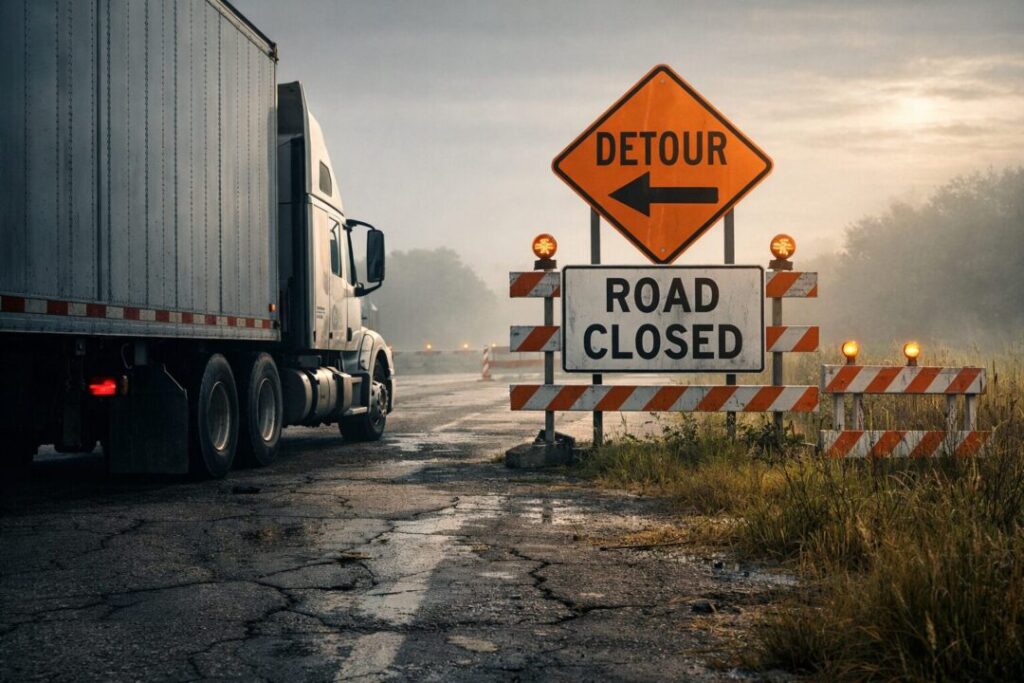
On February 6, the Florida Department of Highway Safety and Motor Vehicles announced a new policy: all driver’s license exams, including commercial truck tests, must now be taken in English. No interpreters allowed.
State officials said the reason is simple: safety.
If you’re driving an 80,000-pound semi, you need to understand road signs, police commands, and emergency instructions. That should go without saying; but here we are.
FLORIDA REQUIRING ALL DL EXAMS OFFERED ONLY IN ENGLISH
This includes TRUCK DRIVER'S tests. Coming on the heels of yet another terrible crash in Indiana, an illegal immigrant truck driver killed 4.@stevegrubershow @whatsrightsam pic.twitter.com/oF25Lb2OUq
— Real America's Voice (RAV) (@RealAmVoice) February 9, 2026
This change came just days after a deadly crash in Indiana.
On February 4, a semi-truck slammed into an Amish van carrying workers to their jobs. Four men were killed.
Police say the driver, Bekzhan Beishekeev, entered the U.S. illegally and was behind the wheel of a commercial truck. He now faces criminal charges and is in custody of U.S. Immigration and Customs Enforcement while federal investigators review whether his trucking company skipped proper licensing steps.
Think about that for a moment.
Four families lost loved ones because someone who probably should never have been driving at all, let alone operating a big rig, was allowed on the road.
And this tragedy is not an isolated case.
A recent segment on the Steve Gruber Show highlighted another troubling example from Florida last August. An Indian national passed his CDL exam, even though he reportedly failed most verbal and road-sign identification questions. He still got licensed.
Should we also allow pilots who've failed the cockpit controls test to fly a plane? No. That makes no sense.
Yet we allow people to drive massive trucks without proving they can read signs or follow emergency commands.
Florida officials say this can’t continue. Their new rule requires drivers to prove they can read signs, understand instructions, and communicate clearly in English before getting licensed.
Critics say the policy discriminates against immigrants and limits job opportunities.
But supporters argue this isn’t about race or politics. It’s about safety.
If a driver can’t read “Bridge Out” or understand a trooper yelling “Stop,” everyone on the road is at risk – including the driver.
Now here’s where Nevada comes in.
Nevada depends heavily on trucking. Commercial drivers keep our shelves stocked and our economy moving.
According to the Nevada Department of Transportation, thousands of large trucks travel our highways every day, especially along I-15 and I-80. One bad decision behind the wheel can shut down a freeway, or far worse.
And Nevada already struggles with traffic safety.
In recent years, fatal crashes across the Silver State have stayed stubbornly high. Add language barriers and weak enforcement, and you’ve got a recipe for disaster.
Florida’s policy says driving is a privilege, not a right. And commercial driving comes with even higher responsibility.
And of course, this ties into the bigger border and immigration debate. Conservatives have long warned that weak enforcement doesn’t just affect jobs or schools. It affects public safety in real, painful ways.
When background checks get skipped and standards get lowered, everyday Americans pay the price.
Opponents argue that better training and translators could solve the problem. But supporters say that misses the point. In an emergency, there’s not going to be time to call an interpreter.
You either understand, or you don’t.
Florida chose safety.
Because if you’re driving an 18-wheeler sharing the road with other people, “good enough” just isn’t good enough.
The opinions expressed by contributors are their own and do not necessarily represent the views of Nevada News & Views. Digital technology was used in the research, writing, and production of this article. Please verify information and consult additional sources as needed.