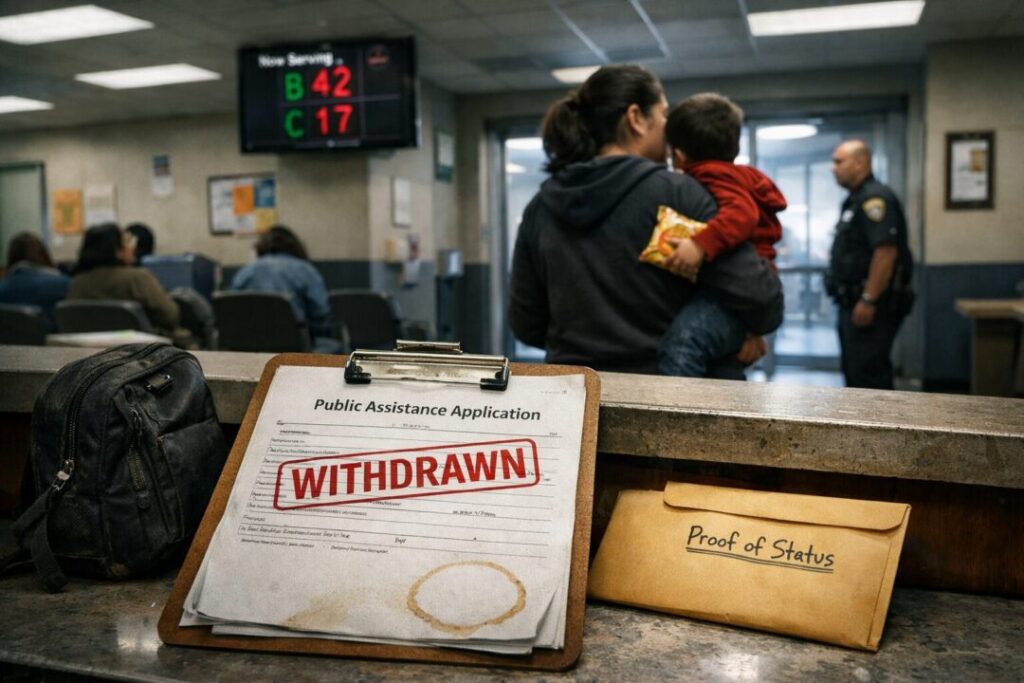
Here’s something you’re not going to hear much about on the nightly news.
A new national survey shows that immigration enforcement under President Donald Trump’s second term is changing behavior in a big way.
And yes, it involves taxpayer-funded benefits.
Trump's policies are having an effect.
36% of illegals have stopped participating in welfare programs
42% have avoided applying for a welfare program.
Even 11% of legal immigrants (who also should not get welfare!) have dropped out of a program.
(KFF study link:… pic.twitter.com/vWovw0Uauq
— White Papers Policy Institute (@WhitePapersPol) February 17, 2026
The 2025 Survey of Immigrants by KFF and The New York Times looked at 1,805 immigrant adults between late August and October of last year.
It’s a nationally representative sample, conducted in six languages, with a margin of error of plus or minus 3 percent overall.
The headline number?
In households with a likely undocumented immigrant, 36 percent say they stopped participating in government assistance programs since January 2025. Another 42 percent say they avoided applying in the first place.
That’s not small.
Government programs in this survey include help for food, housing, or health care. In other words, benefits funded by American taxpayers.
Even across all immigrants surveyed, 11 percent said they stopped participating in assistance programs. Twelve percent said they avoided applying.
In citizen-only immigrant households, the numbers are much lower. Just 4 percent stopped. Five percent avoided applying.
The difference is clear.
Enforcement Has Consequences
The survey also shows why this is happening.
Forty-one percent of immigrants say they worry about detention or deportation. That number is up from 26 percent in 2023.
Among likely undocumented immigrants, that fear jumps to 75 percent.
Fifty-three percent say they’re worried about at least one enforcement issue, such as deportation, family separation, or loss of status.
Critics say this is proof that enforcement is going too far. Forty-one percent of immigrants surveyed say enforcement is “too tough,” up from 19 percent in earlier polling.
They argue families are scared. They point to rising reports of stress and anxiety. The survey says 40 percent report negative health effects tied to immigration concerns.
Those are serious claims. No one should shrug off real fear. But here’s the other side.
For years, Americans were told illegal immigrants don’t use welfare. Or that the numbers were tiny.
Now we have data showing behavior changes when enforcement tightens. That tells us something.
The Taxpayer Question
If stricter enforcement leads to fewer people drawing benefits they may not qualify for, that matters.
Nevadans know this debate well. Our schools, hospitals, and housing programs are already stretched thin.
Clark County taxpayers are footing the bill for Medicaid, emergency services, and public education costs tied to rapid population growth.
When nearly half of likely undocumented households say they avoided applying for benefits, that’s not just a social trend. That’s a budget issue.
And remember, this survey attributes the pullback to fear of drawing attention to immigration status. Not to new eligibility rules.
But from a public policy standpoint, accountability works the same way. If laws are enforced, behavior changes.
That’s not cruelty. That’s how rules function.
A Bigger Picture
The survey also found 22 percent of immigrants know someone who was arrested, detained, or deported since January 2025. That’s up from 8 percent earlier in the year.
That will fuel more debate.
Yet even with all this, 70 percent of immigrants surveyed say they would still choose to come to the United States again. That says something too.
America remains a magnet. Opportunity still calls.
The real question for voters, especially here in Nevada, is simple: Can we be a nation of opportunity and a nation of laws at the same time?
The data suggests enforcement changes behavior. The politics will decide what happens next.
But one thing is clear. When the rules are enforced, people notice. And taxpayers do too.
The opinions expressed by contributors are their own and do not necessarily represent the views of Nevada News & Views. Digital technology was used in the research, writing, and production of this article. Please verify information and consult additional sources as needed.