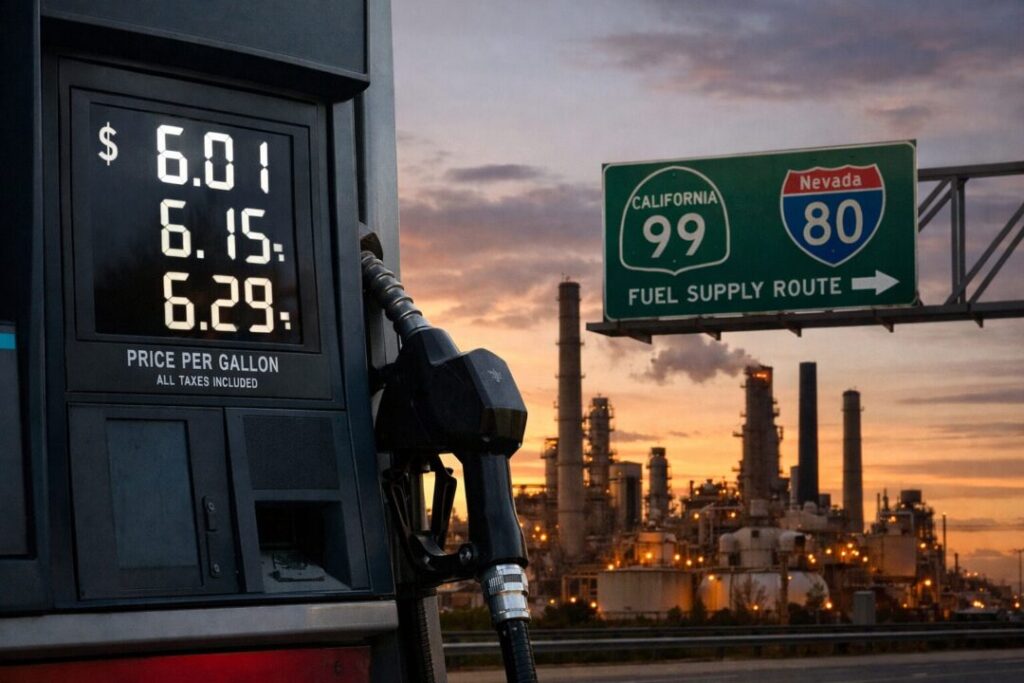
Chevron recently sent a letter to California Governor Gavin Newsom warning that proposed changes to the state’s climate rules could force more refineries to shut down.
The company says the plan could raise gas prices by more than $1 per gallon and put hundreds of thousands of jobs at risk.
Chevron CEO says they may move their company out of California to escape Gavin Newsom’s new requirements
‘California’s system to cut back on refinery pollution has Chevron saying it may be forced to leave’
“In a letter sent to Governor Gavin Newsom and other California… pic.twitter.com/AR00g8Hk7I
— Wall Street Apes (@WallStreetApes) March 6, 2026
Chevron Raises Alarm
The warning came in a March 2026 letter from Chevron to Newsom’s office.
The company criticized proposed amendments to California’s cap-and-invest program, which is tied to the state’s broader cap-and-trade climate rules.
Under the program, the state sets limits on greenhouse gas emissions. Companies must buy allowances if they want to emit more than the cap allows. The money raised is then used for clean energy projects and environmental programs.
Chevron says the newest changes could push fuel producers out of the state.
According to the company, the rules would make it harder for California refineries to compete with imported fuel from other countries. That could lead to more closures.
Chevron warned that the changes could “force the closure of additional California refineries,” increase gas prices by more than $1 per gallon, and threaten as many as 500,000 jobs connected to the state’s energy supply chain.
Refineries Are Already Closing
California has already seen several refinery closures.
Phillips 66 shut down a refinery in 2024. Another major facility operated by Valero in Benicia is expected to close in April 2026.
Each time a refinery shuts down, the state’s ability to produce gasoline drops.
And California already has one of the most tightly controlled fuel markets in the country. Its special fuel blend means gasoline from many other states cannot simply be shipped in during shortages.
When supply shrinks, prices jump.
Nevada’s Fuel Pipeline
For Nevada, the situation is especially sensitive; we depend heavily on California for fuel. Roughly 88% of the transportation fuel used in Nevada comes from California refineries.
That means decisions made in Sacramento often ripple straight across the border.
When California gas prices spike, Nevada stations usually follow within days. We’ve seen this happen many times over the past decade.
Industry Warnings
Chevron spokesperson Ross Allen warned that the amendments could make it “uneconomic to produce fuels in California,” which could lead to more refinery shutdowns.
If that happens, he warned, California would rely more heavily on imported fuel. That could make supply less stable and prices more volatile.
Supporters Defend Climate Goals
Supporters of the cap-and-trade system say the program is working as intended.
The California Air Resources Board, known as CARB, runs the program. The agency says the policy has helped the state reduce greenhouse gas emissions while also investing billions of dollars into clean energy and climate projects.
CARB argues the program helps strengthen the economy while moving California toward its environmental goals.
Supporters also say the transition away from fossil fuels is necessary to address climate change and modernize the state’s energy system.
Critics Call for Balance
Critics say the problem is not environmental goals themselves, but the speed and scale of the regulations.
They argue that pushing refineries out too quickly could create shortages and drive prices higher for working families.
Americans still rely heavily on gasoline for everyday life.
If policies reduce supply before alternatives are ready, prices will rise – and consumers will have to pay the difference.
Why Nevada Is Watching Closely
Energy analysts say the Silver State should pay close attention to what happens in Sacramento.
When California’s fuel supply tightens, the price jump usually doesn’t stay on their side of the border for long.
The opinions expressed by contributors are their own and do not necessarily represent the views of Nevada News & Views. Digital technology was used in the research, writing, and production of this article. Please verify information and consult additional sources as needed.