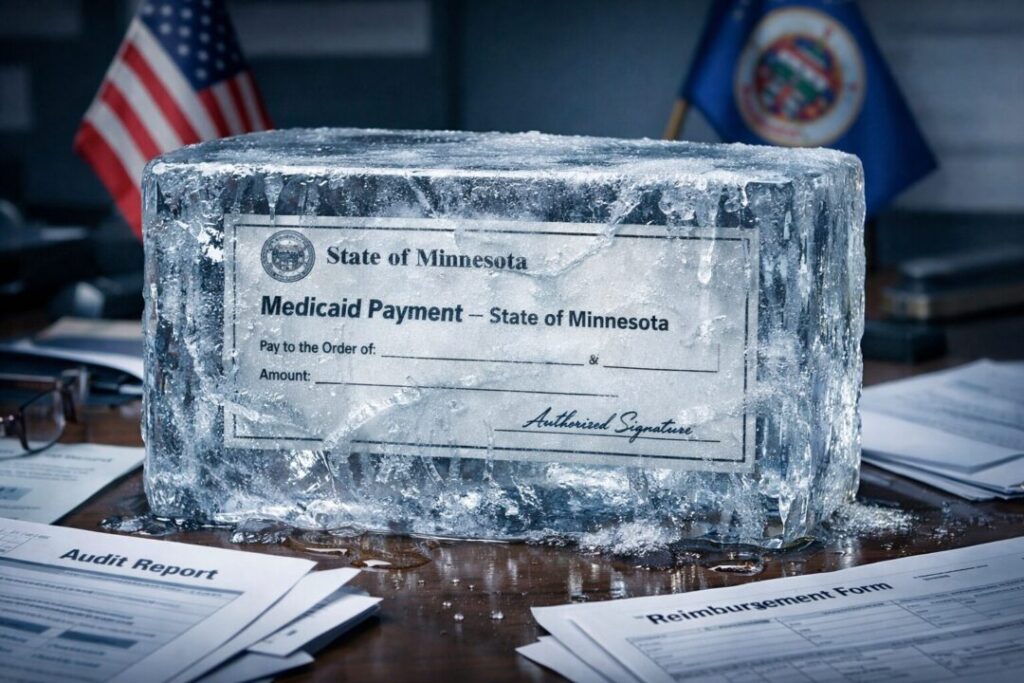
A major fight is brewing between the Trump administration and the state of Minnesota after federal officials froze more than a quarter billion dollars in Medicaid funding over fraud concerns.
Vice President JD Vance announced in late February that the federal government would withhold $259.5 million in Medicaid reimbursements from Minnesota.
The move is part of what President Donald Trump has called a national “war on fraud.”
Now Minnesota is fighting back in court.
State officials recently filed a lawsuit against the federal government, arguing the administration does not have the legal authority to freeze the money.
The dispute could become one of the first major legal tests of the Trump administration’s effort to crack down on waste and abuse in federal programs.
Minnesota Given 60 Days
The announcement was made alongside Mehmet Oz, who now runs the Centers for Medicare and Medicaid Services.
Oz said Minnesota’s governor, Tim Walz, has 60 days to submit a corrective action plan if the state wants the money released.
“They need to propose and act on a comprehensive corrective action plan to solve the problem,” Oz said during the announcement.
If the state fails to make changes, federal officials warned that as much as $1 billion in Medicaid reimbursements could be withheld this year.
The frozen money represents nearly half of the federal reimbursement Minnesota expected for the most recent fiscal quarter.
Fraud Cases Sparked Federal Action
The crackdown comes after several high profile fraud investigations in Minnesota.
“Far too many people have gotten rich by taking what is the best of the American spirit and getting rich off of it instead of providing services to kids who need it,” he said.
Federal officials say the freeze focuses on 14 Medicaid service categories considered high risk for fraud, including autism services, home rehabilitation care, non emergency medical transportation, and overnight supervision programs.
Congress Starts Asking Questions
The issue has now moved beyond the courts and into Congress.
During a recent House hearing, Republican lawmakers questioned Gov. Walz about Minnesota’s handling of fraud in government programs.
The questions come after the massive Feeding Our Future scandal, a pandemic era food aid scheme that federal prosecutors say stole about $250 million from taxpayer funded programs.
Walz defended his state’s record and said Minnesota has secured more than 300 fraud related convictions and recovered roughly $80 million.
Republican lawmakers argued the state should have acted sooner.
A National Crackdown May Be Coming
Minnesota may only be the first target.
Oz has suggested the federal government is reviewing Medicaid spending in multiple states and could take similar steps elsewhere.
The administration has also paused new companies from enrolling in Medicare’s durable medical equipment program while officials review suspected fraud.
Federal officials say audits found about a 20% billing error rate, representing roughly $1.5 billion in questionable charges. About $1 billion of that may be fraud.
Oz said the pause will allow investigators time “to shut down these bad guys.”
Why Nevada Is Watching
This fight may be happening in Minnesota, but the outcome could matter in Nevada and across the country.
Medicaid is funded jointly by states and the federal government. That means federal taxpayers help cover the cost.
According to the Kaiser Family Foundation, the federal government pays more than half of all Medicaid spending nationwide.
If federal officials expand audits or funding freezes, other states could face the same scrutiny.
For many taxpayers, the issue comes down to a simple question.
If billions of dollars in healthcare fraud are slipping through the cracks, should Washington step in to stop it or leave states to police themselves?
That debate is now playing out in court and in Congress. And it may only be getting started.
The opinions expressed by contributors are their own and do not necessarily represent the views of Nevada News & Views. Digital technology was used in the research, writing, and production of this article. Please verify information and consult additional sources as needed.