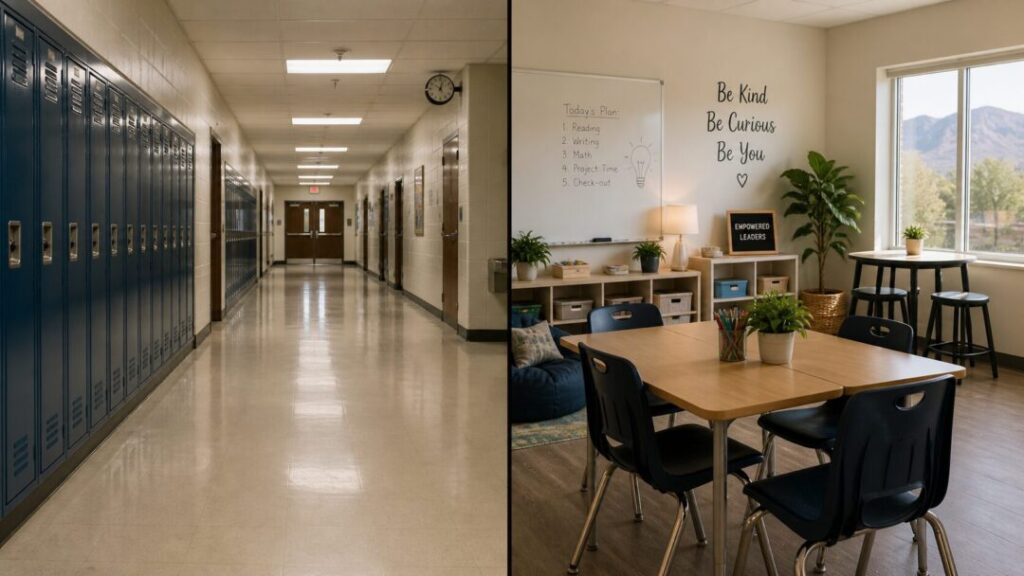
In honor of National Microschools Week, Nevada Policy is excited to highlight the story of one such model: EmpowerEd Leaders in Boulder City.
EmpowerEd Leaders: A New Education Model in Boulder City
Founded in 2024, by former public school teachers Jayme Haines and Amy Higley, EmpowerEd Leaders was born out of desire to serve Boulder City’s student community better than the traditional public school allowed. As Haines explains, “It seemed like the district cared more about data than about kids.” Instead of continuously chasing high performance scores on state exams, the two educators set out to build education that was personal and personalized.
Just over a year later, their vision has taken shape, now serving 45 students ranging from kindergarten to 8th grade. Their growing waitlist signals way higher demand than capacity.
Personalized Learning vs Traditional Public Schools
Walking into the EmpowerEd Leaders facility is nothing similar to a traditional school. There are no long hallways of identical classrooms or rigid bell schedules dictating movement. Instead, the space is dynamic and intentional. In one room, elementary students work through reading, writing, and math with individualized, one-on-one support.
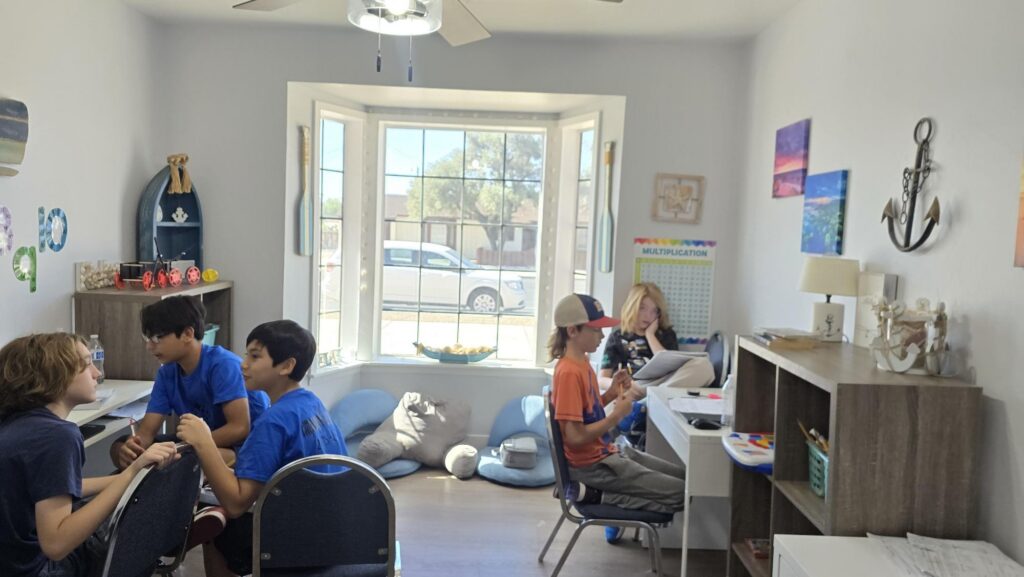
In the common space not too far from the elementary students, a small group of middle-school-aged kids are completing worksheets. One student is focusing on his reading in the silent room. The environment reflects the vision Haines and Higley had for the future of education – students are not just passive participants they are active, independent, and engaged learners who know their needs.
Flexible School Schedules That Benefit Families
This philosophy is best pronounced in the structure of learning at the microschool. Students attend academic sessions Monday through Thursday from 8:30 a.m. to 12:30 p.m., freeing up afternoons for extracurriculars, sports, and family time. Fridays, once a month, are reserved for field trips open to both parents and students. This Friday, for instance, they will be heading to In-N-Out for a closer look into business operations. They’ll cut potatoes, assemble burgers, and learn firsthand what it takes to run a franchise.
As cofounder Amy explains, “The goal is simple: students should not leave school wondering, ‘What do I do now?’”
Real-World Learning Through Project-Based Education
The real-world orientation is also reflected by the heavy emphasis on project-based learning. For example, students interested in teaching careers can mentor younger peers in elementary grade-levels to exercise their skills and learn from experience. Budding entrepreneurs are given even more autonomy.
Earlier this year, five students designed full business plans and pitched them to the local credit union board. After answering questions and incorporating board’s feedback, each received $100 in startup capital. Their ventures ranged from homemade organic dog treats to handmade jewelry and custom press-on nails. Students then brought their products to local fairs, where they learned how to price goods, manage revenue, and make decisions about saving or reinvesting. Projects like these are intended to expose children to real-life problems at an early age.
How Microschools Support Individual Student Success
This personalization further extends beyond projects. At EmpowerEd Leaders, no two students learn the same way because they aren’t expected to. Some students prefer completing work through computers, others choose pen and paper. Some gravitate toward STEM-focused work, while others spend more time in the arts and crafts room.
Core curriculum components—reading, writing, and math—are still foundational. The EmpowerEd curriculum is built by aligning state standards with what Haines and Higley know to actually work from their classroom experience.
The small scale also allows for a level of academic flexibility unavailable in traditional settings. A student reading below grade level can receive targeted support without stigma, while another excelling in math can move ahead without being held back by age-based benchmarks.
“In public schools, parents are often too fixated on grades,” Haines notes. “But the grades aren’t always a true representation of their child.” While families can opt into state assessments, the school prioritizes ongoing diagnostic evaluations to track progress and keep parents informed. Additionally, to ensure transparency and access, parents have direct communication with the educators and are always welcome to spend time at the facility.
Alongside the major academic shifts Haines and Higley describe major shifts in social attitudes as well. Students interact across age groups, building relationships that feel like family. In a setting this small, individuality is highly encouraged.
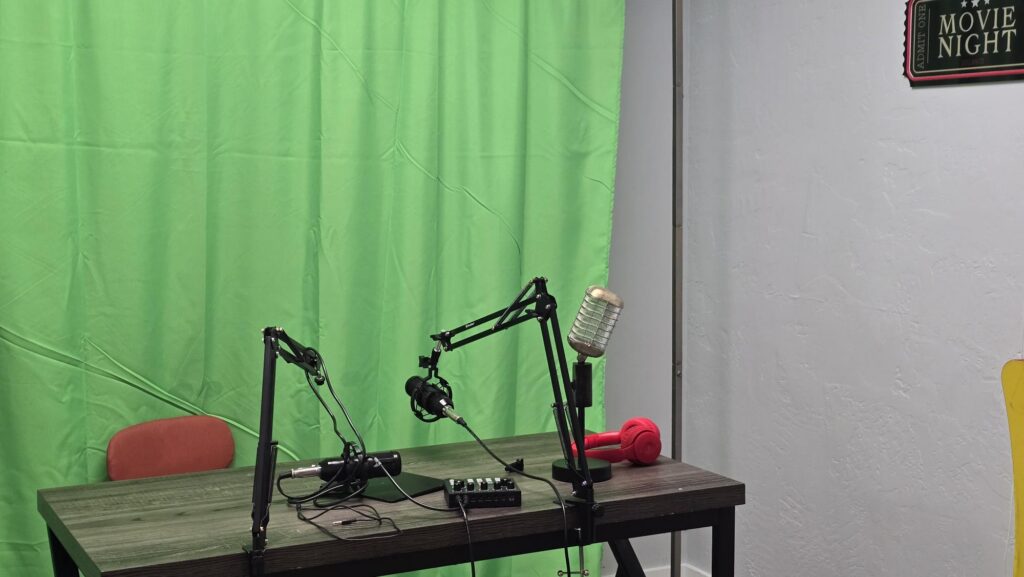
It is visible even in the physical space filled with various projects and paintings. One eighth-grade student with a passion for art was encouraged to take on a major project: painting murals throughout the school, including a panda that has since become the unofficial mascot of EmpowerEd Leaders. Students also have access to tools like a podcast studio and 3D printer, allowing them to turn creative ideas into tangible outcomes.
Challenges of Starting a Microschool in Nevada
However, Haines and Higley admit that the path to bringing their vision to life was not easy. From navigating business formation and regulatory requirements to managing inspections and compliance, the logistical hurdles were significant. But perhaps, the biggest challenge according to Higley was “unschooling.” The founders acknowledge that both the students and the teachers had to unlearn a lot, and rethink what education looks like. However, the process of “unschooling” has ultimately allowed the microschool model to thrive. Looking ahead, the founders plan to continue evolving, expanding the curriculum that is applicable to real-life, and servcing their community.
EmpowerEd Leaders is just one example, but it reflects a broader trend. As dissatisfaction with traditional education district-run schools continues to grow, microschools are not just an alternative—they are becoming an increasingly viable solution.
For most Nevada families, the question is no longer whether a different model is possible, it’s whether the system they’ve known will meet their needs soon enough.
The opinions expressed by contributors are their own and do not necessarily represent the views of Nevada News & Views. This article was originally published via NevadaPolicy.org on 4/30/2026.