The “Hollywood Handout” Debate Isn’t Over
It starts small. Then it grows.
That’s the pattern voters are seeing again with film tax credits. And this time, the ask is bigger than ever.
In Los Angeles, Mayor Karen Bass is backing a plan to remove the cap on film and TV tax incentives.
Karen Bass Joins Mayoral Rival Nithya Raman in Supporting Unlimited Film Incentive https://t.co/fmZmVEOJxn
— Variety (@Variety) May 2, 2026
That means no limit on how much taxpayer money could go to Hollywood studios.
Her argument is simple. It’s about jobs.
“We are in a global battle for entertainment jobs,” Bass said, arguing the industry is key to the middle class in Los Angeles.
Others agree. Councilwoman Nithya Raman also supports an uncapped program, saying studios need certainty if they’re going to stay in California.
But here’s what’s getting attention.
California already spends about $750 million a year on these incentives. And even with that, production has still been leaving the state.
Now the answer is… spend more?
That’s where critics start asking hard questions.
Programs like this usually begin with limits. A cap to keep spending under control.
Then pressure builds. Supporters say it’s not enough. Jobs are at risk. Other states are competing.
So the cap gets raised. Then raised again. And eventually, people start asking why there’s a cap at all.
That’s exactly where California is now. And it’s why this debate matters in Nevada.
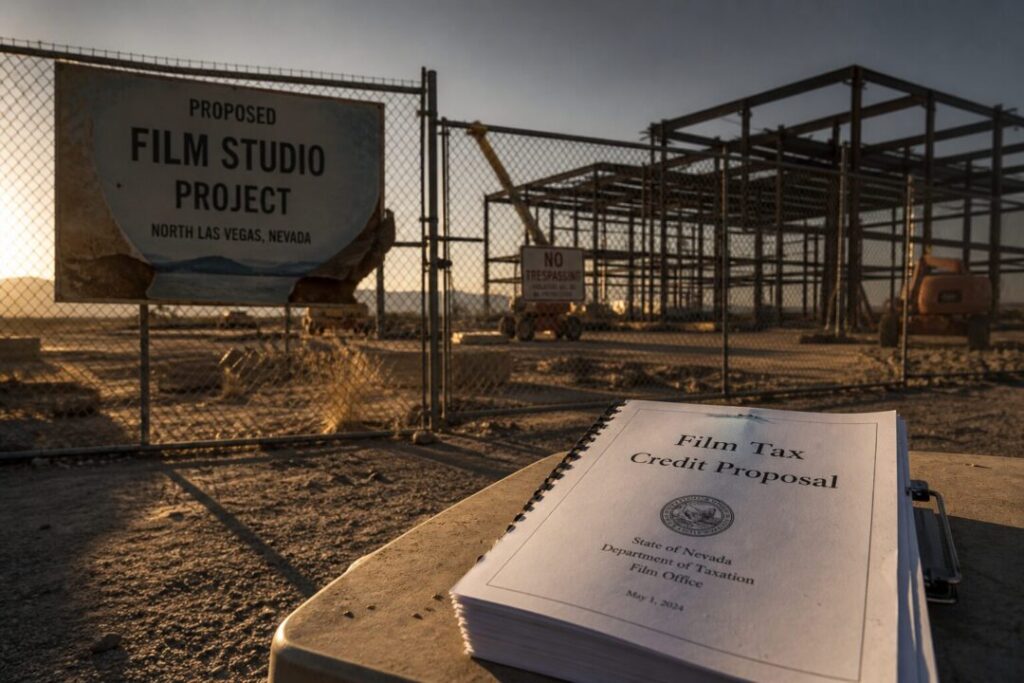
Last year, Nevada lawmakers took up a massive film tax credit proposal many critics called the “Hollywood Handout.”
Supporters pitched it as a way to bring jobs and grow the economy.
But not everyone was convinced.
The plan passed the State Assembly, including a yes vote from my opponent, Assemblyman Jason Patchett.
But it stalled in the Nevada Senate and never made it to the governor’s desk.
For now, it’s dead. But not gone. Lawmakers and industry groups are expected to bring it back next session.
That’s why voters are taking a closer look at how this all plays out elsewhere.
Because once these programs get started, they don’t tend to shrink. They tend to grow.
Critics say the Hollywood Handout was a big gamble with taxpayer money and no clear guarantee it would pay off.
Supporters argue it could still bring jobs and investment Nevada doesn’t want to miss.
That tension isn’t going away. And Nevada has seen this kind of promise before.
The Faraday Future project near North Las Vegas once promised thousands of jobs and a billion-dollar factory.
It never delivered. The site still stands as a reminder of what can happen when big plans fall apart.
Film tax credits aren’t identical. But the risk feels familiar.
You’re using public money. You’re betting on future results. And you’re hoping the numbers work out.
Meanwhile, basic needs don’t disappear. Schools still need funding. Roads still need repairs. Public safety still matters.
That’s where critics say priorities come into focus.
Supporters of film incentives argue they help keep jobs from leaving. They say without them, states like Nevada could lose out.
That’s a fair concern.
But critics push back. They say if an industry depends on constant subsidies, something isn’t working.
They also warn these programs can turn into bidding wars. One state offers more. Another follows. And taxpayers are left covering the difference.
California’s current debate shows how far that can go. From $100 million years ago to $750 million today. And now talk of no limit at all.
For Nevada voters, the question is simple: If that’s the path, where does it lead?
Because once the door opens, it rarely closes. And when government starts making big bets like this, it’s not the politicians who carry the risk.
It’s the people paying the bills.
The opinions expressed by contributors are their own and do not necessarily represent the views of Nevada News & Views. Digital technology was used in the research, writing, and production of this article. Please verify information and consult additional sources as needed.