(Marc M. Friedland) – Nevada's Legislature meets for 120 days every two years.
That is the entire window a state senator gets to fix housing costs, public safety and the cost of living before going home for another 24 months.
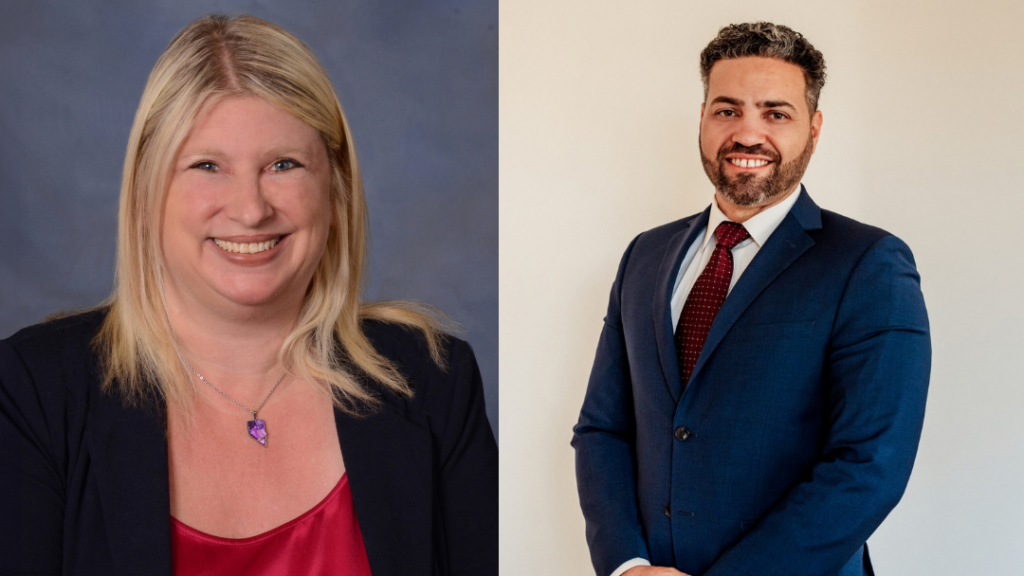
Julie Pazina has now spent two of those biennial windows representing Senate District 12, and she is asking for a four-year term to fill two more.
She has run as “a local businesswoman, not a politician” since her first campaign in 2017, and before she'd knocked on a single door that year, Senate Majority Leader Aaron Ford and the full Senate Democratic Caucus had already endorsed her.
The brand hasn't moved since. The institutional backing behind it has only grown.
This piece draws on her campaign finance filings with the Nevada Secretary of State, her Financial Disclosure Statements, a weighted 2025 legislative scorecard, the Legislature's own bill files, minutes and Senate Journal, the endorsement lists of the groups backing her, and reporting from The Nevada Independent and Nevada Current.
None of that makes her a bad person, and in fairness she has passed real legislation.
But it does raise the question SD12 voters should be asking: is a caucus vote wearing a businesswoman's brand what this swing seat needs for the next four years?
A caucus vote
The Senate Journal records 82 roll calls on the session's final day, June 2, 2025.
Pazina never voted no on any of them, and on the 23 contested ones she sided with the Democratic majority every time (as did six other Democrats).
A weighted 2025 scorecard tracking her votes on 66 bills against a free-market benchmark shows why: she broke from the business-friendly position 62.1% of the time overall, but the pattern isn't uniform.
On general business bills she actually landed on the free-market side more often than not, 56.2% of the time; it's specifically on labor mandates, bills requiring something of an employer, where that drops to 32.1%.
She voted for AB 414, an employer safety mandate, in a 13-8 party-line vote that Governor Lombardo vetoed nine days later, and carried the floor argument for AB 388, a 50-plus-employee paid-leave mandate that passed 11-9 and was also vetoed.
Her SB89, barring hate-crime convicts from owning firearms for 10 years, was vetoed in 2025, and the Independent reports Lombardo rejected the idea in 2023 too.
Nevada Policy, the free-market think tank that scores every legislator, gave Pazina 29.5% in 2023 and 38.4% in 2025, under its 50% line both years and about 45 points below the average Senate Republican in 2025.
Her record isn't exclusively anti-business, though: on AB 44, the AG's price-fixing bill, she voted yes even though American Homes 4 Rent, a later $1,000 donor, testified against it.
The endorsement lists
EMILYs List, the Culinary Union, AFSCME Local 4041, Planned Parenthood Advocates Mar Monte and UAW Region 6 all list Pazina for SD12 and Nicole Cannizzaro, the majority leader now running for Attorney General.
Her campaign Facebook page adds Teamsters Nevada, SEIU Local 1107, the Nevada State Education Association and the Southern Nevada Building Trades.
The Vegas Chamber's BizPAC and the Public Safety Alliance of Nevada, a coalition of police associations, are on her list too.
Aaron Ford's gubernatorial campaign lists her among its Democratic state senator endorsers, and the Nevada Conservation League has endorsed her as well.
These are broad slates, not proof of personal coordination, but the mainstream Democratic coalition has lined up behind her all the same, with some business and public-safety support on top.
Who pays for the campaign
Pazina has raised roughly $434,000 since January 2023.
Her 2026 reports show $218,436 raised through June 30, with about 97% arriving in single contributions of $1,000 or more, the large majority from institutions rather than individual SD12 voters.
Contributions of $100 or less totaled $1,604, or 0.7%, which reads like having virtually no grassroots support in a swing district.
Of the $7,660 she spent in 2026, $5,000 went to other Nevada Senate Democrats.
By my tally, about 16% of her money since 2023 came from gaming, resort and live-entertainment interests, led by Station Casinos and Zuffa at $10,000 each, and roughly 17% came from unions and Democratic-aligned committees, including three donors of $10,000 or more each: Clark County Education Association, Friends of Edgar Flores and Nguyening Leadership.
In June 2023 she voted for the $380 million public financing package (Clark County bonds and tax credits) for the Oakland A's stadium, a bipartisan 13-8 vote; Athletics Investment Group gave her campaign $2,000 four months later.
Her disclosure statements list about $10,130 in sponsored events over three years, the largest a $2,761.79 trip to San Francisco paid for by the Southern Nevada Building Trades Unions.
Her flagship bill: attempted to solve the wrong problem
Nevada needs 2,303 more physicians just to reach the national average, according to the state's own April 2025 workforce report, in 35 of 37 tracked specialties.
That is the scale of the problem Pazina was elected into.
Her answer was Senate Bill 350, the Graduate Medical Education program: an ask for $17 million, more than double the Governor's own $8.5 million GME budget, to fund residencies over four years instead of two.
Finance cut that to $8.5 million and stripped a companion funding mechanism before passing it in May 2023; the advisory council it created didn't meet until September 2025, 27 months later, and it took a second bill, SB 262, to add $9 million before the state finally awarded $15.8 million to nine programs in July 2026, more than three years after the original bill.
A Nevada residency, UNLV's dean has said, takes three to five years to build, sometimes with a one-to-three-year fellowship on top before a specialist ever sees a patient, and there is no record Pazina made that math, or the funding case, to the Governor's office at all.
No realistic number of GME grants was ever going to close a 2,303-physician gap on that clock.
There was a faster fix available the whole time, and it deserved at least as much of Pazina's attention as the program she chose to build from scratch.
Two months before her GME bill was even introduced, Gov. Lombardo signed Executive Order 2023-004, directing every occupational licensing board to justify its barriers to entry and adopt reciprocity wherever a majority of other states already allowed it.
Physician licensing was the obvious test case: a fully licensed doctor practicing in another state could be seeing Nevada patients within months if the paperwork moved faster, not years.
Pazina didn't use that opening.
Two years later, a broader fast fix reached her own desk, and it died there.
SB 34 would have let Nevada join the interstate licensure compacts already used by physician assistants, nurses, audiologists and physical and occupational therapists, so qualified out-of-state providers could start practicing here in months.
This was not a fringe idea: a Nevada Board of Nursing survey found 92% of the state's nurses supported it, the state's own Patient Protection Commission brought the bill, and the Nevada Hospital Association backed joining the compact, as it had for years.
The only organized opposition was a single union, SEIU Local 1107, which argued the real fix was better staffing ratios, not out-of-state competition.
The bill was referred to the Senate Committee on Commerce and Labor, which Pazina chairs.
She never scheduled a hearing, and it died automatically on April 12, 2025, under the rule that kills any bill a chair declines to act on.
When The Nevada Independent asked her directly why, Pazina declined to answer and referred the question to a Senate Democratic Caucus spokesperson, who talked about “tailored solutions” instead.
The Nevada Board of Nursing's own executive director called the whole episode “a political hot potato,” and Gov. Lombardo's PAC, Better Nevada, publicly accused Pazina of “enabling” the nursing shortage by refusing to hear the bill.
So the hospitals wanted it, the nurses wanted it, the Governor had already opened the door to it, and Pazina let it die anyway rather than cross one union.
A separate, narrower fix specifically for physicians, SB 124, passed the Senate unanimously, 21-0, in 2025 and was signed into law.
It lets internationally trained doctors practice under supervision, with a path to a full license only after two years, a shorter road than hers, but still not a fast one; it was carried by Sen. Fabian Doñate, not Pazina, who isn't recorded as a cosponsor.
Strip away the press releases and the grant-round photo ops, and Nevada is exactly where it started: an acute shortage of doctors, while the one head-on fix, faster reciprocity for providers already licensed and already practicing, sat unbuilt, unproposed by Pazina, and dead in her own committee without explanation.
Three different paths to easing the shortage, and on every one where Pazina had a hand, the result was the safe way: a council, a grant round, a press release, anything but the direct fix sitting in plain sight.
It is much ado about nothing, a record long on announcements and short on results, exactly the kind a district ought to be willing to replace.
In fairness
Pazina sponsored 14 bills in 2025, and 79%, or 11, became law, tying her for second among all legislators in bills signed.
On first glance that appears admirable, but the Senate is not a marathon race to see who can run the fastest.
The bills she actually authored and got signed are the safe kind: an interstate wildfire-response compact, a school-garden appropriation, lower licensing fees for small businesses, a ticket-price transparency law, and the follow-up GME funding fix, none of which mandate anything of an employer.
The labor mandates on her record, like the paid-leave and workplace-safety bills, were other legislators' bills that she voted for on the floor, not bills she wrote herself.
In March, the Cure 4 the Kids Foundation recognized her work expanding Nevada's newborn screening program.
The alternative: a self-made business owner
In the 2024 general election for Assembly District 41, Rafael Arroyo narrowly lost to incumbent Democrat Sandra Jauregui, 50.36% to 49.64%, a margin of 257 votes, in a district nested inside SD12; Governor Lombardo and AFP Action not only backed that run, but have since endorsed Arroyo for SD12 as well, along with the Nevada Senate Republican Caucus.
Born in Puerto Rico, he came to Las Vegas as a child, and his mother went on to teach in Clark County schools for more than two decades.
He started his fledgling company, Smog Plus, in 2008 at age 23, and the Nevada Globe reports that a detective soon told him that combining smog testing with DMV registration violated the law.
By Arroyo's own account, he challenged the claim for more than two months and won, a fight that he says taught him that politics will get involved with you if you don't get involved with it.
Today, per Gov. Lombardo's own endorsement of him, the company, now called Smog Plus DMV Services, has grown to nine locations across the valley employing more than 35 Nevadans, offering smog testing alongside vehicle registration, title services, permits, new plates, VIN inspections and auto repair.
Arroyo's message, as the Globe reports it, is “Let's not enact California policies in Nevada,” a line that ties directly back to Pazina's record of labor-mandate votes.
His stated positions are to hold government accountable on wasteful spending, restore consequences for crime, protect small businesses and give parents more say in education, and he backs school choice through the state's Opportunity Scholarship program.
SD12 is a true swing seat, with 34,328 registered Democrats to 30,168 Republicans as of August, and Pazina herself knows exactly how thin that margin can get — she lost her first Senate race by 24 votes in 2018, and won this one by barely five points in 2022.
That is the kind of district where eight years of the same answer, a council, a grant round, a press release, a caucus vote, ought to be a hard sell.
Arroyo has never chaired a committee, so he has never had a bill of his die quietly inside one, the way SB 34 died inside Pazina's.
What he has instead is a business built from nothing, a fight with a state bureaucracy that he took on and won, and a campaign built on cutting through exactly the kind of red tape that left Nevada's fastest fix for its doctor and nurse shortage sitting unheard on Pazina's desk.
Voters in SD12 can read her committee's bill files, her campaign finance reports and the governor's veto list, and weigh that record against a challenger who has never had the chance to build one of his own.
Then they can decide which is the greater risk for the next four years: a known record of safe brand and slow results, or a challenger with no legislative record at all, but a demonstrated talent for taking on entrenched systems and winning.
The opinions expressed by contributors are their own and do not necessarily represent the views of Nevada News & Views. Digital technology may have been used in the research, writing, or production of this article. Please verify information and consult additional sources as needed.