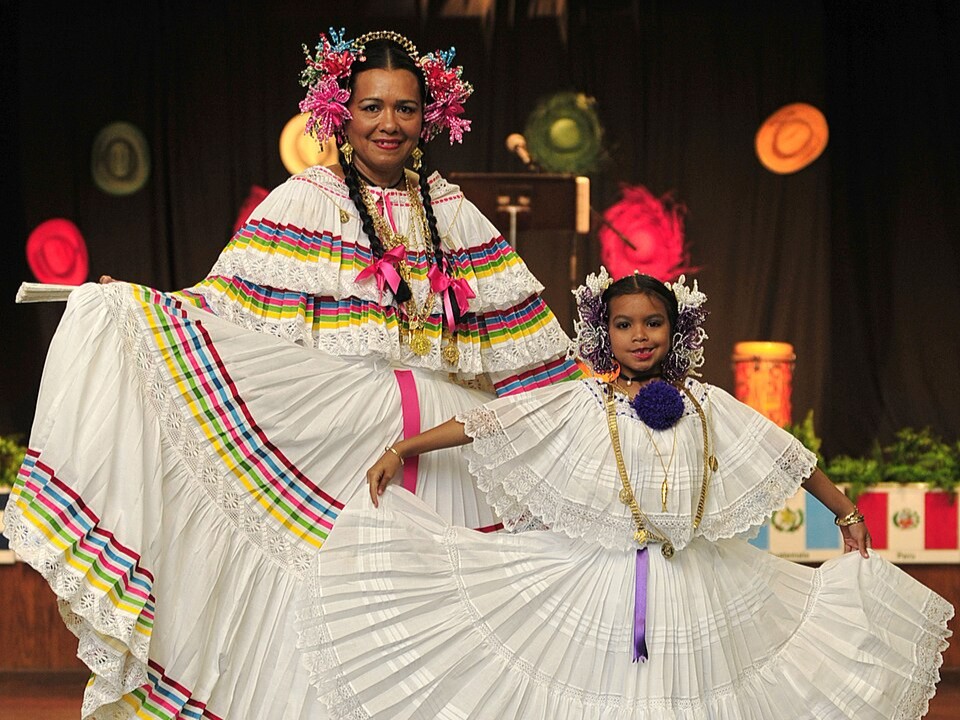
A Las Vegas Sun column says Latinas will pass Question 6 again. It speaks for a community it admits it can’t speak for, and it says little about what Question 6 would actually do.
This week, the Las Vegas Sun published a column titled “Latinas helped pass Question 6 — and will do it again in November.”
Its author, Denise Lopez, directs Nevada campaigns for Reproductive Freedom for All, the national abortion-rights organization formerly known as NARAL Pro-Choice America.
Her argument is simple: honoring Latinas during Hispanic Heritage Month means voting yes on Question 6 on Nov. 3.
I’m Hispanic. My mother was born in Cuba. I read the column closely, and I think Latino Nevadans deserve a more honest account, both of who we are and of what Question 6 does.
Speaking for us while saying no one should
To her credit, Lopez writes that Latinas are not a single voting bloc and that no one should speak for all of us. The rest of the column does exactly that. It uses Hispanic Heritage Month as the setting and treats support for Question 6 as part of honoring our contributions.
Our community is not a monolith.
Start with abortion itself. Pew Research Center’s most recent data finds that 56% of Hispanic adults say abortion should be legal in all or most cases, while 42% say it should be illegal in all or most cases. That’s a real division within our community, and it’s exactly what a campaign erases when it claims to speak for “Latinas.”
(And that isn’t even the question Question 6 asks. Whether abortion should be legal is already settled in Nevada. More on that later.)
Our politics are just as varied.
The column says 81% of Nevada Latinos backed Question 6 in 2024 but doesn’t say where that number comes from. It appears to come from a post-election survey that also found Nevada Latinos voted for Kamala Harris by nearly 30 points. The network exit poll found them split almost evenly, 48% to 47%, with Latino men favoring Republicans.
When polls of the same voters disagree that much, a campaign that quotes only the friendliest one isn’t describing our community: It’s selling a message.
The column also cites a 2026 survey in which 8 in 10 Latino respondents said protecting access to “reproductive healthcare” was important.
That survey covered competitive congressional districts nationwide. It didn’t ask Nevadans, it didn’t ask about Question 6, and “reproductive healthcare” covers far more than abortion. Prenatal care, birth control, fertility treatment and miscarriage care all fall under that phrase, and almost everyone supports them, including those voting no.
That tells us Latinos care about their health. It tells us nothing about Question 6.
Our faith lives are varied too. About 4 in 10 U.S. Hispanic adults are Catholic, and many others are evangelical, secular, or somewhere in between. Pew has found these groups hold very different views on social issues.
Follow the money
The Sun’s tagline identifies Lopez by her title. What the column itself never mentions is money. Her organization is one of the largest funders of the Yes campaign, and she runs its Nevada operation.
In the first half of 2026, Nevadans for Reproductive Freedom, the PAC running the Yes campaign, raised more than $815,000. Nearly all of it came from five contributors, none of them Nevadans:
- $250,000 from Quinn Delaney, a donor from Piedmont, California, who sits on the board of the Planned Parenthood Action Fund.
- $250,000 from Planned Parenthood Advocates Mar Monte, the advocacy arm of the largest Planned Parenthood affiliate in the country, headquartered in San Jose, California.
- $200,000 from Reproductive Freedom for All, Lopez’s employer.
- $100,000 from Think Big America, the group founded by Illinois Gov. J.B. Pritzker. It doesn’t disclose its donors, and it gave the same PAC $1.15 million in 2024.
- $10,000 from Shannon Hunt-Scott of Los Gatos, California, who chairs Reproductive Freedom for All’s PAC and is vice chair of the organization.
That accounts for about $810,000 of the $815,000.
Reproductive Freedom for All has also announced a $23.5 million national midterm program with “priority investments” in Nevada, including Question 6.
In 2024, the Yes campaign raised more than $11 million. By comparison, Protect Our Girls, the main PAC opposing the measure, has raised $10,000 this cycle, all from two Carson City residents.
Even the timing of the Sun column follows the campaign. The same week it ran, Reproductive Freedom for All released a statement from Lopez tying Question 6 to the mifepristone anniversary, the same hook her column uses.
None of this makes her arguments wrong on its own.
They should be judged on the merits, and the rest of this piece does that. But readers deserve to know what they’re reading.
The column is framed as a Latina voice during Hispanic Heritage Month. Its author’s job is to pass Question 6 for an organization that is funding it. She isn’t paid to represent Hispanics. She’s paid to represent Reproductive Freedom for All.
A column about everywhere except Nevada
Much of the column is about things Question 6 cannot touch: abortion bans in other states, average drive times to clinics in those states, the Trump administration’s review of mifepristone, and Medicaid cuts in Washington.
Question 6 is a Nevada constitutional amendment. It cannot override the FDA, restore federal Medicaid dollars, or change a law in Texas or Florida.
In Nevada itself, abortion is already legal through 24 weeks, and after that point when a woman’s life or health is at stake. That protection comes from NRS 442.250, which voters approved by referendum in 1990. Under Article 19 of the Nevada Constitution, a law approved by referendum cannot be amended or repealed by the Legislature or the governor, only by another vote of the people.
The column closes by saying abortion belongs in the constitution, “where no politician can take it away.” For the core of Nevada’s abortion law, that is already the case.
Read our prior coverage:
Nevada’s Abortion Law Isn’t Going Anywhere, So What Does Question 6 Actually Change?
What Question 6 actually says
Here is the operative language from the ballot question:
“All individuals shall have a fundamental right to abortion performed or administered by a qualified health care practitioner until fetal viability, or when needed to protect the life or health of the pregnant patient, without interference from the state or its political subdivisions. The right established by this section shall not be denied, burdened, or infringed upon unless justified by a compelling state interest that is achieved by the least restrictive means.”
A second section defines the key terms. A “compelling state interest” is limited to protecting the health of the person seeking an abortion. “Fetal viability” is the point at which, in the professional judgment of the patient’s treating health care practitioner, the fetus is likely to survive outside the womb.
That language makes four major changes:
- It applies the strictest test in constitutional law. Any law that “burdens” abortion must be justified by a compelling interest and use the least restrictive means available. Courts strike down most laws that face this test.
- It narrows what counts as a legitimate interest. The only interest that qualifies is the patient’s health. Other interests, such as informing parents or giving someone time to reconsider, don’t count.
- It moves away from requiring a doctor. Nevada law, NRS 442.250, requires that abortions be performed by a physician. Question 6 never uses the word “physician.” It protects abortion performed by a “qualified health care practitioner,” a broader term the amendment doesn’t define. Nevada’s physician requirement would then have to survive strict scrutiny, and we’ve already seen how that goes. When Michigan’s similar amendment reached court, a judge struck down its physician-only rule.
- It replaces a clear line with individual judgment. Voters set 24 weeks in 1990. Under Question 6, viability is decided case by case by the “treating health care practitioner.” Combined with the change above, that practitioner may not be a doctor.
Put those changes together and look at late-term abortion. Today, Nevada law draws a clear line. After 24 weeks, an abortion is allowed only to protect the woman’s life or health, and it must be performed by a physician in a hospital.
Question 6 keeps a life-or-health condition after viability, but it doesn’t define “health” or say who decides when an abortion is “needed.” It lets the treating practitioner, who may not be a doctor, decide when viability begins in the first place.
In other words, the safeguards voters wrote in 1990 would rest on the honor system. A clear 24-week line, a doctor, and a hospital would be replaced by one practitioner’s judgment, reviewed by no one unless someone sues.
Voters wrote those safeguards. Question 6 erases the first and puts the other two on trial.
We’ve seen this movie
Supporters often describe amendments like this as simply keeping current law. Other states’ experience says otherwise.
Michigan voters adopted a similar amendment in 2022. In May 2025, a judge ruled that it invalidated the state’s 24-hour waiting period, its informed-consent requirements, and its rule that only physicians may perform abortions.
Ohio passed its amendment in 2023. Within a year, a judge blocked its 24-hour waiting period, its in-person visit requirement, and its informed-consent requirements, finding they conflicted with the new amendment.
Why the second vote matters
The column notes that Question 6 won 64% of the vote in 2024. But Nevada requires constitutional amendments proposed by initiative to pass twice, precisely so voters get a second look.
Since 2024, Nevadans have been able to watch Michigan and Ohio courts apply nearly identical language. Voting no this time isn’t a reversal of the first vote. It’s the second vote doing its job.
Our heritage, our choice
Nevada’s current abortion law is not a ban. Access to abortion did not change in Nevada when Roe v. Wade fell.
That’s because Nevadans settled this question together in 1990, approving a clear standard by nearly two to one. It has held for more than three decades, and no politician can touch it. Question 6 would take the details of that standard away from voters and hand them to practitioners’ judgment calls and to judges.
Now a campaign bankrolled from California, Washington, D.C., and Illinois wants to reopen that settlement, and it’s telling Latino Nevadans our heritage has already decided how we’ll vote. It hasn’t.
Latino Nevadans will vote on both sides of this question, as we always have. No label, not even “Latina,” decides how any of us will vote, or how we should. But anyone who values a clear law over a judgment call, a doctor over the honor system, and voters over lawsuits has every reason to vote no.
Honor our heritage by trusting us to think for ourselves.
The opinions expressed by contributors are their own and do not necessarily represent the views of Nevada News & Views. This article was written with the assistance of AI.