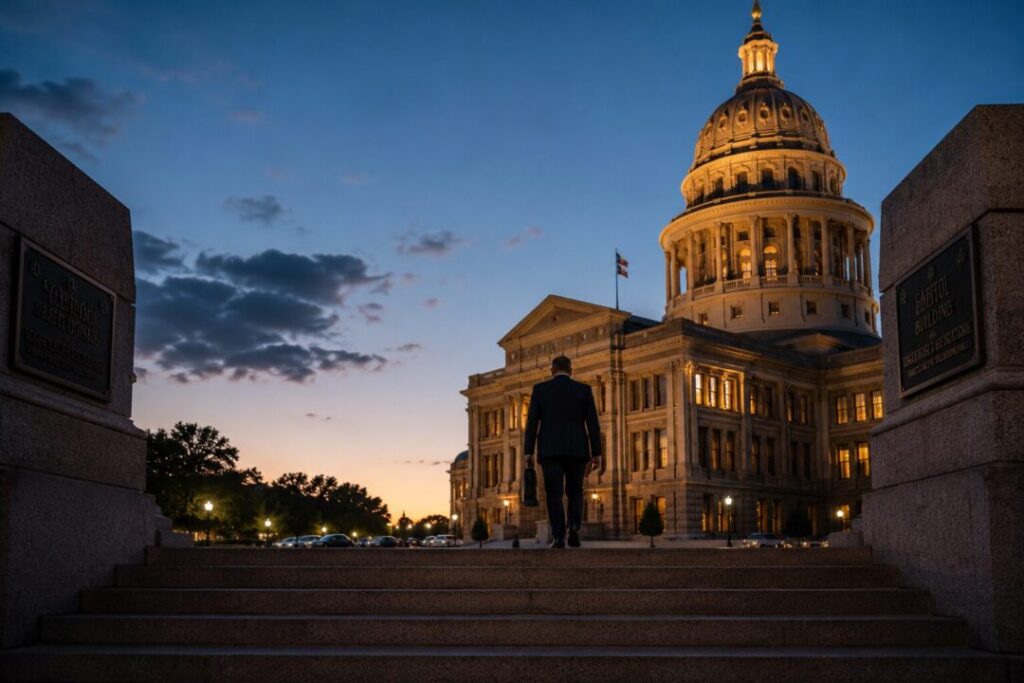
Congressman Wants to End Direct Senate Elections. The Founders Might Agree with Him.
Texas Congressman Keith Self just threw a hand grenade into the national debate over federalism.
Self, a Republican and member of the House Freedom Caucus, introduced a joint resolution last week to repeal the 17th Amendment to the U.S. Constitution.
That’s the amendment that lets voters directly elect their U.S. Senators.
In other words, he wants to take that choice away from you and give it back to your state legislature.
Sounds radical, right? Well, hold on. Let’s at least hear the man out.
First, the reality check.
This proposal is dead on arrival. To repeal a constitutional amendment, you need a two-thirds vote in both the House and Senate, plus approval from 38 states.
Sitting U.S. Senators would essentially have to vote to change how they get their jobs. That’s not happening.
So why does this matter?
Because sometimes a bill that can’t pass still says something important.
What the 17th Amendment actually changed.
Before 1913, U.S. Senators weren’t chosen by voters. They were chosen by state legislatures. That was the original design from the Founders.
The idea was simple: the House would represent the people. The Senate would represent the states. Each would check the other.
When the Progressive Era reformers pushed through the 17th Amendment, they argued that state legislatures were corrupt and slow. Direct elections, they said, would make Senators more accountable.
Maybe. But something was also lost.
What Self and his allies are saying.
Rep. Self put it plainly: “The current system has given us six-year politicians more focused on national ambitions and the institution of the U.S. Senate than on the states they serve.”
He’s got a point. Think about it.
A U.S. Senator raises millions of dollars from national donors. They build national media profiles. They run for president. They get pulled into Washington’s orbit and start thinking more like a D.C. insider than a state representative.
Under the original system, if your Senator wasn’t listening to the folks back home, your state legislature could dump him at the end of his term. That’s a pretty direct accountability mechanism.
Self’s resolution already has eight co-sponsors, including Reps. Paul Gosar of Arizona, Scott Perry of Pennsylvania, and Andrew Clyde of Georgia.
All conservatives. All frustrated with a Senate that keeps slow-walking House priorities. That frustration is real.
The House passed the SAVE America Act, a voter ID and proof-of-citizenship bill. The Senate has been dragging its feet.
Self used that example to argue that if the Senate won’t represent the states, maybe the states should get to pick them again.
Here in Nevada, that’s worth thinking about.
Nevada’s U.S. Senators are chosen by the statewide electorate. But Nevada’s statewide electorate doesn’t always look like Nevada’s state legislature.
When the legislature is conservative and the statewide voter base tilts differently, you get a disconnect between what state leaders want and what D.C. sends back home.
That’s the tension Self is pointing at.
What critics say.
Critics have a fair counterpoint. State legislatures have their own corruption problems. The old pre-1913 system was filled with backroom deals and deadlocks.
Moving the choice away from voters hands it to a smaller political class. And honestly, that’s a real concern.
But the supporters would say today’s system just moves those backroom deals to a bigger stage. National special interests, Super PACs, and out-of-state billionaires now fill the role that local party bosses once played.
Is that better?
Rep. Self’s resolution isn’t going anywhere. But the ideas behind it, about federalism, about state sovereignty, about senators who’ve lost their connection to the states they serve, those ideas aren’t going away either.
Sometimes a proposal that can’t win is still asking the right questions.
The opinions expressed by contributors are their own and do not necessarily represent the views of Nevada News & Views. Digital technology was used in the research, writing, and production of this article. Please verify information and consult additional sources as needed.