As a Realtor, I've spent years helping families achieve the dream of homeownership.
I've also worked with many small property owners who invested their life savings into rental properties as a way to build financial security for their families.
And with that in mind, I think some of the conversations happening around housing today should concern all of us.
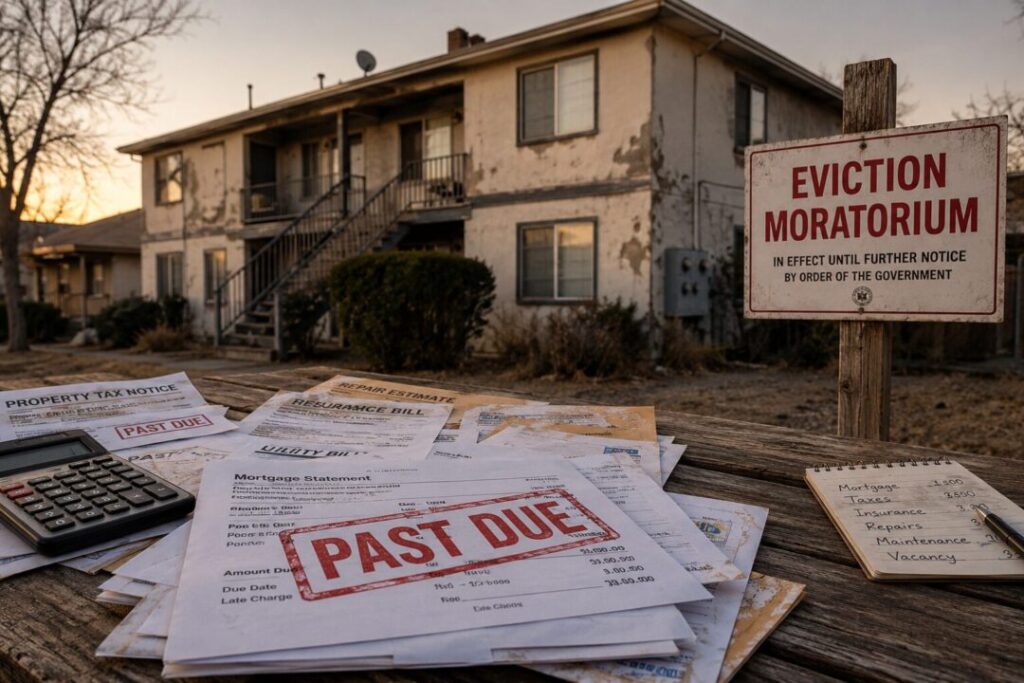
During COVID, governments across the country imposed eviction moratoriums. Many people still misunderstand what those policies actually did.
The government didn't step in and pay everyone's rent. Instead, many landlords were legally prevented from removing tenants who stopped paying rent.
But the bills kept coming.
Mortgage payments were still due.
Property taxes were still due.
Insurance premiums were still due.
Maintenance costs were still due.
Imagine you're a retired couple who spent decades saving to buy a duplex. Or an immigrant family that pooled resources to purchase a small apartment building. Or a working family depending on rental income to supplement retirement.
Then your tenants stop paying for months. Sometimes much longer.
Meanwhile, inflation drives up the cost of everything. Insurance rates. Building materials. Property taxes.
The income disappears, but the expenses don't.
Many small landlords faced this reality, drained savings accounts, borrowed money, and took on debt just to keep their properties afloat.
Today, some of those same property owners are being portrayed as villains.
Buildings can deteriorate when owners struggle financially for years. Critics often complain about property conditions while ignoring the policies that helped create the problem.
That's backwards.
If government policies contribute to financial hardship, it's unfair to pretend consequences happen all by themselves.
What's especially troubling is where some of these ideas seem to be heading.
We're hearing growing calls for government intervention when properties are deemed neglected or underperforming.
Supporters say these measures are necessary to address housing shortages and improve living conditions.
I understand the concern. Everyone wants safe, affordable housing.
But we should be very careful about giving government more power over private property.
History teaches us that once government expands its authority, the definitions tend to expand too.
Today the concern may be deferred maintenance.
Tomorrow it could be “underutilized property.”
The next day it's something labeled as a “community need.”
The language changes, but the result is often the same: less private ownership and more centralized control.
As a Realtor, I know strong communities depend on people who are willing to invest in neighborhoods. They buy properties. They improve them. They take risks. They create housing opportunities.
When government sends the message that ownership itself is risky, fewer people will invest.
That's not good for neighborhoods. It's not good for housing supply. And it's certainly not good for affordability.
The biggest companies and investment firms can survive policy mistakes. They've got deep pockets, lawyers, and access to capital.
Small property owners don't. They're often the first to suffer when government gets it wrong.
Here in Nevada, we're already struggling with housing affordability and inventory shortages. The last thing we should be doing is creating more uncertainty for people willing to provide housing in our communities.
We need policies that encourage investment, protect property rights, and hold everyone accountable.
We don't need a system where government creates financial hardship then blames property owners for the consequences.
The people who weathered the storm of eviction moratoriums aren't the villains in this story.
In many cases, they're the ones who sacrificed the most just to keep their doors open and their properties standing.
The opinions expressed by contributors are their own and do not necessarily represent the views of Nevada News & Views. Digital technology was used in the research, writing, and production of this article. Please verify information and consult additional sources as needed.