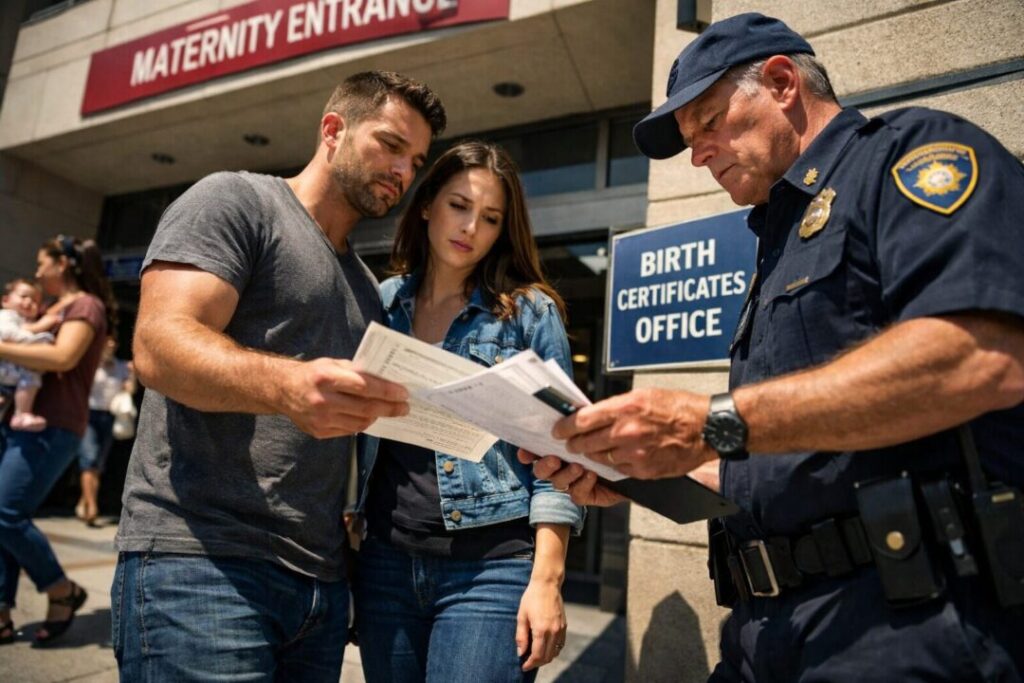
Here’s a question most Americans think they already know the answer to: If you’re born in the United States, you’re automatically a citizen, right?
Not so fast.
Over the weekend, conservative legal scholar and radio host Mark Levin made a strong case on Fox News that what we’ve been told for years about birthright citizenship might not line up with the Constitution at all.
And now, with the U.S. Supreme Court weighing a case tied to President Donald Trump’s executive order on the issue, this debate isn’t just talk anymore.
It could reshape immigration policy nationwide.
What Levin Says the Constitution Actually Means
Levin’s argument is simple. He says the 14th Amendment has been misunderstood.
That amendment, passed after the Civil War, says that all persons born in the U.S. and “subject to the jurisdiction thereof” are citizens.
Most people stop reading after “born in the U.S.”
Levin says that’s the mistake. He argues the key phrase is “subject to the jurisdiction thereof.”
In plain terms, he says that means full political loyalty to the United States, not just being physically present here.
Under that reading, children of illegal immigrants would not automatically qualify for citizenship, because their parents still owe allegiance to another country.
Levin points to the original purpose of the amendment. It was meant to ensure citizenship for freed slaves after the Civil War.
It was not designed as an immigration policy, and certainly not as a way to grant citizenship based on illegal entry.
Why This Matters Right Now
This isn’t just an academic argument.
The Supreme Court recently heard arguments tied to Trump’s executive order that challenges the current interpretation of birthright citizenship.
Levin called the case “very simple,” but said the justices are making it more complicated than it needs to be.
That’s a polite way of saying he thinks the Court is avoiding the obvious.
If the Court sides with a narrower reading, it could change decades of immigration policy overnight.
Of course, not everyone agrees. Critics argue that birthright citizenship has been widely accepted for more than a century.
They point to court decisions like the 1898 case United States v. Wong Kim Ark, which affirmed citizenship for a child born in the U.S. to non-citizen parents.
They also warn that changing the rule could create chaos.
Imagine hospitals, states, and federal agencies trying to verify the citizenship status of every newborn’s parents. That’s not a small task.
Still, Levin’s argument taps into a deeper concern many Americans already feel. Does current policy reward illegal behavior?
Think about it like this. If someone cuts in line and still gets served first, what message does that send?
Levin says the current interpretation of birthright citizenship does something similar. It creates an incentive for illegal immigration by offering a major benefit at the end of the process.
What It Means for Nevada
Here in Nevada, this debate isn’t theoretical.
Our state has seen rapid population growth, ongoing strain on schools and healthcare, and constant pressure on public services. Immigration policy plays a direct role in all of that.
If federal rules change, Nevada will feel it quickly. From Clark County classrooms to local hospitals, the ripple effects would be real.
At the end of the day, this comes down to a basic question: What did the Constitution actually mean when it was written?
Levin says we’ve drifted away from that meaning. The Supreme Court now has a chance to decide whether he’s right.
And if they agree with him, the way America defines citizenship could change in a very big way.
The opinions expressed by contributors are their own and do not necessarily represent the views of Nevada News & Views. Digital technology was used in the research, writing, and production of this article. Please verify information and consult additional sources as needed.