If you've ever thought voter rolls should be at least as secure as a trip to the airport, you and Florida have something in common.
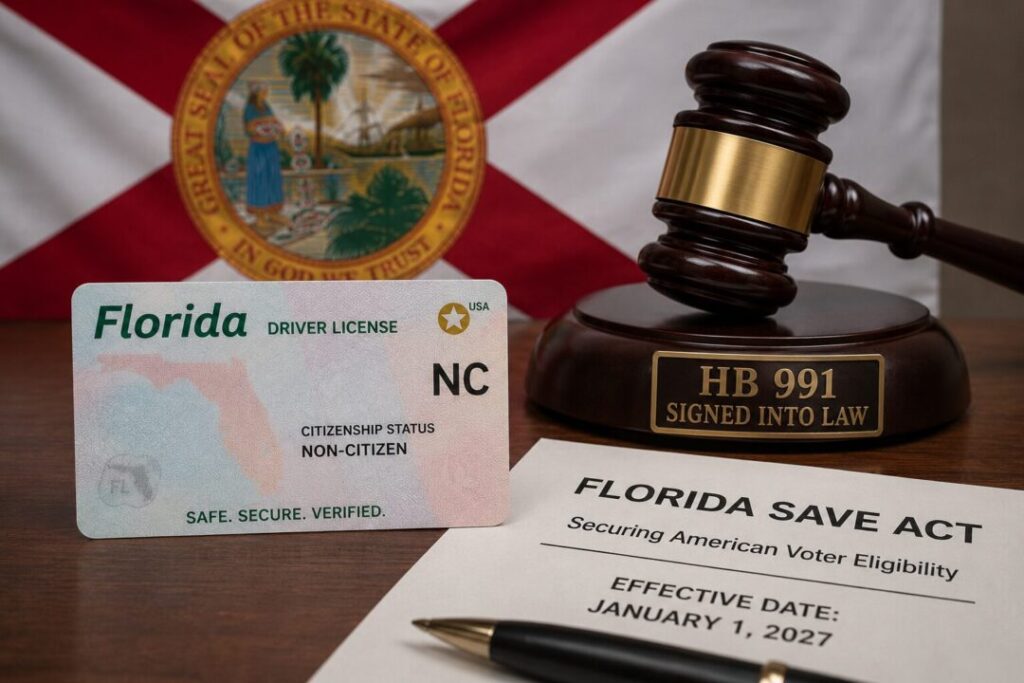
Governor Ron DeSantis signed the Florida SAVE Act (HB 991) on April 1, 2026.
Starting January 1, 2027, new, renewed, or replaced driver's licenses and state IDs will show citizenship status. Non-citizens get “NC” printed on the card.
🚨 WOW! Democrats are furious as a law will soon take effect in Florida REQUIRING that EVERY driver's license issued will need to display whether the person is a NON-CITIZEN as part of the state's SAVE America Act
Florida did it right again ☀️
The law also ENSURES only citizens… pic.twitter.com/pqwnCCIGJk
— Eric Daugherty (@EricLDaugh) June 12, 2026
What Florida Just Signed
When someone registers to vote, election officials cross-check their info against the state DMV database to verify citizenship.
Most Floridians with a REAL ID-compliant license already handed over citizenship documents at renewal, so they clear automatically.
If the database can't verify someone, they produce a passport, birth certificate, or naturalization papers. No verification, no registration.
The law also audits existing voter rolls, adds felony penalties for false registration, makes paper ballots the primary voting method, and removes student IDs as valid voter ID.
The Voter Roll Cleanup
Florida already found 198 likely non-citizens who had illegally registered and/or voted out of 13 million registered voters.
Small number. But close elections get decided by hundreds of votes.
The audit provision covers current registrations too, not just new ones.
Can't confirm citizenship through existing records? You get a notice. Ignore it, and you're off the rolls.
Critics note the DHS verification database has occasionally flagged naturalized citizens incorrectly. That's important to monitor.
The law includes a resolution process, and naturalized citizens who get a new ID receive a free replacement card.
Five States Didn't Wait for Washington
Congress stalled the federal SAVE Act in the Senate. The states moved anyway.
Florida, Mississippi, South Dakota, Utah, and Tennessee have all signed proof-of-citizenship voting laws. More than a dozen others are considering them.
Eight states have passed stricter voter ID restrictions through at least one chamber, including Arizona, Iowa, and West Virginia.
Nevada hasn't touched any of this.
For a state that's seen multiple elections decided by a few hundred votes, that gap is getting harder to defend.
The Opposition
Voting rights groups filed a federal lawsuit within minutes of the signing, arguing it creates unnecessary barriers for eligible voters.
Their concern is that seniors and some naturalized citizens may not have easy access to passports or birth certificates.
Worth noting: Florida's law is less burdensome than the federal version. It hits the databases first. Document submission only kicks in when those checks fail.
So What Happens Now?
The law doesn't take effect until 2027, after this fall's midterms. It's already in court. There's a real chance it gets delayed or modified before anyone sees “NC” on a license.
But the blueprint is clean: check existing databases, confirm citizenship before registration, require documents only when records don't match.
It doesn't stop anyone from voting. It requires voters to be citizens.
Five states signed it. Nine more are building the same framework right now.
If Washington won't do it, state legislatures will.
The opinions expressed by contributors are their own and do not necessarily represent the views of Nevada News & Views. Digital technology was used in the research, writing, and production of this article. Please verify information and consult additional sources as needed.