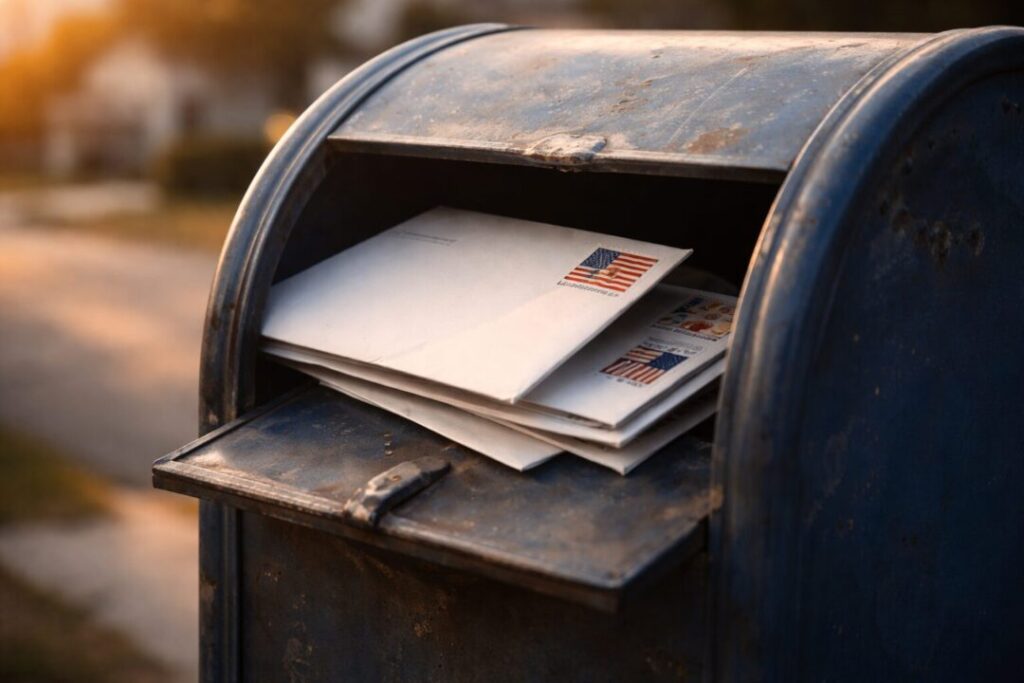
Mailing a letter isn’t as cheap as it used to be. Now it could get a whole lot worse.
The United States Postal Service is asking to raise the price of a first-class stamp to nearly $1. Right now, it costs 78 cents. Under the new plan, that could jump to between 90 and 95 cents.
If you send out birthday cards, bills, or small business mail every week, those extra pennies add up fast.
And once prices go up, they rarely come back down.
Why the Increase?
At a recent House Oversight Committee hearing, Postmaster General David Steiner said the agency is in serious trouble.
The Postal Service reported a $9 billion loss in 2025. Steiner warned it could run out of cash in less than a year.
“As you all know, there are only three things that any company can do to improve financial performance — sell more products, raise prices or cut costs,” Steiner told lawmakers.
“On the pricing side, we need to look for higher prices on both our package and mail products.”
In simple terms, the Postal Service says it needs more money. And the easiest way to get it is from you.
Steiner also argued that U.S. stamps are still cheap compared to other countries.
He pointed to France, where stamps cost about $2.72, and the United Kingdom, where they run around $2.50.
He also pointed out that those countries are much smaller than the U.S. Mail here travels thousands of miles, from Alaska to Puerto Rico, for under a dollar.
That’s all true. But it doesn’t tell the whole story.
A Familiar Pattern
When government-run systems struggle, the first answer is almost always the same. Charge more.
But government agencies don’t face the same pressure as private businesses do to fix problems. They can go to Congress or raise rates and keep going.
And that’s what we’re seeing here.
The Postal Service isn’t just asking for higher stamp prices. Steiner also said it needs Congress to raise its borrowing limit above the current $15 billion cap, which has been in place since the 1990s.
So the plan is simple. Charge more. Borrow more. Hope it works.
Who Pays the Price?
The people who feel this the most won’t be big corporations. They’ll be everyday Americans.
Seniors who still pay bills by mail. Small businesses that rely on sending invoices. Families mailing care packages or holiday cards.
And there’s a bigger question here. If the Postal Service keeps losing billions every year, will higher stamp prices really fix the problem? Or is this just a short-term patch?
Even Steiner admitted that raising prices would “largely solve our controllable loss.”
That word “controllable” suggests there are deeper issues that still aren’t being addressed.
What Critics Say
Supporters of the increase argue the Postal Service has no choice. They say mail volume has dropped, costs have gone up, and the system needs to adapt to survive.
The world has changed. More people use email and online billing.
But critics on the conservative side say raising prices without serious reform is the wrong approach. They argue it rewards failure instead of fixing it.
They want to see real changes. Cutting waste. Modernizing operations. Looking at private sector solutions.
The Bottom Line
At the end of the day, this comes down to trust.
Do you trust that raising prices will solve the problem? Or do you think it’s just kicking the can down the road?
The opinions expressed by contributors are their own and do not necessarily represent the views of Nevada News & Views. Digital technology was used in the research, writing, and production of this article. Please verify information and consult additional sources as needed.