How a Reality TV Star Just Changed Campaign Politics Forever
Most political campaigns spend a fortune trying to get voters to pay attention. Spencer Pratt spent a fraction of that and got people talking anyway.
No, Pratt didn't win his bid for mayor of Los Angeles. But his campaign may have done something even more important.
It gave politicians a glimpse of what campaigning could look like in the age of artificial intelligence.
Political strategist Rick Tyler recently highlighted one of the most overlooked stories from the Los Angeles mayoral race.
It wasn't about polling. It wasn't about fundraising. And it wasn't about endorsements.
It was about attention.
During the campaign, a volunteer named Charles Curran created a series of AI-generated videos supporting Pratt.
These Spencer Pratt videos by @dsonoiki are better than 99.9% of political consultant ads. He does it again. pic.twitter.com/hemFACa8xZ
— Clay Travis (@ClayTravis) May 29, 2026
The videos transformed Los Angeles politics into over-the-top pop culture adventures.
One portrayed Pratt as a superhero battling a city in decline.
Another used science fiction themes to poke fun at California's political establishment.
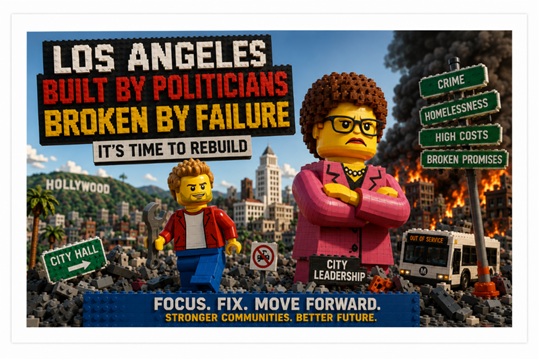
A third recreated Los Angeles politics in a Lego-style world filled with chaos, dysfunction, and satire.
The videos were funny. They were ridiculous. They were impossible to ignore. And that's exactly why they worked.
For years, political consultants have treated digital media like miniature television commercials. They create polished 30-second spots, upload them to social media, and hope voters watch.
Most don't.
Today's voters scroll quickly. They're bombarded with content every minute of every day. If something doesn't grab attention immediately, it's gone.
The Pratt videos understood that reality.
They weren't designed to look like traditional political advertising. They were designed to look like something people would voluntarily share with friends. That's a huge difference.
According to Tyler, the most important lesson from the Pratt campaign is that political persuasion is changing.
Campaigns used to rely heavily on money. If you wanted a professional-quality video, you needed production crews, editors, consultants, and a sizable budget.
Artificial intelligence is changing that equation.
Today, a volunteer with a laptop can create content that rivals productions that once cost tens of thousands of dollars. That should get the attention of every candidate running for office.
It should also get the attention of every incumbent.
For years, political establishments enjoyed a major advantage because they controlled most of the resources. They could outspend challengers and dominate the airwaves.
But AI is lowering barriers.
A creative supporter can now produce content capable of reaching hundreds of thousands of voters without buying television time or hiring a consulting firm.
Of course, there are risks.
AI can be used to mislead voters. It can create fake images, fake voices, and fake scenarios. That's why transparency and honesty remain important.
But ignoring the technology won't stop it. The toothpaste is already out of the tube.
The smarter approach is learning how to use these tools responsibly while recognizing that political communication is evolving faster than most campaign laws and consultant playbooks.
There's also a lesson here for Nevada.
Whether it's a race for governor, Congress, the Legislature, or city council, candidates who understand how people consume information today will have an advantage over those still relying on yesterday's methods.
Voters don't share mail pieces. They don't forward television commercials to their friends.
They share content that entertains them, surprises them, or speaks to frustrations they already feel. That's what the Pratt videos did.
Spencer Pratt may not have become mayor of Los Angeles. But his campaign showed something every future candidate should remember: The next viral political message might not come from a consultant, a campaign manager, or a media buyer.
It might come from a volunteer with an AI prompt and a good idea. And that reality isn't going away.
The opinions expressed by contributors are their own and do not necessarily represent the views of Nevada News & Views. Digital technology was used in the research, writing, and production of this article. Please verify information and consult additional sources as needed.