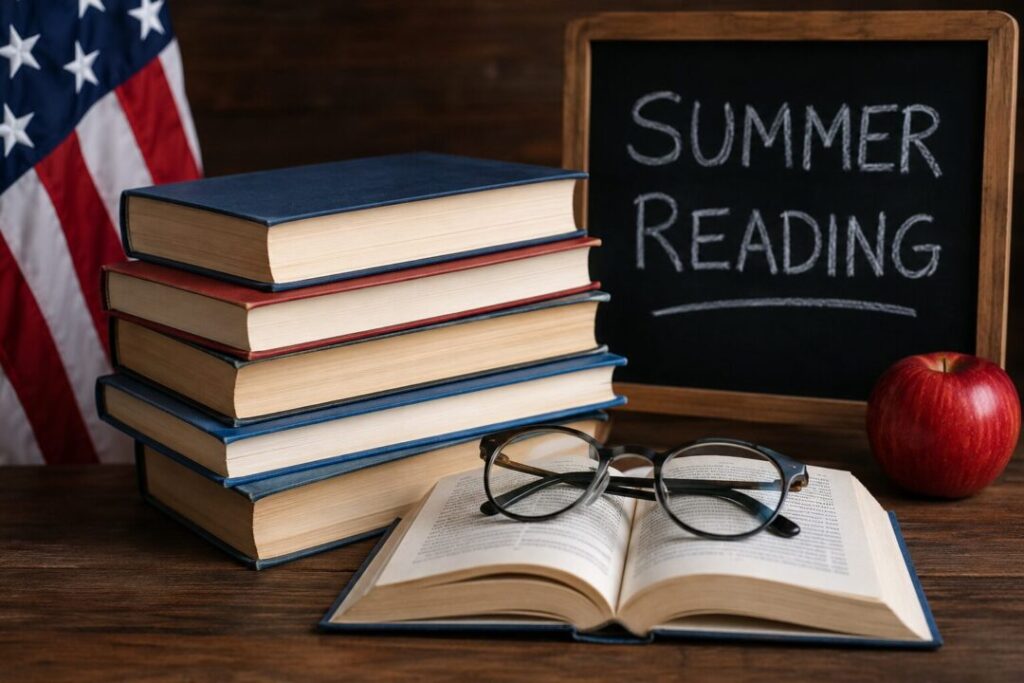
A lot of kids spend summer glued to tablets, video games, or YouTube. The White House is trying to get them to pick up a book instead.
Second Lady Usha Vance recently announced the 2026 Summer Reading Challenge for students in kindergarten through 8th grade.
Kids read 12 books between June 1 and September 4. Parents then submit their child’s completed reading list. In return, students receive a personalized certificate, a special America 250-themed bookmark, and access to a prize.
Some students will even get the chance to visit Washington, D.C., and the White House with a chaperone.
Not bad for reading books during summer break.
According to the National Assessment of Educational Progress, reading scores among American students have fallen in recent years, especially after the COVID-era school shutdowns.
Teachers across the country have also reported growing problems with short attention spans and weaker reading habits among younger students.
Parents in Nevada have seen some of the same struggles. Clark County schools, like many districts nationwide, continue dealing with learning loss and low proficiency rates in reading and math.
This challenge doesn’t involve some giant new federal agency or billion-dollar spending package. It’s encouraging families to do something we already know is good for kids: read more books.
Critics may argue programs like this are mostly symbolic. A reading challenge by itself won’t fix struggling schools, teacher shortages, or declining test scores.
But culture matters, too. A kid who spends summer reading 12 books is building skills that no government mandate can force.
And unlike some education debates that instantly turn into partisan warfare, this is one issue where pretty much every parent can agree: Reading is good for kids.
It improves vocabulary, attention span, imagination, and critical thinking. It also gives children a break from the nonstop digital noise that dominates modern life.
The challenge also gives parents flexibility. Children can choose their own books instead of working through a rigid government-approved reading list.
Kids are far more likely to keep reading when they actually enjoy what they’re reading.
Maybe one child grabs a history book about the American Revolution. Another picks mystery novels. Another tears through books about dinosaurs, baseball, or space.
It all counts.
The goal isn’t to create perfect little scholars by Labor Day. The goal is simply to help kids fall in love with reading again.
The opinions expressed by contributors are their own and do not necessarily represent the views of Nevada News & Views. Digital technology was used in the research, writing, and production of this article. Please verify information and consult additional sources as needed.