If you want to see the future, sometimes all you have to do is look west.
California just ran a real-world test on high minimum wages. And the results should have Nevada paying close attention.
In 2023, California Gov. Gavin Newsom signed a law raising the minimum wage for fast-food workers to $20 an hour.
It took effect in April 2024. For everyone else, the statewide minimum wage is now $16.90.
Supporters said it would help workers keep up with rising costs. But early results tell a different story.
A working paper from the University of California, Santa Cruz found what many economists expected. Higher wages didn’t come free.
The study reported higher menu prices, fewer work hours, and cuts to benefits. Some workers even lost overtime.
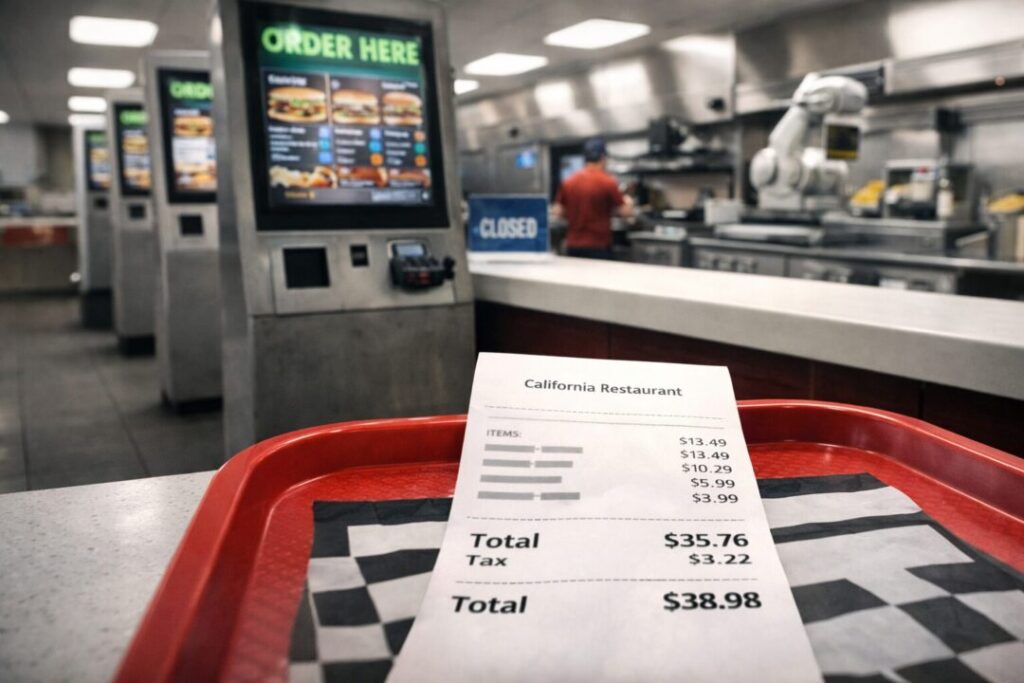
And businesses started looking for ways to replace workers altogether. That means more automation. Think self-order kiosks. Think AI ordering. Think robots assembling meals.
The study even pointed to “Cobots” being used by chains like Chipotle. Machines don’t take breaks. They don’t call in sick. And they don’t need a paycheck.
So when the cost of hiring people goes up, businesses adjust.
The result? Fewer opportunities for the very workers the law was supposed to help.
At the same time, customers are paying more. The study estimates fast-food prices in California are up between 8 percent and 12 percent since late 2023.
That’s not a small bump. For a family grabbing a quick meal, that adds up fast.
And business owners are feeling it too. The report says profits are down. That means less money to expand, hire, or invest.
In other words, everyone takes a hit.
Now bring that closer to home.
Las Vegas is already dealing with rising prices. Visitors notice it. Locals feel it. And there are growing concerns that higher costs could start pushing tourists to cheaper destinations.
That’s a real risk for a state built on hospitality.
If Nevada lawmakers follow California’s lead, those pressures could get worse.
There’s also a bigger principle at play.
When government mandates wages in the private sector, it’s not free money. It’s an unfunded mandate. The cost doesn’t disappear. It gets pushed onto someone else.
The owner has to make up that difference somewhere. They can raise prices, cut staff, or invest in machines.
Usually, that means higher prices for customers. Fewer hours for workers. Or fewer jobs altogether.
None of those options are painless.
Supporters of higher minimum wages argue that workers deserve a living wage. That’s a fair concern. But good intentions don’t override basic economics.
Even California voters seem to be catching on. In November 2024, they narrowly rejected a ballot measure that would have raised the minimum wage to $18 an hour.
Still, some groups are already pushing for $30 an hour by 2030. At some point, you have to ask how high is too high.
For Nevada, the lesson is simple: We don’t have to repeat California’s mistakes to learn from them.
The opinions expressed by contributors are their own and do not necessarily represent the views of Nevada News & Views. Digital technology was used in the research, writing, and production of this article. Please verify information and consult additional sources as needed.