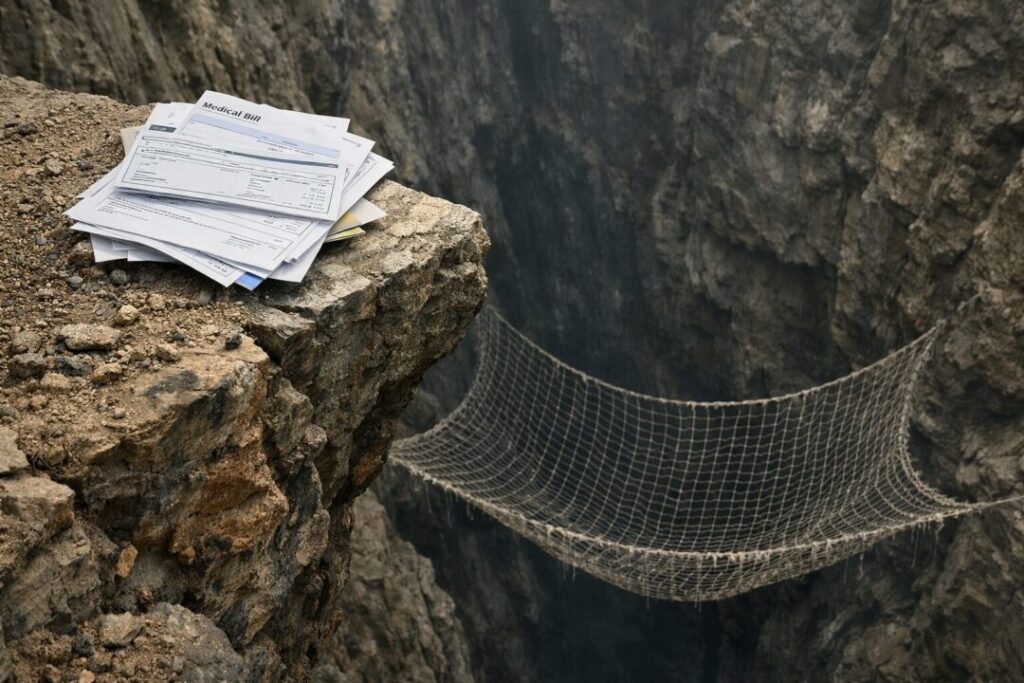
What if getting a raise actually made your life harder?
What if that's not a “what if”?
A Denver mom explains how she earns about $60,000 a year. Not rich. Just working, paying bills, raising a kid.
She says she can’t get government medical help for her daughter because she makes too much money.
And if she took a lower-paying job, she’d qualify.
This mother makes $60,000 but can’t afford her daughter’s medical procedure. However. If she were to downgrade her job and salary, she would qualify for government medical assistance for her daughter.
What’s even more messed up is that she’s from Denver, where every migrant gets… pic.twitter.com/x1utsgQCh7
— Stand Up For Trump (@StandUpForTrmp) April 2, 2026
Work less, get more help. Work more, lose it.
That’s what policy experts call the “benefits cliff.” And it’s not new.
The Catch Nobody Talks About
It’s been talked about for years in programs like Medicaid, food assistance, and housing aid.
Once your income crosses a certain line, even by a little, benefits can drop off fast. Sometimes all at once.
So a small raise doesn’t feel like a win.
It feels like a penalty.
According to multiple policy studies, this cliff effect can discourage people from taking better jobs or working more hours.
Not because they don’t want to get ahead. But because the math doesn’t work in their favor.
You earn a bit more. Then suddenly, you’re paying thousands more in medical bills or child care.
That’s not exactly a ladder out of poverty.
What Colorado Changed
Now layer in what’s happening in Colorado. The state expanded its “Cover All Coloradans” program in 2025.
It offers Medicaid-style coverage to low-income kids and pregnant women, including illegal immigrants.
A working parent can make just a little too much money and lose coverage for their own child.
But someone here illegally can qualify.
Now, no one wants to see a child go without medical treatment. But the problem is, now the program is costing more than expected.
State budget projections have already had to adjust upward. More people are enrolling than anticipated.
That means higher costs for taxpayers.
And on top of that, many conservatives think it's fair to ask:
Why is the government expanding benefits to people who aren’t supposed to be here in the first place?
It’s Happening in Nevada Too
Here in Nevada, families face similar cliff effects in different government programs.
Same story. Different ZIP code.
You’re doing what you’re supposed to do. Working hard. Trying to move up.
Then the rules shift as soon as you feel like you're getting ahead.
A Debate with No Easy Answer
Critics say this is what happens when government draws hard lines.
You’re under the limit, you get help. You go one dollar over, it disappears.
When that happens, people stop climbing.
Not necessarily because they’re lazy, but because the system makes moving up feel risky.
Supporters see programs like these as a safety net, not a trap. They say without them, many families would be in serious trouble.
But at what point does the safety net stop catching you and start holding you down?
The opinions expressed by contributors are their own and do not necessarily represent the views of Nevada News & Views. Digital technology was used in the research, writing, and production of this article. Please verify information and consult additional sources as needed.