Some countries talk tough. Iran has acted tough for 47 years. And Americans have paid the price.
As a former United States ambassador during President Trump’s first term, I’ve seen this up close.
Not from a classroom or a think tank. From the real world of diplomacy, where words matter, but actions matter more.
Let’s be honest about something Washington keeps dancing around. Iran isn’t just a “nuclear problem.” It’s a decades-long problem.
Since 1979, Iran’s regime has built its entire identity around hostility to the United States and Israel.
The U.S. State Department has labeled it the world’s leading state sponsor of terrorism since 1984. That’s not a talking point. That’s a documented fact.
And the record is long.
In 1983, Iran-backed Hezbollah killed 241 U.S. Marines in Beirut.
In 1996, the Khobar Towers bombing killed 19 American airmen.
During the Iraq War, Iranian-backed militias used roadside bombs that killed hundreds of U.S. troops.
Just recently, in 2024, an Iran-aligned militia killed three American service members in a drone strike in Jordan.
This isn’t ancient history. It’s a pattern.
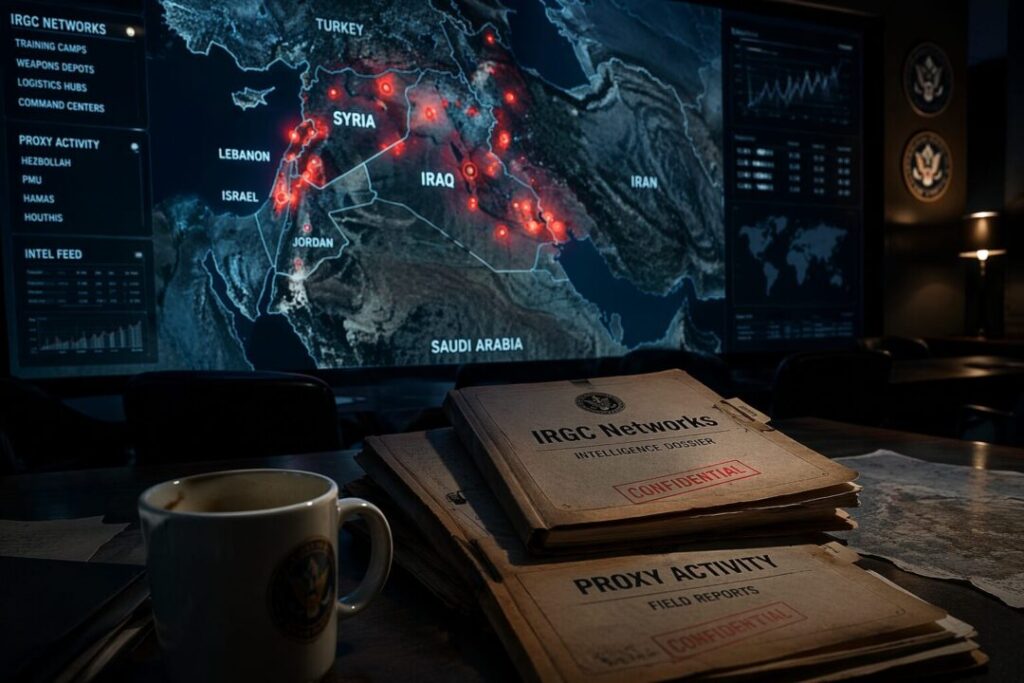
Iran doesn’t fight straight up. It uses proxies. Hezbollah. Hamas. The Houthis. Militias in Iraq and Syria. Groups that give Iran cover while still doing its bidding.
That’s how they’ve kept the Middle East on edge for decades.
They fund it too. Hezbollah alone has received hundreds of millions of dollars a year from Iran. Other terror groups get tens of millions more. That money doesn’t come out of thin air. It comes from oil revenue and state resources.
So when you hear about sanctions or “maximum pressure,” understand what that really means. It means cutting off the money that fuels attacks on Americans.
Critics want to reduce all of this to one issue. Nukes.
Yes, Iran can’t have nuclear weapons. That’s obvious. But that’s only part of the story. Even without nukes, Iran had missiles that can hit U.S. bases and allies.
It threatens global shipping in the Strait of Hormuz. It backs attacks on commercial vessels in the Red Sea. It carries out cyber operations and assassination plots.
This isn’t a country that just wants to be left alone. This is a regime that wants influence, control, and power across the region.
Now here’s where the difference comes in.
For years, the approach out of Washington was simple. Talk. Negotiate. Hope. But hope isn’t a strategy.
President Trump understood something basic. If you make threats and don’t follow through, the other side stops taking you seriously.
That’s not politics. That’s common sense.
When Trump pulled out of the Iran nuclear deal in 2018, critics said it would lead to chaos. Instead, Iran’s oil exports dropped sharply. Its currency collapsed. Inflation surged.
The regime felt real pressure. Then came the turning point.
After Iran-backed forces killed an American contractor, Trump ordered the strike on Qasem Soleimani, the head of the IRGC-Qods Force and the man responsible for coordinating much of Iran’s proxy warfare.
That wasn’t symbolic. That was decisive.
Iran responded, but it pulled back from full escalation. And attacks on U.S. personnel dropped significantly afterward.
Why?
Because the message was clear. THIS president doesn’t bluff. And that matters in negotiation. In fact, it’s everything.
Iran is now negotiating because Trump was picking off their leadership one by one. That’s not just war. It’s about leverage.
Reagan used to say, “Trust but verify.” But with Iran, we’ve learned something else. Trust isn’t enough.
Under President Trump, the policy became something more grounded in reality: Trust – but drone strike. Not recklessness. Not endless war. But credible consequences.
Critics say this approach is too aggressive. They worry about escalation. That’s fair to consider. But let’s ask a simple question: What has 47 years of Iranian behavior taught us?
They push when they sense weakness. They test limits when lines aren’t enforced. They negotiate seriously only when the cost of not negotiating gets too high.
That’s not theory. That’s history.
Even during periods of diplomacy, Iran kept funding proxies, expanding missile programs, and advancing nuclear capabilities.
So the idea that more talks alone would fix this ignores reality.
Pressure works because it forces choices. Do they spend money on their people or on proxy wars? Do they escalate or survive?
When their economy is squeezed, their options shrink. That’s why “peace through strength” isn’t just a slogan. It’s a proven approach.
At the end of the day, this comes down to credibility. When America says something, does it mean it?
Under President Trump, the answer is decidedly yes. And when your enemies believe that, something interesting happens.
They start to listen.
The opinions expressed by contributors are their own and do not necessarily represent the views of Nevada News & Views. Digital technology was used in the research, writing, and production of this article. Please verify information and consult additional sources as needed.