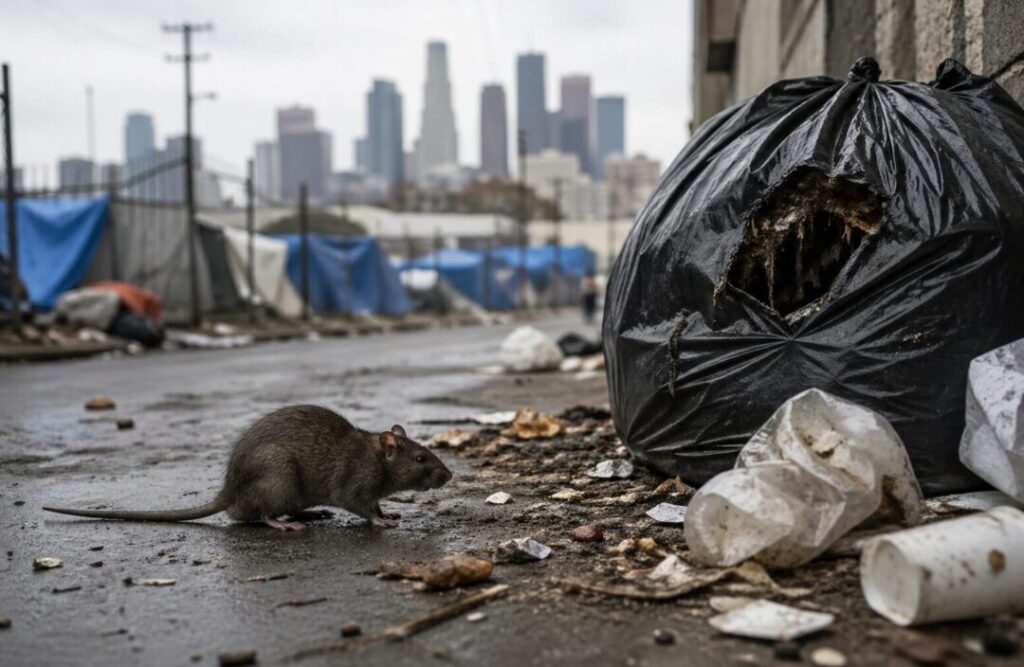
Los Angeles County just reported a record 220 cases of flea-borne typhus in 2025, up from just 187 the year before.
About 90% of those people ended up in the hospital, according to the county’s latest public health data released in April.
Typhus. In 2025. Not exactly what you expect to hear about a major American city.
Los Angeles County is experiencing a record breaking surge in flea-borne typhus, a medieval disease
This isn’t something to take lightly, 90% of cases are requiring hospitalization
This new disease is actually a result of Democrat policies. Homeless encampments create harborage… pic.twitter.com/7HutuAMLmc
— Wall Street Apes (@WallStreetApes) April 29, 2026
Typhus 101: The Basics You Need to Know
Flea-borne typhus is a bacterial infection. It’s spread by fleas that usually live on rats, stray cats, and opossums, not person to person.
A flea bites, leaves behind infected droppings, and somehow that bacteria gets into your skin or eyes. That’s how it starts.
At first, it feels like a bad flu. Fever, headaches, body aches. Some people get a rash. But it can turn serious fast.
Why This Problem Is Growing
Health officials in LA County are pretty clear about what’s driving it. More trash. More rodents. More places for them to hide.
Illegal dumping, piles of garbage, overgrown lots, and homeless encampments where food waste builds up all make for an environment that disease thrives in.
This isn’t complicated. Leave food out long enough, rats show up. Give them cover, they stick around. And where there are rats, fleas aren't often far behind.
How Government Decisions Play a Role
These conditions didn’t just magically appear.
Critics say local policies helped create the environment we’re seeing now.
For example, anti-camping rules that aren't enforced consistently let large encampments stick around longer. And when they do, trash tends to pile up.
Then there are restrictions on certain rat poisons. California limited some of them to protect wildlife.
That sounds reasonable. But it also means fewer tools to deal with growing rat populations.
And then there’s basic cleanup. When illegal dumping sits too long, it turns into a feeding ground.
Local officials are now calling for more trash pickup, more bins, and more coordinated cleanups.
That alone kind of tells you there were gaps before.
What Some Say We’re Missing
Not everyone thinks this is mostly about policy. Some point to warmer weather, which can stretch out flea season.
Others say typhus has been around in California and Texas for years, so it’s not new.
That’s all true.
But here’s what’s different.
The numbers are higher, and the cases are showing up in very specific areas where sanitation issues are easy to see.
That makes it seem like less of a coincidence.
And even if policy isn't completely to blame, it's still part of the government's job to course-correct and protect the public.
Why Nevada Has Noticed
There’s a point where it stops being about politics and starts being about public health.
Trash brings rats.
Rats bring fleas.
Fleas bring disease.
That’s just how it works.
The Itch LA Can't Scratch
Los Angeles spends a lot of money trying to deal with these issues.
And yet here we are, talking about a disease most people haven’t thought about since high school history class.
That’s the part that's really bothering people. Not only that typhus cases are rising.
But that it’s happening in places where the warning signs are sitting right out in the open.
The opinions expressed by contributors are their own and do not necessarily represent the views of Nevada News & Views. Digital technology was used in the research, writing, and production of this article. Please verify information and consult additional sources as needed.