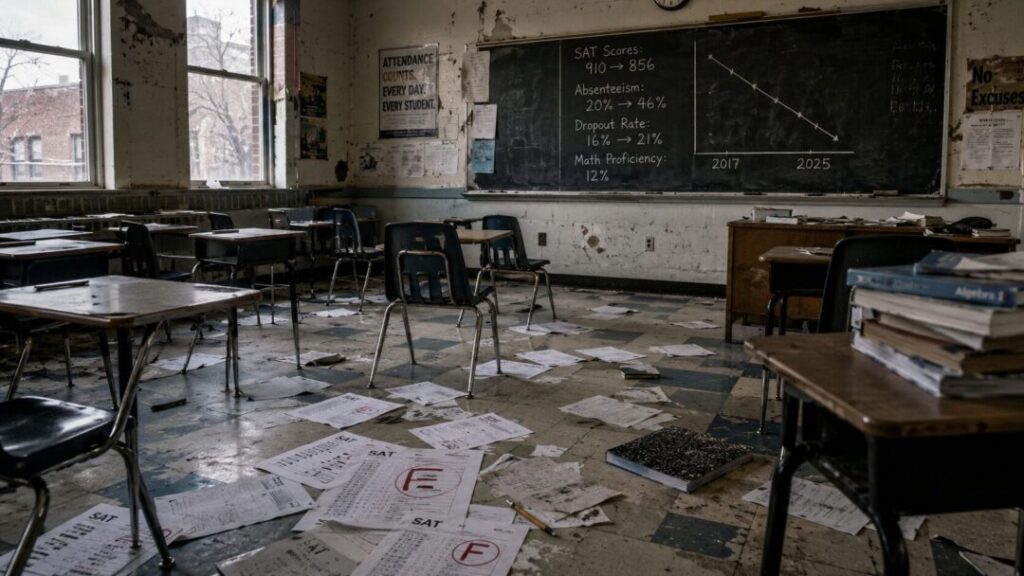
If money alone fixed schools, Baltimore should have the best students in America by now.
Spoiler alert: they don't.
Baltimore public school spending:
2017: $16k per student (1 year)
2025: $25k per student (1 year)The result?
SAT average down from 910 to 856
Absenteeism up from 20% to 46%
Dropout rate up from 16% to 21%— End Wokeness (@EndWokeness) May 14, 2026
Since 2017, Baltimore City Public Schools has pumped roughly $650 million in additional spending into the system. Per-student spending jumped from about $16,000 to nearly $25,000.
That’s a staggering amount of money – especially when you realize enrollment actually dropped by around 7,000 students during the same period.
Fewer kids. Way more money. Worse results.
According to reporting using data from the Maryland State Department of Education, average SAT scores in Baltimore schools fell from 910 to 856.
And it wasn’t just the test scores. Chronic absenteeism exploded to roughly 46%.
Nearly half the students are now missing enough school to be considered chronically absent.
Imagine running a business where almost half your customers stopped showing up and your response was, “We just need more funding.”
Dropout rates have climbed too, hitting more than 20% in some reports. Graduation rates barely moved at all, inching up about one percentage point over eight years.
Math scores may be the ugliest number in the whole mess.
Only about 12% of students are considered proficient in math district-wide. Some schools reportedly had almost nobody meeting grade-level standards.
This is after hundreds of millions in new spending. Meanwhile, the payroll keeps growing.
The Adults Are Doing Just Fine
It was reported that roughly one-third of district employees now make over $100,000 a year. Hundreds earn more than $150,000. Some top administrators reportedly pull in over $200,000 annually.
Where exactly is all this money going?
Because it sure doesn’t look like it’s reaching the classroom.
Defenders of the district say the situation is a little more complicated.
Baltimore deals with crushing poverty, violent crime, drug abuse, and the lingering damage from COVID shutdowns.
School officials say they’ve invested heavily in tutoring, literacy programs, mental health services, and student support systems. They also point to small reading gains and slightly improved graduation rates as signs of progress.
Okay. But taxpayers aren’t crazy for asking questions about these numbers.
At some point, results have to matter.
If your contractor keeps asking for more money while your roof still leaks, eventually you stop blaming the weather and start blaming the contractor.
The Same Frustration Exists in Nevada
How many times have voters in Nevada been told schools just need “a little more funding” and everything will work out? How many tax hikes have been pitched as the magic solution?
Meanwhile, parents still complain about overcrowded classrooms, failing test scores, violence, discipline problems, and kids graduating without basic skills.
That’s why more families are fleeing to charter schools, homeschooling, private schools, microschools, and other alternatives to public schools.
Families Just Want Schools That Work
Parents don’t care about glossy district presentations.
They care whether their kid can read.
Whether they can do basic math without a calculator.
Whether they’ll be ready for college, work, and life in general when they graduate.
Baltimore keeps proving the point conservatives have made for years: more spending means nothing if the system itself is failing.
The opinions expressed by contributors are their own and do not necessarily represent the views of Nevada News & Views. Digital technology was used in the research, writing, and production of this article. Please verify information and consult additional sources as needed.