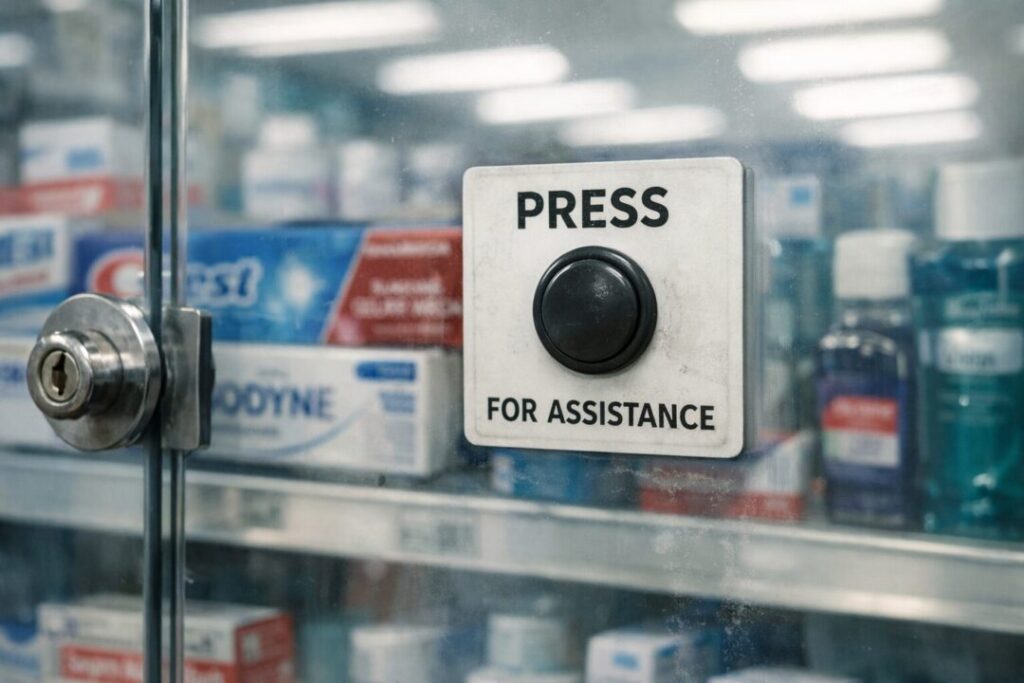
The other day at CVS, I didn’t feel like a customer. I felt like I was trying to solve a puzzle.
Press a button. Wait. Get escorted to one item. Press another button. Wait again. By the time I got to deodorant, I was done.
My experience today at CVS: it’s not a store anymore, it’s an escape room 🔐
Press button. Wait. Get escorted to lashes.
Press button. Wait. Get escorted to makeup wipes.
Press button. Wait… for deodorant.I quit halfway through my list.
If customers need a chaperone to shop,…
— Kelly Chapman (@Chapman4Nevada) April 11, 2026
That wasn’t just an annoying shopping trip. It was a warning sign.
When everyday items like shampoo, toothpaste, baby formula, and cold medicine are locked behind glass, something bigger is going wrong.
And it didn’t happen overnight.
It got worse after Democrat lawmakers decided to get “softer” on crime. The numbers tell the story.
Retailers saw a 93 percent increase in shoplifting incidents in 2023 compared to just four years earlier. Losses hit around $112 billion nationwide.
Organized retail crime is now a major driver, with groups stealing large amounts of goods and reselling them online or on the street.
And shoppers are noticing.
More than 60 percent of customers say they regularly run into locked merchandise. Many don’t wait. Over half will leave and shop somewhere else.
That means lost sales, frustrated families, and fewer neighborhood stores staying open.
Retailers didn’t wake up one day and decide to lock up toothpaste for fun. They did it because theft got out of control.
And in Nevada, we have to be honest about why.
In 2019, Democrats passed sweeping criminal justice changes that raised felony theft thresholds and reduced penalties for certain property crimes.
The goal was to focus on violent offenders and reduce prison populations.
That sounds reasonable on paper. But in the real world, it sent a message.
For many repeat offenders, especially those tied to organized retail theft, the risk got lower. The consequences got lighter. And the system got slower to respond.
Criminals pay attention to that. Retailers do too.
That’s part of why stores are now locking up everything from razors to baby formula.
They’re reacting to a system that made it harder to stop repeat theft and easier for criminals to walk away.
Even major chains admit this is a last resort.
Walgreens has called locked cases its most efficient way to deal with theft. At the same time, they admit it hurts sales.
So let’s be clear. This isn’t a business model. It’s a survival tactic.
To be fair, not everyone agrees with this view.
Some critics say the rise in theft is overstated or tied to better reporting. Others argue that locking shelves goes too far and punishes honest customers.
There’s some truth there. Locked cases are frustrating. They do drive people away. But ignoring the root problem won’t fix it.
If we want to unlock those shelves, we need to restore consequences.
Here’s where Nevada can act.
First, we need to revisit the 2019 changes and tighten penalties for repeat theft and organized retail crime.
If someone is hitting multiple stores or stealing for resale, that should carry serious consequences.
Second, we need faster, more consistent prosecution. Catch-and-release doesn’t work. It just teaches criminals they can keep going.
Third, we should strengthen coordination between local law enforcement and the attorney general so organized theft rings don’t slip through the cracks.
Fourth, we should go after the resale pipeline. Stolen goods don’t just disappear. They get flipped online. Cutting off that market matters.
And finally, we need to stand up for the people who follow the rules.
Because right now, they’re the ones paying the price. They’re the ones waiting. They’re the ones walking out of stores empty-handed.
If I’m elected to the Nevada Assembly, I’ll support reforms that bring back accountability, protect businesses, and make shopping normal again.
Because buying toothpaste shouldn’t require a staff escort. And it definitely shouldn’t feel like an escape room.
The opinions expressed by contributors are their own and do not necessarily represent the views of Nevada News & Views. Digital technology was used in the research, writing, and production of this article. Please verify information and consult additional sources as needed.