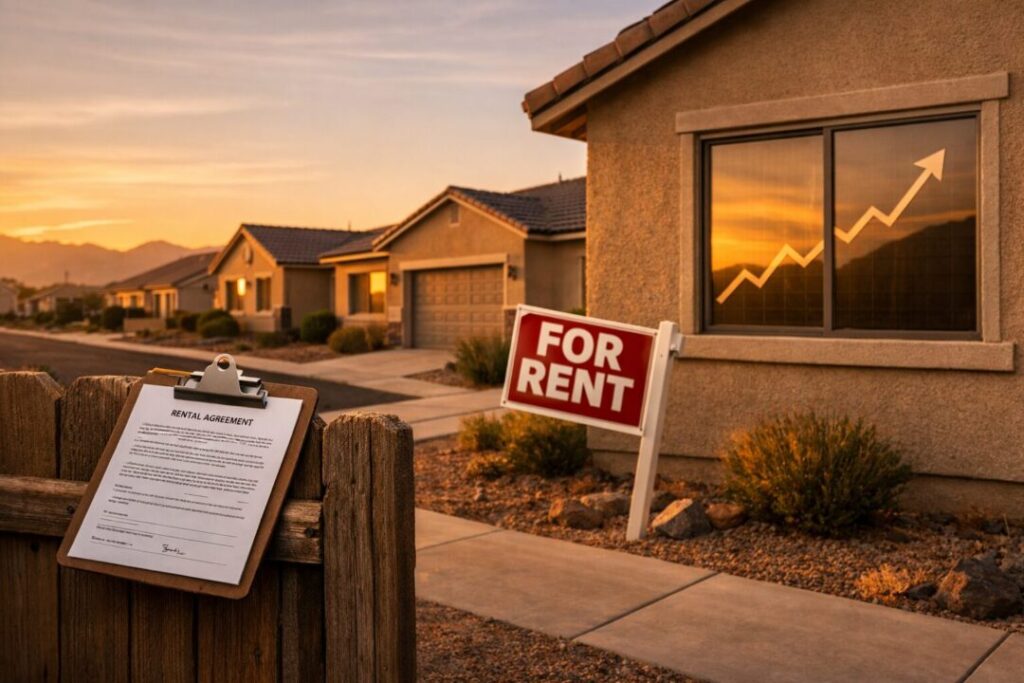
It sounds simple. Track rental homes. Gather data. Fix the housing problem.
But in Nevada, that “common-sense” idea could come with a serious downside.
Lawmakers are once again looking at something called a rental registry.
It’s a system where the government collects details about rental properties, prices, and ownership.
Supporters say it brings transparency and helps keep landlords in check. But critics warn it could do the opposite.
And the evidence from other cities backs that up.
A Fix That Hasn’t Worked Before
Rental registries aren’t new. Cities like New York and Berkeley have used them for decades.
The goal was simple. Improve housing conditions and control costs.
Yet those same cities still struggle with high rents and limited housing.
That raises a fair question. If this works so well, why hasn’t it solved the problem?
Even in places with strict enforcement, results have been weak.
In Berkeley, officials found that only about 5 percent of tenants were paying above rent limits despite the registry system.
Meanwhile, Los Angeles and Louisville have both faced challenges with similar programs.
Costs Always Land on Renters
Here’s the part that hits home for families. These programs aren’t free.
Cities have to build systems, hire staff, and enforce rules. In San Francisco, those costs reached up to $3.6 million a year.
Guess who ends up paying for that?
Renters.
Landlords often pass those costs along through higher rent.
It’s basic math. When it costs more to operate, prices go up.
And in a place like Nevada, where housing is already tight, that’s the last thing people need.
Small Landlords Get Squeezed Out
A lot of Nevada’s affordable housing comes from small, local landlords. The “mom and pop” owners.
They’re not big corporations. They’re regular people renting out a home or two.
Extra rules and paperwork can push them out.
In Seattle, stricter housing rules led many small landlords to sell or leave the market.
A 2023 audit found that 67 percent of landlords who exited said compliance was too hard.
When that happens, something important disappears. Affordable housing.
It often gets replaced by larger, more expensive developments. That means higher rents and fewer options.
Privacy Concerns Are Real
There’s also a privacy angle that shouldn’t be ignored.
Rental registries collect a lot of personal data. Names, contact details, even financial information.
In Berkeley, a data breach exposed sensitive information from tens of thousands of renters.
In some cities, tenants don’t even have to give consent before their data is collected.
That’s a big concern in today’s world, where data leaks happen all the time.
Critics vs. Supporters
Supporters of rental registries argue they help hold bad landlords accountable. They say better data leads to better policy.
That’s a fair point. Nobody wants unsafe housing.
But critics say there’s a better way. Instead of adding layers of regulation, focus on building more homes.
More supply usually means lower prices.
It’s the same idea as anything else. When there’s more of something, it costs less.
What This Means for Nevada
Nevada lawmakers are still exploring this idea, with talk of possible action in future sessions. But the warning signs are there.
More rules can mean fewer homes. Higher costs can mean higher rent. And more government control can lead to less flexibility in the market.
If the goal is affordable housing, the path forward may be simpler than it sounds.
Build more. Cut red tape. Let the market work.
Because once government starts collecting data and expanding control, it rarely stops there.
And for Nevada families trying to make ends meet, that’s a risk worth thinking about.
The opinions expressed by contributors are their own and do not necessarily represent the views of Nevada News & Views. Digital technology was used in the research, writing, and production of this article. Please verify information and consult additional sources as needed.