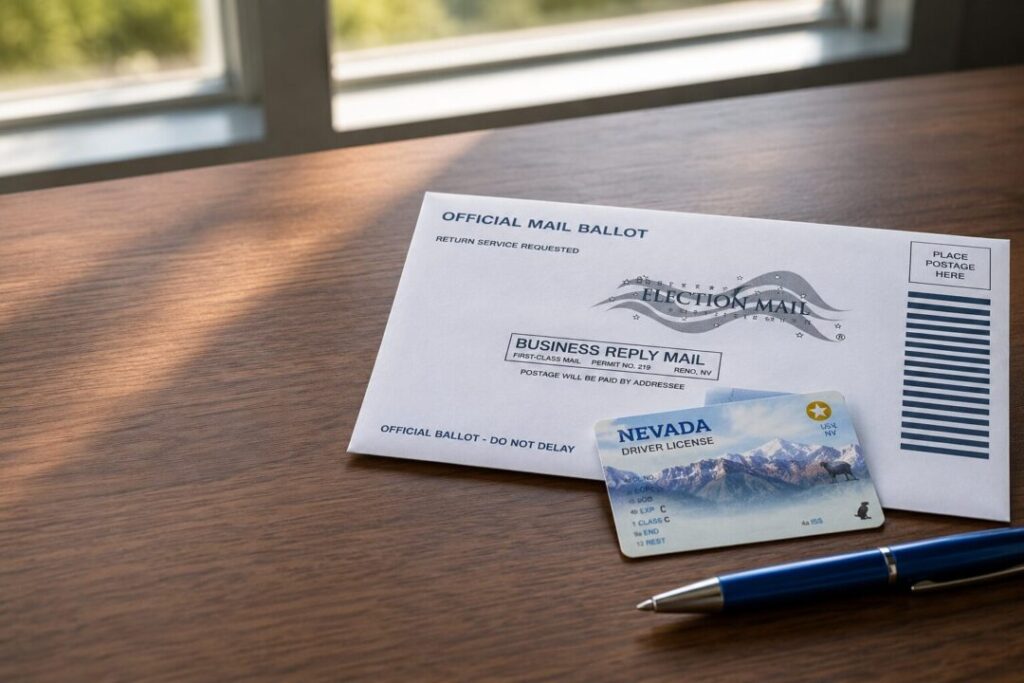
(Logan Gifford) – In 2026, Nevada will have the fewest number of ballot initiatives since 2012. Yet one of those measures is Question 7, the voter ID amendment, a repeat of 2024.
This initiative may seem familiar to many Nevadans, and it is no surprise why. Voters first approved it in 2024, by a margin of 73 to 27. It returned to the 2026 ballot because a constitutional amendment must pass in two consecutive elections.
And while it is a very popular measure, the fight for more secure elections will not be easy. In fact, that fight has just begun.
Despite question 7 receiving 179,000 signatures across all seventeen Nevada counties, 80% above the legal requirement, Question 7 has faced significant challenges.
For example, Marc Elias and a coalition of anti-voter ID groups sued in Nevada state court to stop the measure. Fortunately for all Nevadans, the Nevada Supreme Court ruled unanimously that the measure could proceed.
But the battle for more secured elections continues as opponents of question 7 have put a lot of misinformation out into the public, so let’s readdress the facts
If you vote on Election Day, you show a valid ID. Under the measure and current statute, that means a Nevada driver’s license, a passport, a tribal ID, a student ID, another government-issued photo ID, or any form the Legislature approves.
If you vote by mail, and most Nevadans do, nothing about that changes. You write the last four digits of your driver’s license or Social Security number on the envelope next to your signature. That is all it asks.
You already show ID to board a plane, cash a check, or buy cough syrup off the shelf. A ballot deserves at least that much protection.
The public agrees and it is not a close race as the 2024 election shows. But more recently, CBS conducted a poll earlier this year and found that 80% support voter ID, a finding that transcends party lines.
And its not surprising considering voter ID has always been bipartisan issue. In fact, In 2005, James Baker and Former President Carter led a bipartisan commission on election reform and recognized that apathy in the process was fair from both major parties. The only caveat was access to an ID.
Nevada State Senators Carrie Buck and Jeff Stone worked to improve access to obtaining an ID during the previous legislative session with SB 230. The bill died in committee.
Even Secretary of State, Cisco Aguilar, is getting prepared to implement the requirements.
“We have to have this ready to go in less than five months,” said Aguilar, referring to the time between the end of the 2027 legislative session and the 2028 Presidential preference primary.
“That means updating systems, it’s updating processes, it’s educating voters, but also, making sure elections administrators understand the responsibility that they have. I think there are some really unique ways to use some technology to improve efficiencies at the polling locations.”
If Nevada’s top election official can prepare in good faith, the rest of us can finish the job at the ballot box.
We approved Question 7 once. We cannot grow complacent now.
Vote yes again in 2026, make it law, and restore faith in a process that belongs to every American.
The opinions expressed by contributors are their own and do not necessarily represent the views of Nevada News & Views. This article was originally published via JoinOurAmerica.org on 7/21/2026.